Keep it moving – by Scott Marsland, FNP-C

Keep it moving – by Scott Marsland, FNP-C

[ad_1]

HISTORY

Are there boys who don’t like jokes about poop? I haven’t met them, and I wasn’t one of them. When I was a kid, we had Dr Seuss books, but Everybody Poops by Justine Avery had yet to be written. Honestly, I feel silly using the word poop, but I’m trying to keep this Substack at least PG rated.

Poop was the word my stepfather Em instructed me to use. He landed in my life when I was eleven years old. Em was short for Embury. He was Embury T Jones, Jr, the only son of an engineer and inventor. He was a big man, 6’2”, 260 lbs of muscle, with a voice that carried the entire bass section of the men and boys choir of Christ Church Episcopal Church in Hartford, CT.

Em was a corporate headhunter, and a former computer scientist from when computers occupied entire buildings and used punch cards for programming. He was a Captain in the US Naval Reserve, who bounced a quarter on my bed to test whether I had tucked the corners tightly. He was, well, a Captain. If you didn’t like the way he ran his ship, you could walk the gangplank. He didn’t like swearing. We didn’t agree about what constituted swearing.

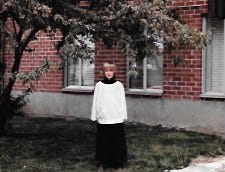
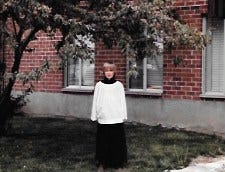
Scott the St James choirboy 1978

By fourth grade I was singing in the St James Episcopal Church boys choir in West Hartford, CT. Thus, Em and I would come to share a love of sacred choral music. The church choir was where I learned to swear, smoke cigarettes, drink alcohol, shoplift, and kiss girls. Not necessarily in that order, but all in the same year.

I shouldn’t blame all my vices on the boys choir. Swearing came naturally to me. I’ve always been small, so I made up for it with expletives. My elementary classmates from Cuba and Puerto Rico were more than happy to teach me swear words in Spanish. Enough to get cuffed by Mrs Rodriguez our Spanish teacher.

In prescience of the tumultuous relationship we would have, Em rescued my petulance tuckus years before he became my stepfather. St James choirs joined Christ Church Cathedral choirs for a special performance of …who knows what? I don’t remember the music. What I remember is that when the choirmaster from Em’s church saw me sticking my tongue out at the junior high hotty I had my heart on, he grabbed me by the scruff and tossed me in the stairwell. Ouch! Em came into the stairwell a few minutes later and made sure I was okay. I was just a tad humiliated, but otherwise figured all is fair in love and war.

So, swearing. There are so many words for human excrement. None are quite as definitive and satisfying as s**t. The French have merde. The Brits have shite. Under the house rules of Captain Jones, poop was permissible, crap was not, s**t definitely not. There would be consequences. A battle of wills ensued. Ultimately I walked the plank, and went to live with my Nana and Pop pop in another state. My grandparents thought they were going to enjoy their golden years in peace and instead ended up raising a teenager.

Pop pop was more my speed. A former US Marine who fought in Okinawa. He was a gentleman and had good manners, but he also knew his way around some serious vernacular. Heck, even my Nana would drop a s**t bomb now and again. In his later years Pop pop was bald on top with a horseshoe of hair. He ran a service station for forty-five years, and was happy to be under the hood of a car tinkering. Except that on more than one occasion he would bang his exposed scalp on the propped hood of said car, which would lead directly to a Pop pop classic: GOD…DAMN, goddamn, goddamn!

Pop pop’s objection to profanity was more about timing. Not a big deal to say s**t, but do we have to talk about it at dinner? Well, if you were me you did. Another battle of wills ensued, although better matched, as we were both Marsland men after all. An enlisted man couldn’t exercise too much probity.

RECENT HISTORY

My comfort level with expletives is a perfectly valid reason why I ended up working in the Emergency Department (ED). The floor nurses were really just too proper, and had a bit too much value judgement going on, perpetually. The ED was the realm of hoodlums, prisoners, homeless, drug users, and working folks in medical crisis. Do you think that patients with 10 out of 10 flank pain from kidney stones are focused on keeping their conversation Disney-appropriate? No. By the time I landed in a level 1 trauma center, it was generally a non-stop s**t show. F-bombs were de rigeur.

Fortunately for me and my patients, my familiarity and comfort level with s**t was more than vowel and consonant deep. Ask any nurse what her/his/their hot button body fluid is and you’ll get some interesting conversation going. I worked with a nurse, who shall remain named Chicken Nugget (you know who you are), and she has this super power of turning off her sense of smell when she starts a shift in the ED. She was impervious to s**t.

I’m not so lucky as Chicken Nugget, but my Kryptonite is sputum. One time when I was still sporting a crew cut, I was in an isolation room doing tracheostomy suctioning. The patient coughed a huge, green, sticky sputum clump that skidded across my scalp, slowly settling in for a landing. I could only finish the job I started as the goo slowly sank into my hair. So, sputum, no thanks. But vomit, urine, blood, sweat, tears, and s**t, no problem.

In fact, I’m so relaxed around s**t, that I developed a reputation for being a masterful disimpactor. I just made up that word, but that’s what I was good at. May you never have need of fecal disimpaction, but if the occasion did arise, you for sure want someone who brings plenty of lubrication, a sturdy constitution, a gentle and kind manner, patience, and long fingers. That’s me. When you’re the one experiencing a disimpaction, it’s very intense, but when it’s done well, you are very, very appreciative. No joke, I once had a grateful patient’s wife force a wad of hundred dollar bills down my scrub top after I got him unplugged. It’s a shame that I was a serf of New York State and couldn’t legally accept the tip. This is all to say that s**t happens, the ED is often a s**t storm, and a satisfying s**t is one of the elusive pleasures of a well-lived life. Now let’s talk about how to keep things moving.

PRESENT

As promised in my last Substack, I’m going to cover supplements and medications which are harmful in general, but specifically problematic in patients experiencing post-acute sequelae of Covid (PASC) and Covid vaccine injury. Last week I wrote about aluminum containing medications. This week I’d like to discuss polyethylene glycol or PEG.

Polyethylene glycol (PEG) is a petroleum-derivative compound that is made from ethylene glycol (ethane-1,2-diol), the main ingredient in antifreeze. PEG can be found in a number of other products, including skin creams and personal lubricants, and as a food additive for anti-foaming purposes. PEG may be familiar to you by its brand name MiraLAX. This is pure PEG crystals, sold over-the-counter, and marketed as a laxative. In 2019, the MiraLAX brand generated about 29.7 percent of laxative/stimulant liquid/powder/oil sales in the United States. Sales of laxatives in 2023 topped $1.5 billion annually, and apparently there is a shortage.

How does MiraLAX work? It is classified as an osmotic laxative. This means that it works by drawing water into the colon. The water softens the stool and may naturally stimulate the colon to contract. These actions help ease bowel movements.

If you have been using PEG for years, you are probably wondering what the fuss is about? This is a great example of the difference between the pre- and post- Covidian world. You know the song “The Old Gray Mare”? She ain’t what she used to be. These bodies we are living in are changed, with innumerable pathologies and complications to confound us.

The PEG story goes back to an important decision made by the Covid mRNA vaccine manufacturers. PEG-modification (pegylation) conjugates PEG with the lipid nanoparticles (LNP) in the shots. It coats the surface of the LNPs reducing opsonization, aggregation, and improving mRNA delivery to the target cells. Translated, it helps the LNP glide past our immune system surveillance and through the phospholipid membranes of our cells. This action enables longer circulation of nanoparticles. However, there is now evidence that PEG causes immunogenic responses when conjugated (PEGylated) with other materials such as proteins and nanocarriers. See studies here and here. It has been estimated that up to 25% of people who received a Covid shot have developed antibodies to PEG.

If we have learned anything from the censorship of HCQ, IVM and other repurposed drugs which could effectively treat Covid, we should bear in mind that the scientific literature on occurrence of PEG antibodies is compromised. When you read a study which minimizes this, i.e. concludes that PEGylation in the Covid shots is safe and effective, make sure to also read the conflicts of interest declared.

What happens when a person develops antibodies to PEG? If you are allergic to something, and you ingest a sizable quantity of it on a daily basis, it is going to make you sick. Signs of a new allergy to PEG include pruritus (itching), tingling, flushing, urticaria (raised, red welts on your skin), angioedema (facial swelling), hypotension, and bronchospasm.

Spike protein destabilizes mast cells provoking mast cell activation syndrome (MCAS) in many PASC and vax patients. When mast cells are unstable, they are frequently releasing histamine. Whereas white blood cells have a lifespan of about a week, mast cells last 2-4 years. We’ll be dealing with this dynamic for some time to come. In the context of MCAS, PEG antibodies mean that PEG-containing products have the potential to trigger anaphylaxis or hypersensitivity reactions in some people. In the most extreme of cases, a new PEG allergy has created enormous obstacles to treatment as there are many beauty care products, medications and even foods containing PEG. I have found this to be the case with more than six patients under my care. One patient would experience severe anxiety, tachycardia, flushing, and dizziness from the tiny amount of PEG in a dose of the anti-histamine Pepcid/Famotidine. My experience is that when patients wean off MiraLAX, there is a significant improvement in their global symptom burden.

Products containing Polyethylene Glycol

Medications using Polyethylene Glycol

Foods containing Polyethylene Glycol (See these WHO 2021 food additive details)

  • Emulsifiers, stabilizers and sweeteners

  • Chewing gum

  • Food supplements

  • Water-based sports, energy and electrolyte drinks

  • Surface treated fresh fruit

What now? Laxatives are habit forming. If you have come to rely upon MiraLAX/PEG to have regular bowel movements, it would be unwise to stop abruptly, even if you are slowly poisoning yourself. If you develop a small bowel obstruction and need emergency surgery, you haven’t gained any ground. A more strategic response is to wean yourself over several weeks and replace the MiraLAX/PEG with safer alternatives. My favorite supplement in this case is OxyPowder, a combination of ozone-oxygenated magnesium and citric acid. I also like to use Garden of Life Prebiotic fiber which you mix with water and drink. Metamucil is readily available in most grocery stores and pharmacies. Prunes are an old standby.

We also need a longer-term plan to get off the laxative train, but keep things moving. Regular bowel movements require three components: hydration, dietary fiber, and mobility. Just like a three-legged stool, if you take away one of those three components, it isn’t stable. Hydration can be the easiest part. More than twenty-five years ago, a college classmate of mine changed my life with some simple advice. It was Mohit Bali, an introverted computer major who was observant if not elegant in his delivery. He told me that every morning when I wake up, I should drink a big mason jar of water right away. He explained that this was a basic teaching of Ayurvedic medicine for more than 3,000 years, and would help me lead a long and healthy life.

What Mohit didn’t share, but which I later learned, is that every human being wakes up dehydrated. Our body spends the time we are asleep engaging in cellular repair, burning fuel, making waste, using up oxygen and water. What we do instead of hydrate upon waking? We drink coffee. Yes, it stimulates our bowels, but the caffeine is a diuretic, which makes us pee and dehydrates us further, so that we start the day deeper in the hole. If you must drink coffee, then have at it, but drink a 32 oz of water first thing and you’ll thank yourself for it. The water will also stimulate you to have a marvelous BM.

Mobility is the next challenge, especially if we have the fatigue and post-exertional malaise of PASC and vaccine injury. Simply put, moving your body stimulates gastrointestinal motility. Move your body less, and waste will take longer to pass through you, permitting more of the moisture to be reabsorbed by your intestinal walls, creating bigger and drier stool.

Obtaining dietary fiber is as easy or hard as you choose to make it. You can use the options I mentioned above, but food is best. There are two kinds of fiber: soluble and insoluble. Soluble fiber gives stools bulk. Foods that are good sources of soluble fiber include apples, bananas, barley, oats, and beans. Insoluble fiber helps speed up the transit of food in the digestive tract and helps prevent constipation. Good sources of insoluble fiber include whole grains, most vegetables, wheat bran, and legumes. Foods that have fiber contain both soluble and insoluble fibers.

Diametrically opposed to fibrous foods are processed foods. White rice, white flour, refined pasta, and sugar have the effect of gumming up the works. Minimizing these aspects of your diet, and maximizing whole foods will produce long-term health benefits and more regular BMs.

Water, movement and fiber. Drink water early and often. Happy trails to you.

P.S. I have no financial interest in the products which I recommend, such as OxyPowder, Garden of Life Prebiotic Powder, or Metamucil.

[ad_2]

Source link

One thing from another – by Scott Marsland, FNP-C

One thing from another – by Scott Marsland, FNP-C

[ad_1]

History

I had at least four fathers. My biological father, my stepfather, my paternal grandfather, and the father of my best friend in high school. Only the last of these is still alive. One thing which each of them had in common was a facility with explanations about the world around us and how things work. Instead of facility, I thought to use the word alacrity, but my Pop pop could be grumpy when I asked him the meaning or spelling of a word. “There’s a very big dictionary on the book shelf at the end of the hall Scotty.” Yes, I knew that. It was the one that each of my siblings, cousins and myself would take turns sitting on at the dining room table during holidays growing up. “But you’re right here Pop pop, and you explain it so well.” That would usually get a look up from his Travis McGee novel and over the rims of his glasses, then an answer. Yes!

Because my dad had the first shift in this province of fathers, his patient explanations overshadow all others. Why is the sky blue? What makes wind? Are cats smarter than dogs? Why do dogs eat cat poop? (seriously, that made me doubt that dogs are smarter than cats) Do girls ever fart? Do all fish have teeth? (the movie Piranha had come out) How does Santa get down the Chimney? If God created the world, who created God? How does a lightbulb work? Why do you use a radar detector? That’s just for starters. Clearly he had his work cut out for him.

Learning from my dad, 1971

I marveled that he knew so much about so many things. As an adult, I remember my dad and think that it would be fair to say he was a Renaissance man. He played tennis and volleyball, and took up martial arts before his death. He built a passive solar house, restored a Model A Ford coupe with a rumble seat, had a beautiful garden, and was a decent cook by his third marriage. He was a successful salesman, an introvert who taught himself to be socially engaging, and was well-respected by his colleagues. He knew things, things that mattered. He had the answers to my questions, and on the rare occasion that he didn’t, he didn’t fake it.

Recent Past

One of my favorite novelists is Barbara Kingsolver. The last book I read by her was Demon Copperhead which is a story of life and love in the southern Appalachian Mountains of Virginia. A line early in the novel has stuck with me as I have struggled to master this novel medical realm of Covid. “If you care, you’ll learn one thing from another. Anybody knows a sheepdog from a beagle, or a Whopper from a Big Mac.”

In the emergency setting, knowing one thing from another can make a big difference in the how the day goes for the patient in your care. Was that Morphine (MS04) or Mag Sulfate (MgS04) which caused you to stop breathing? Before I hang your blood, are you Bill Jones (DOB 6/24/59) or Bill Jones (DOB 6/23/59)? Did that telemetry monitor just show you brushing your teeth, or did you enter a potentially fatal dysrhythmia of ventricular fibrillation? You know, things that matter.

I have a decent understanding of how drugs work, at what doses, through what mechanisms of action, and with what side effects. It helped to spend nearly a decade on the Pharmacy and Therapeutics Committee at Cayuga Medical Center in Ithaca. But I still relied heavily upon the expertise of my pharmacy colleagues while working in the Emergency Department (ED). When I started work in the trauma center at Upstate, this reliance grew, both because there were expert clinical pharmacists stationed in the ED itself, and because they actively participated in bedside care. During care of a trauma patient, it was Rob or Greg who was right behind me at the bedside, mixing drugs, passing syringes, reminding the team when the next dose of Epinephrine was due. They mixed the drips which made intubation work, hearts keep beating, blood pressure supply vital organs.

In this complex environment, I outsourced some of my learning. When the Covid vaccines were being rolled out, it was our pharmacist Greg to whom I turned. He had spent twelve hours watching expert testimony about the vaccines. I remember in the med room he assured me that the technology was at least a decade old, that they were safe, and he had done his homework in order to answer questions from colleagues like me. That was enough for me, because this was the guy who had my back when the chips were down, every damn time.

Present

I don’t outsource many of my questions anymore. Since I received two bad batch shots in January of 2021, I do my homework. In fact, I’ve read more studies in the last three years than the previous thirty. At this point, my study and clinical practice have propelled me into the position of trying to teach you.

The longer we are in practice at the Leading Edge Clinic, the more I encounter patients who still have almost both feet still in the land of conventional medicine. They still trust their PCP, their Cardiologist, their Gastroenterologist. The people who advised them to get the shots. They have been through the ringer, and haven’t been getting any answers. They are talking to me because their friend, family, neighbor, co-worker referred them. All they know is that they were told I might be able to help them.

This is a weak position from which to question the guidance of the trusted medical professionals in their lives. One way in which I approach this is by offering a framework. I suggest that when they next speak with their practitioner, they ask them this: “Sir/madam, can you please help me understand what is spikopathy, the pathologies it causes in long-haul and vaccine injury, and what you know about how to evaluate and treat those injuries?” I suggest that when that doctor/NP/PA gives them a blank stare, they remember it. You figure that into your calculations about whether their evaluation, testing, diagnosis and treatment is based upon reality.

The same practitioners may also tell you “We just don’t know much about long-haul and vaccine injury, and it will be years before we understand it and can effectively treat it.” My response is that today, not tomorrow or years from now, there is a graduate level course in long-haul and vaccine injury available at no cost. It is the eighty-two (and growing) part series by Dr Syed Mobeen, known as Dr Been. It is the Long Story Short series from the FLCCC Alliance. Any layperson or practitioner who watches and learns from that series will acquire knowledge that currently evades 99.9% of the practitioners in the United States, if not the world.

Along those lines, a patient recently told me that we need to share a list of medications that people experiencing spikopathy shouldn’t take. She was right. This is a start. In upcoming Substacks I will cover proton-pump inhibitors (PPIs), statins, and polyethylene glycol (PEG). In this Substack I’ll start with aluminum-containing over-the-counter and prescription medications. Examples are Maalox, Mylanta, Pepto-Bismol, Carafate or Sucralfate.

What are these products supposed to do? Aluminum hydroxide (Maalox, Mylanta) is a basic inorganic salt that acts by neutralizing hydrochloric acid in gastric secretions. Aluminum hydroxide is slowly solubilized in the stomach and reacts with hydrochloric acid to form aluminum chloride and water. It also inhibits the action of pepsin by increasing the pH and via adsorption. Bismuth subsalicylate (Pepto-Bismol) consists of trivalent bismuth and salicylate suspended in a mixture of magnesium aluminium silicate clay. The medicine forms a protective coating over the lower part of your esophagus, and partly coats your stomach. This helps protect them from stomach acid. It also has weak antacid properties that may help reduce too much stomach acid.

Sucralfate/Carafate works by forming a barrier or coating over a gastric ulcer. This protects the ulcer from the acid of the stomach, allowing it to heal. More technically, it dissociates in the acid environment of the stomach to its anionic form, which binds to the ulcer base. This creates a protective barrier to pepsin and bile and inhibits the diffusion of gastric acid. Sucralfate also stimulates the gastric secretion of bicarbonate and prostaglandins.

Why use aluminum in these antacids? One word, flocculation. If your house is connected to a municipal sewage system, when you flush the toilet the waste flows to your local sewage treatment plant. It is common practice in the United States to add aluminum powder to the raw sewage in order to make the solid waste settle out of the solution, so that it can be collected and removed. How does that work? Aluminum is what chemists call a cation. It has a +3 charge. The organic waste from your poo has a negative charge. Aluminum binds to the organic waste and this joint venture becomes sludgy. Ergo, flocculation. What happens when you ingest medications which have aluminum? Flocculation, in your blood. Sludging, in…your…blood.

It is not rare that during my first visit with a patient who has post-acute sequelae of Covid (PASC) or vaccine injury they will have one of these medications on their list. Or, as we progress through the visit, it comes out that they take one of these medications, Carafate being the worst. That is the moment when I try to explain to them that we have a bit of work to do just to get to the starting line of healing.

When I assert to you that 100% of the population has microclotting, regardless of vaccination status, the import of what I shared about aluminum gathers weight. For now, I’ll direct your questions about microclotting to Dr Jordan Vaughn’s presentation on Microclotting at the FLCCC Alliance in May 2023. We have lost the controls in this dystopian medical experiment, and we have all been contaminated by spike. On a scale of 0-4, the best we have seen when testing blood for our patients is a 1.5. This was only one patient, and after months of anticoagulation therapy. Dr Vaughn, who I consider the United States national expert on microclotting, after testing thousands of patients, would assert that the best score we see in the general population is microclotting at a level of 1 out of 4.

Some of you are old enough to remember the white stick which your dad or grandad had in the medicine cabinet and would use to stop bleeding from a cut suffered while shaving. I’m old enough that I still have one of these. Safety razors have mostly made this a thing of the past, but that white stick was a styptic pencil. Anhydrous aluminium sulfate is the main ingredient and acts as a vasoconstrictor in order to disable blood flow. The stick is applied directly to the bleeding site and it stings. The high ionic strength promotes flocculation of the blood, and the astringent chemical causes local vasoconstriction. It has 56% aluminum.

If you doubt that the little bit of aluminum in these medications is enough to cause trouble, I’ll give you a couple of examples. One of my unvaccinated patients is a band teacher who was relatively stable. Then he went on a trip to Disney with his students. He took along his travel kit, in which he had a travel deodorant with aluminum, and travel hair gel, with aluminum. During the trip he drank soda out of aluminum cans. After the trip his health deteriorated dramatically. When we had the next visit, he reported symptoms reflective of microclotting: severe headache, vision changes, arm and leg muscle pain, joint pain, GI upset. Shedding was contributing to these changes. When he returned to his non-aluminum deodorant at home, and stopped using his aluminum containing hair gel, he saw improvement in his symptoms.

Another patient is a radiologist who had symptoms reflective of microclotting, with cognitive issues, headache, myalgia and joint pain. With the simple intervention of eliminating his habit of drinking seltzer out of aluminum cans, he achieved a remarkable reduction of his symptoms. Just avoiding this tiny amount of aluminum had enough impact that this trained medical professional could clearly identify the benefit.

Sucralfate/Carafate contains 21% aluminum by weight. A typical regimen of 1 g 4 times/day contains 828 mg of elemental aluminum. I used to love Carafate, and would introduce patients to it by saying it was an old-fashioned drug which was very effective at helping heal peptic ulcer disease or esophagitis. Ironically, the underlying autoimmune dysregulation, antibody response, mast-cell activation, and microclotting from spikopathy can easily lead to heartburn and gastrointestinal dysregulation. Along comes a general practitioner or gastroenterologist and they prescribe Carafate. The result is a catastrophic escalation of microclotting, as each dose of aluminum provokes more and more and more flocculation or sludging in the patient’s blood.

What are your alternatives to these aluminum containing drugs? First and foremost, knowledge. Dr Sherry Rogers recently updated her classic No More Heartburn: The Safe, Effective Way to Prevent and Heal Chronic Gastrointestinal Disorders. Buy it, read it, and act upon it. Take time to chew your food, drink less liquids with your meals, drink less alcohol, eat fewer processed foods, and limit caffeine intake. Try using oral liquid aloe vera, apple cider vinegar, and slippery elm bark to heal your inflamed gut. Eat a healthier diet, and cultivate a more robust microbiome, preferably with cultured foods and liquids rather than proprietary pills and potions promising probiotic nirvana. For the unfortunate with bleeding ulcers, get a juicer, and drink raw cabbage juice. There were two excellent studies from the late 1940s and 1950s which demonstrated this intervention to be a safe and quick way to completely heal ulcer craters. See references here and here.

One thing from another. If you care, you’ll learn.

P.S. This last week I appeared on the Shaun Newman Podcast episode #554. The content of his show has taken a giant turn from focusing on sports to discussing current events in Alberta and Canada. We had a fun and informative visit together. After this podcast was released on Friday December 22, 2023, bad actors hacked Shaun’s website and diverted web traffic to a bogus site in Indonesia. They stole his domain and registered it under GoDaddy. We understand from expert cyber security consultants that the cost of such a job for a talented hacker would be $20-40,000. Somebody, some organization, or some government (Canada?) doesn’t want Shaun broadcasting. My translation is that in the content of our discussion, we are over the target. Don’t let Them win. Please give a listen, and share with others.

[ad_2]

Source link

Do not go gently

Do not go gently

[ad_1]

PAST

When I was 14 years old, I was still living with my mom, stepfather and sister in rural Connecticut. Our family dynamics were acrimonious. We tried to resolve matters with a family therapist who I had known since I was a “hyperactive” little boy placed on Ritalin. Ultimately, he fired us as his clients, because he thought he couldn’t do anything to help us. Not long after that, I ran away and landed at my dad and stepmother‘s for a brief spell. My stepmother was not interested in me joining their family unit and presented me with two options: go to boarding school or go live with your paternal grandparents. To their immense and eternal credit, my Nana and Pop pop had been tracking my misadventures as a young teenager and stepped into the gap to offer me a home. After settling the legal details, my father delivered me to Nana and Pop pop in March 1983.

Lightning Bug is a reader-supported publication. To receive new posts and support my work, consider becoming a free or paid subscriber.

Parkerford 1984

The feeling I remember at that time was one of immense relief. Nana had cleared out the contents of a bureau in the bedroom; a bedroom which I had known from infancy, when we woud visit Nana and Pop pop for holidays. The room had bright yellow and orange flowered wallpaper and two creaky twin beds with feather pillows. There were the sounds of the tinkling radiators at night , the creaking springs of the bed as I turned on it, and the smells of old dog, cigar smoke and yummy cooking. I found these all immensely comforting.

There was of course a honeymoon stage. Pop pop and I had always played gin rummy when I would visit, so after I first arrived, we had a routine of playing several rounds of gin when I got home from school. I started to get better and better at cards, and then to beat him, which was incredibly frustrating for him. Within a relatively short period of time our games lost that spirit of playful competition because he would reliably get angry at losing, and so sadly, we stopped playing.

Pop pop’s uniform consisted of navy Dickies pants and shirt that he would wear when he was working on cars. This uniform was the same one he had worn for forty-five years when he ran his service station. He wore a working man’s Oxford shoe with slip resistant rubber soles. I needed some new clothes and so the first clothes I got were similar blue pants and the same kind of shoes from the local shoe store.

I was ahead of my peers in Spanish because of the excellent public school system I had attended in Connecticut. One of the classes I entered midstream was senior-level Spanish. I realize that the students were very gentle with me, considering what a big dork I was. I remember Susan, one of the pretty girls from the field hockey team, commenting without judgment “You look like a miniature version of your grandfather with your work shoes and Dickies.” At the time I was proud of that and didn’t realize it was a social liability. By the time I graduated, I had reinvented myself to such a degree that I was voted best dressed guy in my graduating class. This actually became one of many points of contention between my Pop-pop and me, as he would call me a fashion plate as I headed out for the bus in the morning.

On the way to Best Dressed, Junior Prom 1986

Nana and Pop pop had not been engaged in parenting for 20 years and a lot had changed during that time. Despite the fact that I was a straight A student and graduated second in my class, my Nana remained convinced that I was a drug user, who would surreptitiously drink alcohol at late night parties. Nothing could’ve been farther from the truth, but I think she was watching too much TV. That’s what could happen if all you watch is soap operas and Donahue.

During this time we had to get to know each other as imperfect human beings on a daily basis rather than the grandson and grandparents we each knew from occasional and relatively short visits during holidays. One thing which shocked me was hearing my Nana swear. Keep in mind that she looked like a little old lady, who spent the better part of her day, sitting on the couch, knitting sweaters, and watching soap operas. I was also coming from a household ruled by a Navy Captain for whom uttering the word crap was a punishable offense. I nearly fell off my chair the day I heard my Nana in the kitchen say “Oh shit.”

I also came to feel the tension between my Nana and Pop pop and understood that it had very old roots. My Pop pop at the age of twenty seven, enlisted in the Marines to go fight in the Pacific during World War II. He didn’t have to, and left for uncertainty and danger, leaving my Nana and two young boys behind. During that time, my Nana had what would later be called a “nervous breakdown.” I don’t believe she ever forgave my Pop pop for that, and I don’t think there’s anything he ever could’ve done to make up for that lost time. They didn’t stop loving each other, but that bone of contention was right there between them every day since 1945.

Pop pop had lots of stories that he told over and over. They used to fascinate me as a boy but living with Nana and Pop Pop, and hearing the stories for the fifth, sixth or seventh time was a little bit wearisome. He had multiple phrases that he’d like to use. Some of the most memorable would be “More _____ than you can shake a stick at,” or “I wouldn’t give you a nickel for a box car full of them,” or “I told him to take a long walk off a short pier.” My all-time favorite had to do with gauging the trustworthiness of someone. He would say “If he goes to church check him twice. If he sings in the choir, check him three times.”

My Nana had her own phrases which tended to be darker. I had never heard these as a boy growing up, but they came out in day-to-day life and close proximity. For instance, “More people dead, more blood in the gutter, and no spoon to eat it with.” Or the alarming “Just take me out behind the barn and shoot me.” Or, most relevant to today’s discussion, “Growing old is for the birds. “

When I was a senior in high school, I had the lead in a play called You Can’t Take It With You. I played the grandfather. My Nana and Pop Pop came to see the performance, and afterwards my Pop-pop commented —more than asked. “So that’s what I’m like?” It hurt my heart. I actually hadn’t considered that he would see my portrayal as a representation of him but it makes sense. I played the character as a man who walked as if in pain. Unfortunately, that was actually the case for my Pop pop. If his arthritis hadn’t been so bad, our relationship would have benefited from many walks in which we would not necessarily have had to speak, but could’ve enjoyed each other’s company and God’s magnificent creation.

In the many years since I lived in Parkerford with Nana and Pop pop, my perspective on aging has evolved. I no longer assume that aging inherently involves increased daily pain, loss of mental clarity, and increasing infirmity. Sometimes I wish that I could go back in time and heal my grandparents with the knowledge I have acquired since then.

RECENT PAST

I’ve spent countless hours in counseling, trying to move past the traumas of my childhood. I can accept that at any given time, taking into account all circumstances, and what they experienced as children themselves, my mother and father and step- parents always did the very best that they could do in the moment. That doesn’t mean that they didn’t mess up and that I got hurt.

It was my tremendous good fortune to have known four sets of grandparents during my childhood and adolescence. All of them were exceptional people. Where my parents mistepped, my grandparents filled in to impart what values and wisdom they could to help me in my journey.

I never knew until the day arrived how long it would take me to forgive my mother for the hardest times of my boyhood. It turns out I needed to turn fifty four. She visited Ithaca this last summer. My wife traveled north to visit my stepmother and so my mom and I had the house and time to ourselves. It was probably the most meaningful and delightful time I’ve experienced with my mother in my entire life.

One of the reasons our visit went so well is that my mom was able to listen to me talk about long-haul COVID, vaccine injury, my own experience as a vaccine injured person, and my experience treating patients over the last two years. She has no idea how famous Pierre is and how extraordinary it is that he and I found each other and became partners. That’s fine. I think she has some sense of the exceptional knowledge I have accumulated and how few people on the planet know what I know and do what we do as a team.

As lovely as her visit was, I don’t think I was able to effectively communicate how profoundly her decision to get boosters has affected her health and the pain which she experiences daily. At the end of the day, I’m still her son, not her treating physician. It may be hard to take too seriously the person whose dirty diapers you changed, who sass talked you when he was a teenager, or who has been hot and cold for decades of your relationship. My story is not that different than those of hundreds of other readers, who have felt disconnected and isolated from their families, friends, and neighbors as they become aware of the real dynamics behind this pandemic. I had to leave my home as a teenager to find another home. I’ve had to leave the healthcare system as I knew it, to help create a new healthcare system which prioritizes people and wellness above sickness and profit. I’ve chosen to care for the people in front of me who want my help, when I haven’t been able to protect the people I love.

PRESENT

To use another quote from my Pop-pop, “If I had a nickel for every time a patient told me that they thought their symptoms were simply a sign that they were getting older or out of shape, I would be a rich man.” In a vaccinated or boosted patient, with new symptoms of cognitive impairment, fatigue, muscle or joint pain, I think that we should assume it is spike-related until proven otherwise. It isn’t just because you haven’t been going on as many walks or eating too many Doritos.

In the last week, two different patients wanted to talk to me about a recent video which has Dr. Robin Rose of Terrain Health in Connecticut, and three other colleagues discussing a detox protocol. Robin was an early advisor of the FLCCC. There were many things in the video which I agreed with and which parallel my clinical experience. For example, Robin said that in microclot testing we have lost the controls and the best that you’ll find is a one out of four. In most long-haul and vaccine injured patients you’ll see a three, three and a half, or four out of four. Robin and her colleagues discussed a German study from 2023, which looked at the migration of spike in mice receiving IV injections of spike, and also cellular stains of brain tissue from human autopsies. Both Dr. Suzanne Gazda and I presented in reference to this study way back in May 2023 at the FLCCC conference on spikopathy.

The thing which Dr. Rose said which deserves focused attention is her statement re: triple anticoagulation. She said that triple herapy is very dangerous for many people. In our practice we have treated hundreds of patients with triple anticoagulation therapy. No one has required a transfusion, no one has died from this therapy. There have been a few nosebleeds, requiring an emergency department visit, and several menstruating women whose menses was so severe that we had to double check their CBC, and modify their treatment plan. On the other hand, there have been a long list of extraordinary improvements, and patients’ clinical symptom burden because of the effectiveness at treating microclotting. 99.9% of patients have seen a decline in their score over time. Two patient who haven’t seen this were surreptitiously using collagen which inhibits platelet activation and aggregation, and which I discussed in a previous Substack as a problem.

It is true that there are an increasing range of options for people to address microclotting. Dr. Rose puts forward a protocol which costs about $670 for six weeks of therapy and reports that it is very effective at safely decreasing spike and effectively decreasing micro clotting. In our practice, we have a robust discussion with patients regarding their clinical options. Triple anticoagulation therapy is one option. The range of other options includes enzymes, such as nattokinase, lumbrokinase, serrapetase, Flavay, and Baobab sipping. We have found that ivermectin is an extremely useful component of treating anticoagulation, because of how it inhibits spike activation of receptors on platelets, red blood cells and endothelial cells. The bottom line is that there is no single treatment which is going to work for every patient and these treatments are best delivered under the guidance of a knowledgeable practitioner.

It is equally important that among the still small cohort of practitioners who are treating patients with long Covid and vaccine injury that there is fastidious attention paid to the accuracy of statements which we make which could lead to depriving some patients of life-changing therapeutic interventions. It is always worth raising the question of what the financial interest is of the practitioner who is making such pronouncements. Do they stand to benfit financially from the therapeutics they are recommending? E.g. Dr Bruce Patterson owns the patent on Maraviroc. That doesn’t inherently mean that Maraviroc can’t be useful to some patients, but it’s a very expensive drug and an individual needs to keep this in mind when deciding whether or not to follow his protocol.

I’d also like to point out the risk of receiving care from a provider who is not up-to-speed with the clinical advances in understanding about micro clotting and spikopathy. This week our practice received multiple threatening and bullying calls from an orthopedic surgeon who was upset that his patient had developed a hematoma after major joint repair surgery. He displayed no understanding of microclotting or spikopathy and accused us of quackery. He blamed us for prescribing triple anticoagulation therapy when in fact, it had been ordered by a vascular surgeon participating in the patient’s case.

There are several important points here. The first is that the patient has a very high spike antibody level and elevated micro clotting, and so is much more likely to have a failed surgical procedure because of the inflammation and localized ischemia. The second point is that practitioners across the United States are slowly getting a clue (way ahead of the regulating and recommending bodies) that microclotting is a very powerful dynamic in the clinical setting. The third point is that knowledge about this is readily available for free to any practitioner who cares to stay abreast of the current reality and science based treatments for spikopathy and microclotting. Becoming a leading and trusted source of this knowledge has been a prime directive of the FLCCC Alliance.

Dr Jordan Vaughn has now given three separate presentations at three different FLCCC conferences regarding micro clotting and its treatment. He has safely delivered care, including the use of triple anticoagulation to more than 1600 patients and our practice has done the same with more than 200 patients. A pre-2019 understanding of coagulation is not only insufficient, but even harmful, and possibly dangerous in a physician’s treatment of a patient, especially in the context of surgery. The fact that a vascular surgeon from a conventional practitioner was willing and able to prescribe triple anticoagulation for our patient is a hopeful sign. Nevertheless, buyer beware. It makes sense to screen your providers with basic questions about what they understand about spikopathy, the pathologies that ensue and how to effectively treat them.

As an FLCCC Alliance-affiliated practitioner, I don’t think that we have all the answers. The protocols haven’t worked for every patient. I do think that under the scientific and medical leadership of Dr Paul Marik, there has been a rigorous standard of evidence applied to FLCCC Alliance recommendations and what makes it into first, second and third tiers. In a bewildering sea of sometimes conflicting medical advice, this foundation is invaluable as a North Star for patients and providers alike. Inevitably there will be honorable disagreements among providers re: the best path forward. Spirited discussion of emerging evidence and clinical responses will help lead to the best outcomes. This is the eternal flame, not yet extinguished, of scientific inquiry.

Lightning Bug is a reader-supported publication. To receive new posts and support my work, consider becoming a free or paid subscriber.

[ad_2]

Source link

Stay steady

Stay steady

[ad_1]

PAST

Legos were my thing for a long time. Wooden blocks, Lincoln Logs, and Erector Set, we had those too, but Legos kept me coming back for more. The Legos I played with were a mish mash of accumulated sets, with many multicolored and interchangeable parts. They were from an earlier time, before the hyper-specialized Lego sets with more sophisticated and realistic shapes. My most common creations were police cars, fire trucks and tractor trailer trucks. I would dump my bin out on the floor of the rec room and crawl around for hours picking out pieces. The worn holes in the knees of my Sears Toughskins pants were evidence of my dedication. BTW, I flinch at the thought of those Toughskins, which were so not cool. I couldn’t wait to be a big boy and wear the much cooler Levis jeans.

Lightning Bug is a reader-supported publication. To receive new posts and support my work, consider becoming a free or paid subscriber.

One of the habits I developed in my Lego trances was to not pay very much attention to my hunger. It wasn’t that I didn’t get hungry, and when I tell you that I’ve long been on a see-food diet, I see it and I eat it, I mean that. But the work at hand had my attention. I was searching for the four circle piece with the car grill on it, or the eight circle piece with POLICE on it, or the black circular twisty piece that connected the tractor to the trailer. If you know Legos, you probably know what I mean. Hunger didn’t hold the same pull as creation.

It turns out that playing with Legos served me well in several ways as an adult. Until I finally got fed up with never getting a break during a twelve hour shift and decided to help lead a unionization effort, familiarity with hunger was the quintessence of my nursing career. I wish that I’d known the value of intermittent fasting before I started my nursing career, as I wouldn’t have been so furious in my hunger.

There are always things to figure out and fix when you’re a nurse, especially in a busy Emergency Department. When the monitor would go on the fritz, the bed stopped working, or the computer refused to cooperate, I would often say, “It’s okay, I played with Legos,” and then set about troubleshooting. Not that I was always successful, but more that I was willing and able to give it a try. This can-do attitude has been invaluable in the uncharted territory of treating PASC and COVID vaccine injury. We are compelled to identify and try safe, repurposed therapeutics to help our patients get better, but because no one person responds in the exact same way, we need to initiate multiple trials of therapy.

MORE RECENT PAST

I love France. And French food. And French women. Yes, my American wife of nearly thirty years knows this. It took me four trips to France and some seriously dark moments to finally figure out that French women were bad for my health. I have absolutely nothing against them, and in fact quite the opposite. The way they move the vowels and consonants with their mouths; the way they move period. Their strong scents of perfume, sweat, and food from the magnificent dishes they are creating in the kitchen.

There are three specific French women from my past who come to mind. Brigitte continuosly mystified me with the delectability and variety of what she could concoct from some leeks, a few eggs, potatoes, cheese, and the meat du jour. The fastest path to my heart is indeed through my stomach.

Boy can French women dress. Clotilde’s hair was always coiffed, and she would have just of touch of lipstick. She wouldn’t be caught dead in sweatpants, not even at home. Not when I knew her anyway. The fashion sensibility didn’t stop on top. I’ve never seen underwear and bras like that in the United States. Do they keep the good stuff in France and send the seconds out for export?

French women can pout like no others. I can’t quite catch it in writing, but it’s something like the movement your lips make when you’re blowing a quick puff of air, and make a sound like a pfff. Seriously. I never looked this up, but when I did, there is was. Yup.

1. Pfff

It might sound (and look) a bit silly but this word is a staple of French conversation and used in the right way, it will give your spoken French a bit of native attitude. 

Pfff often goes hand in hand with a facial expression that exudes boredom or dislike because it is used to convey contempt, disdain and scorn. 

I’m a recovering people pleaser, and pfffs are a way of life in France. Charlotte’s sharp regard and her pfff would slay me. It’s so much worse when it’s directed at you by a beautiful French woman.

Ultimately, French women were just too sophisicated for me. I could not get a handle on “La Seduction”. In case you are as mystified by this as I was, check out the book La Seduction: How the French Play the Game of Life by Elaine Sciolino. When I read this book in my forties there were more lightbulbs going off in my head than flashes at an outing of Taylor Swift and Travis Kelce. Honestly, I tried to keep up, but ultimately I had to leave it to French men. It seems like they enjoy talking as much as French women. I’m inclined to think foreplay is not four hours of political discourse followed by thirty minutes of sex, followed by another hour of political discourse.

So when did I reformulate my position on French liasons and pin my hopes on an American woman? Well, I came back from France in the Winter of 1994, after months of hard work on a farm, and a misadventure of pfffs, to the warm smile, loving arms and kind heart of the lovely lass who had seen me off at the airport in 1993. Somehow it all came into focus, kind of how the surface of a pond settles into still reflection again after a stone drops beneath the surface.

My beautiful American bride is big-boned, wears a Carhart jacket, and can handily beat me in an arm wrestle. She used to swing a hammer building houses with the boys. She is about the smartest commentator on political events that I know, but it doesn’t take four hours to get to kissing. She has a closet full of flannel and never wears lipstick. She is also a damn good cook.

I will always treasure the picture of her standing in front of a French impressionist masterpiece in La Musee D’Orsay: she was the only woman in the joint wearing a plaid flannel shirt and sturdy hiking shoes, as les femmes francaises floated by in their slim tight dresses and princess flats. As The Rolling Stones sang, sometimes you get what you need.

PRESENT

Three months ago I began leading a Zoom support group for patients who had post acute sequelae of Covid (PASC) and injury from the Covid shots. This wasn’t just an act of charity, because I needed it myself. I’m not a psychologist or psychiatrist, but since the age of fourteen, I have been involved in a type of peer counseling, called RC or Reevaluation Counseling or Co-Counseling. The parents of my best friend in high school, the same good people who brought me into the fold of Quakerism, also introduced me to RC. I have spent thousands of hours counseling with others, as well as leading support groups, teaching classes, organizing workshops, and participating in the workshops.

RC dramatically changed the course of my life. It gave me some really important skills around listening and healing. In my 20s I was spending 15-20 hours a week in counseling sessions. I was so dogmatic at that time that I held it out as a make or break requirement of an ongoing relationship with my beloved spouse. Ultimately, I think she has become a much more effective and balanced counselor than me. For me, RC was the Truth, the Way and the Light.

Over time RC lost it sparkle for me. I’ve never stopped using the tool but I found that it didn’t adequately address the issue of suffering. In 2005 when I helped lead an effort to establish an integrated free clinic here in Ithaca, New York I had to back off of my RC commitments. At the time it seemed like a logical next step of putting my learning into action to try and change the world for better.

We all have stories about the surreal way in which our lives changed during the pandemic. The response of the leadership of the RC community and its participants was one of the more bizarre dynamics which I witnessed and continue to observe. Essentially the community bought the narrative. Just like my beloved, progressive, liberal Quakers. That wasn’t as surprising to me as the politicization of the organization and community where Trump became the devil incarnate and people who made the brave choice to not get vaccinated, began to be excluded and treated as if they were not acting rationally. The very organization which I believed was built upon the idea of trusting one’s independent thinking fell for the hypnotism, hook line and sinker.

As I have developed clinical expertise, treating thousands of patients for PASC and vaccine injury, I waded into the online discussions of the RC community to try and share some information. The response was mixed. There was a small number of furtive, private appreciations. There were some very strident, public counter arguments, some of which rose to the level of personal attacks. Ultimately, with some finality, I was instructed by the New York State and national leadership to cease and desist sharing my “opinions” which had no place within the discussions of the counseling community.

In my correspondence with the leadership, it became evident that their perspective was informed by articles in the New York Times, directives from the CDC, articles in Nature, and the guidance of two physicians who participated in the counseling community. One dynamic which surprised me was that people who have known me almost my whole life as a person of blunt honesty and integrity, as well as being a capable clinician, would so quickly deride and dismiss the lifesaving information which I tried to gently share.

One of the most uplifting consequences of my efforts to share was that I became connected with another co-counselor, who has been struggling with PASC. In comparison to the very knowledgeable clinicians within the FLCCC circles and beyond, I think that she is one of the most intelligent, and well informed lay people I have the privilege of knowing. While I have been silenced with regard to the RC community, she continues to persist within the organization to try and communicate the urgency of our predicament in a relaxed and loving way.

One of the immediate lessons that I have taken from this experience is to reconsider the lens through which I’ve viewed the world for most of my life and connection with RC. In essence, people in RC think that they have a corner on the market of rationality, and if they could only get the rest of the world to understand their perspective and utilize their tools the world would become a more peaceful and cooperative place. I think this is actually a very limited and dangerous perspective, which will ultimately lead to a higher proportion of illness and death within the participants of that community as they continue to submit themselves to Covid boosters. It is also a perspective which I need to consciously avoid.

There is no standard of care in treating PASC and vaccine injury, but those of us aligned with the FLCCC Alliance are doing our best to identify the scientific basis for the treatments which we utilize and observe for benefit, neutrality and side effects. Nobody, not even me, is an expert on this subject.

In the meantime, those of us who think that we have some insight that could be helpful to others, face the struggle of effectively communicating that in conversation with the people in our lives. In our support group last week, we spent some time on this subject, and it raises the idea of moral injury. Do we hold our tongue because every time we try to share others reject our guidance and may even break off communication and relationship with us? Certainly, clinicians such as myself, and Pierre have greater responsibility to share what we know publicly because of the ethical and moral commitments we have made to healing. But do you as an individual person have the same level of responsibility?

What we may anticipate—and fear— is that when the day dawns in which the majority of the population understands that we have been duped and poisoned, and are sickening en masse because of that, will the people around us turn on us, and claim that we withheld life-saving information? We won’t know until we get there.

In the meantime, I have a few suggestions. One is to go to the FLCCC Alliance website and become part of the online community there. It is a new initiative to try and establish a virtual space in which clinicians and lay people can engage in dialogue, which is not being censored, and which is scientifically based. Second, I would abide by the idea that we have two ears and one mouth. We should listen twice as much as we speak. Although I am not brief in my Substack, by any means, I try to be brief when there is an opportunity to discuss these matters with an individual.

Respect the innate intelligence of other human beings, give them the space to come to their own conclusions, and hopefully return to you with questions. My need to save others doesn’t override their need and right to exercise free will. Our urgency and strident tone will not persuade people that we are accurate in our perception and ideas about correct interventions.

I learned the hard way that we need to check our egos at the door. I’m still at the beginning exercises of How to Have Impossible Conversations by Peter Boghossian and James Lindsay. We need to prepare ourselves with time spent in nature, meditative repose, and prayer, for the tsunami of sickness which is crashing upon us. We can study the dynamics of grief, and attempt to engage in letting go as we proceed forward. Find your people and endeavor to breakdown the barriers between us. Humanity has not survived this long because of survival-of-the-fittest, but rather from tribal cooperation.

Peace be with you.

P.S. Je suis ravi de voir que la semaine dernière il y a deux nouveaux abonnés français. S’il vous plaît, comprenez cela. Je prends une licence poétique pour essayer de trouver de la légèreté et de l’humour dans la narration. J’apprécie profondément le large éventail d’expressions de l’identité française, qui ne pourrait pas être capturée dans un seul article ni dans une bibliothèque pleine de livres.

Lightning Bug is a reader-supported publication. To receive new posts and support my work, consider becoming a free or paid subscriber.

[ad_2]

Source link

All along the watchtower – by Scott Marsland, FNP-C

All along the watchtower – by Scott Marsland, FNP-C

[ad_1]

Majestic Baobab Trees

PAST

When I was in seventh grade, we moved to the sticks. Our home was across the road from a state game preserve, which was literally swamplands. We had no cable, and the primary source of heat was a big woodstove to which I dedicated many hours, stacking wood, carrying wood inside, starting fires in the morning, and keeping the fire burning during the day. The bus stop after school was a quarter mile from our house down a gravel and oil road. We didn’t have Atari and my parents worked. There was only so much trouble to get into.

The single TV channel we could get carried The Rockford Files with James Garner, and so my slacker afterschool routine was to grab a big mug of Lipton instant tea, a bag of pretzels, and plop down on the worn sofa by the wood stove to watch. I’m really not sure it’s fair to call the sugary mixture tea, as it bears so little resemblance to the real stuff. But I loved the salty sweet yeasty flavors of fake tea and pretzels, and couldn’t get enough of Jim Rockford’s misadventures.

Years before the handsome Tom Selleck played Magnum PI, James Garner won my heart. Magmum PI lived the cushy life in a Hawaiian guest house and rolled in a red Ferrari. Rockford was the cranky antihero who drove 1974-1978 model year Pontiac Firebirds, was a wrongly convicted ex-con, and lived with his dad Rocky in a trailer. He got beat up more often than not.

My favorite scene ever was when Rockford flipped his cigarette into the face of a thug. It was supposed to be a distraction, enabling him to land a punch and escape. Instead, the thug didn’t miss a beat and knocked Rockford off his block. It’s not that I liked seeing my guy get beat up. It’s more that I felt validated, like, “Yeah, you think you’ve got it figured out and it never goes the way you imagined. Blam!”

RECENT PAST

My Nana took tea to the next level. She would brew half a dozen bags of Lipton orange pekoe tea for-ev-er on the stovetop in a gallon pot whose sole duty was tea time. Then she would dump a little can of frozen lemonade in and voila! Iced tea Marsland-style.

In my late twenties I would make fun of my friend Brett and his tea habits. He wouldn’t be caught drinking tea made with a tea bag. In his cupboard were special decorative cans from Kusmi Tea with names like Prince Vladmir. He had a special tea pot which heated water to just the right temperature for a particular tea, AND he had a timer to brew it for a specified time. It all seemed so precious and pretentious, and I figured, well, unless you were English or a metrosexual, a bag of Lipton was adequate.

Fast forward twenty five years and I think that Brett could make fun of me! In the top drawer of my work desk I have a thermometer and a tea strainer. Teabag tea tastes like cardboard to me now, and there is a time and a temperture for all: two minutes for Sencha, three for green, four for black, and five for Pu’er. 160F for green, 170F for Matcha (and a whisk don’t you know), boiling hot for black. And no burned tongue for me, as it won’t pass my lips until it’s cooled to 140F. Rishi Tea, the largest American importer of organic teas became my go-to supplier.

With the pandemic, green tea went beyond yumminess to essential equipment for survival. I was working evenings at SUNY Upstate in the trauma center, and the drive home at 12:30am was 1 1/2 hours of bleak, cold, darkness. I calculated that I could start sipping upon departure and stay awake on the road, then drink a big glass of water upon arrival home and wash out the caffeine. It wasn’t until I joined Pierre at The Leading Edge Clinic and began learning how to fight COVID, then treat post-acute sequelae of COVID (PASC) and vaccine injury that I realized how important that green tea had been.

There are multiple studies now which demonstrate how the epigallocatechin gallate (EGCG) in green tea blocks spike entry into cells. See studies here, there and everywhere. It turns out that after spending hours providing bedside care to sweating, coughing, distressed acute COVID patients, that green tea was not only keeping me awake on the drive home, it was also blocking spike from taking hold in my body.

PRESENT

All Along the Watchtower by Bob Dylan, made famous by Jimi Hendrix:

There must be some kind of way outta here
Said the joker to the thief
There’s too much confusion
I can’t get no relief

Business men, they drink my wine
Plowmen dig my earth
None will level on the line
Nobody offered his word
Hey, hey

No reason to get excited
The thief, he kindly spoke
There are many here among us
Who feel that life is but a joke
But, uh, but you and I, we’ve been through that
And this is not our fate
So let us stop talkin’ falsely now
The hour’s getting late, hey

If you’ve read this far, let me reward your curiosity and tenacity by introducing you to Baobab. After eight months of personal and patients’ use, tracking labs and monitoring clinical effect, I think it is some kind of way out of the confusion, and none too soon.

Baobab is a tree which covers half the continent of Africa. It dates back to biblical times, and was important to tribal people in arid desert regions, because both its hollow core and spongy bark could store water. It is an odd looking tree, which produces a large fruit the size of a football, which has a hard shell. When ripe, the fruit is a dry powder which can be mechanically separated from fiber and seeds. Every single part of the tree is useful to humans and animals alike. The leaves can provide forage for wild animals and livestock, the bark can be made into rope, the wood used for fuel, and the fruit for medicinal purposes. For these reasons it is often referred to as The Tree of Life.

Before there were words for these actions, Baobab fruit was antibiotic, antiviral, antifungal, antipyretic (fever lowering), and poison neutralizing. Tribespeople who hunt with poison tipped arrows and spears will mix Baobab powder with water to apply to the entry wound and neutralize the poison so that they can eat the flesh. Baobob has a pre-biotic fiber which modulates glucose metabolism, thus lowering fasting blood glucose levels. The fiber also creates a welcoming environment for an abundant and diverse population of bifida bacteria in the gut.

Baobab also has EGCG.

Last Spring, Pierre was at a conference in Hawaii and I was covering some of his patients. It was serendipity that I saw the labs come back for a family which had decided to measure the spike antibody for everyone in the household. Mom, college-age daughter and high school-age daughter were unvaccinated, with spike antibody (ab) levels of ~7,000, 3500 and 1500 U/mL respectively. Dad is a physician working in a busy outpatient clinic. He received two Pfizer shots, both from bad batches, and was exposed to ongoing shedding while delivering patient care in a healthcare environment. His spike ab was about 100 U/mL. I was stunned, and understood that this was either a lab error or a very intriguing aberration.

I picked up the phone and called this family, speaking with the mom at length. Dad didn’t take any medications, nor did he take any supplements. In fact, it took about thirty minutes to uncover what he could possibly be doing which would result in such a low spike ab level. Finally she said, “Well, there is this drink he makes every morning and takes to work. It has Baobab powder, and he mixes it with stevia and ginger. He only drinks it during the week, and sips it over the course of the day.” Why Baobab I asked? “It has a lot of vitamin C, and pre-biotics, but I’m not really sure. He’s been drinking it for years.” I thanked her and hung up, then spent the next four hours reading papers about Baobab.

As I read about Baobab’s many qualities, and then learned that it had EGCG, I concluded that the Baobab was somehow connected to this physician’s low spike ab level. He was patient 0. Researchers had considered Baobab to control COVID, but as far as I could tell, hadn’t pursued it further. I pulled $500 out of my piggy bank, messaged twenty patients whose spike ab levels were >25,000 U/mL or relatively high, and made them a proposal. Eat, drink, sip, but one way or the other get 1 Tbsp of Baobab in your body every day for a month, and then let’s recheck your spike ab level.

Within the month the feedback started to roll in, and I had my own experience to contribute. I started drinking the Baobab with my morning vitamins. That didn’t go so well, because I ended up with increased paresthesias (decreased sensation) in my toes and feet. After hearing the same story from three other participants in the pilot study, I suggested that we all sip it over the course of the day, like patient 0. The paresthesias resolved.

When the spike ab results started to come back after a month of Baobab, there was a signal. If patients ate it or drank it, there was a slight change in their levels. But if they sipped it, boy howdy! There were drops in spike ab levels reaching 5,000 U/mL over a month. That was enough for me, and I began guiding patients to sip Baobab, 1 Tbsp in 16oz of water over at least an eight hour period.

More feedback with additional patients revealed a few quirks of the therapy. If someone has severe mast cell activation syndrome (MCAS), they may need to go low and slow. Well, just about all of our patients have some level of mast cell activation, so I guided everyone to start with adding only 1/4 teaspoon to 16oz of water and slowly advancing. Initially, some patients (including me) experienced some bloating while sipping Baobab. I’ll attribute this to the recalibration of our microbiomes as we build up the bifida.

Labs in patients who were sipping Baobab showed a declining fasting glucose, similar to what we see when we use Berberine. Patients also report enormous formed brown stools with a clean finish, i.e. no wiping necessary, and a sensation of complete bowel evacuation. Gotta love that.

Then things got interesting. We have been treating patients for microclotting for over a year now, and so some patients were beginning to retest. What I saw was multiple signals that unvaccinated PASC patients who were sipping Baobab dropped their microclotting scores by two points in 2-3 months. For reference, it often takes six months on anticoagulation with Aspirin, Eliquis and Plavix for a PASC or vaccine injured patient to drop his/her/their score one point. It would appear that not only does Baobab block spike entry into cells, but also that it helps break down microclots faster and safely. How?

The likely answer arrived a few weeks ago when I was reading a review article about natural products for antithrombosis. I learned that EGCG acts along the COX-1 pathway, same as Aspirin, to inhibit platelet aggregation and activation. Whereas Aspirin has about a 20% effect, EGCG has about a 90% effect.

Why not just take EGCG then? Well, you could. But any herbalist worth his/her/their salt would explain that when you isolate an active component of a plant-based remedy, you leave behind other components which synergize and ameliorate adverse effects. Given what I have seen clinically over the last eight months, my vote is to stick with green tea and Baobab sipping.

Where do you get Baobab? There are plenty of sources online if you want to shop around, as Baobab is an agricultural product.

How do you mix it? If you can make gravy without lumps, you can mix Baobab. I usually start the day by slowly tapping one Tbsp of Baobab into a cup of water as I stir it with a spoon. I smush out any remaining lumps, and then add this to a thermos with cold water, shaking and sipping every half hour over the course of the day. Every time I talk to a patient about Baobab, I take a sip!

What does it taste like? I would describe Baobab as having a mild citrus flavor. If it doesn’t agree with you, feel free to flavor it like patient 0. A few patients have complained that it has given them heartburn, and there have been others who can’t be bothered with the fuss and muss of mixing/sipping. My position it this: Baobab costs about $20 for a 1 1/2 month supply, blocks spike, breaks down microclots, builds up my bifida, lowers my fasting glucose, doesn’t taste too bad, and helps me have a very satisfying poop every day. Sold!

Baobab sipping is an economical way to combat shedding. My suggestion is to prepare your Baobab sipper before you head into any social interaction. Start sipping ahead of time, sip during the event, and continue sipping afterwards. In effect you are delivering a steady supply of EGCG and whatever synergy we haven’t yet isolated in a lab, which is blocking spike entry into your cells. If you are going to travel, bring the powder with you and once you are through airport security, mix it up at the water fountain and get down to sipping. Our patients and team have been doing this for months, and overall the results have been positive.

Cheers!

P.S. If you have ever seen a Guardians of the Galaxy movie, you can appreciate the power of a groovy soundtrack. My wife and I really enjoyed the updated series of Battlestar Galactica, and I’ll never forget when Jimi Hendrix’s anthem showed up in the narrative. Five main characters keep hearing the song in their head, and end up together in the same rom where they realize they are the Final Five Cylons. Internet wisdom says: “The song’s biblical and mythical connections make it fitting for the show, as it foreshadows destruction and leads to a new world.”

P.S.S. I have no financial stake in any of the products I recommend, including Rishi Tea.

[ad_2]

Source link

Skin deep – by Scott Marsland, FNP-C

Skin deep – by Scott Marsland, FNP-C

[ad_1]

HISTORY

Straight white teeth are a form of social currency. Alternately, crooked, broken and discolored teeth can directly impact one’s ability to attract a mate, land a job, and secure less unequal treatment in society. Common sense may tell you this is true, but there have also been academic studies which prove the point, such as this one from Ontario, Canada.

My paternal grandparents, Pop pop and Nana

My Nana and Pop pop, who were my paternal grandparents, took me into their modest home and raised me from my teenage years into adulthood. Nana had buck teeth, which she often referenced in a self-conscious and self-deprecating manner. Pop pop’s teeth were rather crooked, and both of my grandparents had brown tints to their teeth from years of drinking tea. We lived on their Social Security, and a very small monthly check from my father. I’ve never known two people who were more selfless and loving, good to the bone, and sturdy. I give thanks that I tumbled out of my middle class upbringing to live with family who instilled common sense and working class sensibilities in my fanciful head. To them I give credit for the values which have guided me through the valley of the shadow of death as a “plague doctor” during a pandemic.

Nana and Pop pop had three boys. Doug and Bruce were the youngest and middle brothers respectively, and my dad was the oldest. The story was that Pop pop sold his coin collection to help pay for my dad’s first year at Penn State, and there wasn’t money left for braces. As a result my dad had teeth just as crooked as Pop pop’s. I remember his fast work with a toothpick after eating corn-on-the-cob in the summertime. Although his smile was imperfect, it was big, kind-hearted and freely offered in friendship and humor.

In junior high school I still had a gap between my two front teeth. I wasn’t self-conscious about it until some scornful classmates used it to taunt me, and then I realized that this was a thing. Braces soon followed, which were becoming a badge of middle class status. I didn’t follow through with my retainer, and so I have an overbite, again. At eighteen I injured my left upper front tooth, which was replaced with a crown. At a party a few years later, a UPenn dental student pointed out that the enamel of my crown didn’t match the rest of my teeth. I was so surprised by her lack of social graces that I neglected to tell her to bug off to the moon. But, I was reminded again that in the eyes of many people, crooked, stained, mismatched, missing and imperfect teeth leave you lower on the social ladder.

The funny thing is that the older I get, the more I trust people with “bad” teeth. At least I know that they are rubbing up against the gritty truth of our existence, and they are less likely to pretend they are better. They are often capital C Characters, and that is a step up in my book.

RECENT PAST

During nursing school I was working full-time hours, taking full-time classes, up to my gills in rotating credit card debt to pay for classes, and stressed to the breaking point. It’s a testimony to her Taurus tenacity and Catholic kindness that my beloved wife stuck with me through that time.

At some point during those years I developed weeping lesions on both sides of my face. They were each about the size of a pinky finger, below my ears, along my jawline. They were red and angry, weeping straw colored fluid. Trips to my primary doc and the Dermatologist brought prescriptions for potions, lotions and pills, none of which helped. These sores on my face added an exponential layer of stress upon me as I was going through clinical rotations. Although none were so guache as to mention it outright, I could follow the eyes of patients and medical professionals to my bright red racing strips and see the alarm and questions forming in their minds.

It eventually occurred to me to try a homeopathic remedy called Rhus Toxidendron, which is formulated from Poison Ivy. My brain made the connection betwen the open weeping lesions one would experience with a severe case of Poison Ivy. I had lived and worked on a farm in France years before, back when I thought I wanted to be a farmer. The family on this farm had their own pharmacy of remedies, some of which dated back more than a hundred years, made by their grandparents. Within a week of starting Rhus Tox my lesions were gone. It would become one of hundreds of cases in my career where a simple intervention resolved what dozens of practitioners and therapies couldn’t touch.

PRESENT

About three months ago there was a week in which I had three different patients who developed worsening symptoms because they started taking collagen supplements. It wasn’t something I ever recommended, but I understand why they started taking it. Consider whether you have had this experience: you run into an old friend, or get to visit with a family member who you haven’t seen since later 2019. You are looking at them and thinking, “Man, you look terrible! You’re hair is falling out, your skin is pale, wrinkly and sagging. It’s as if you aged a decade in four years.” Mmm hmm. That’s the spike protein for you. It damages collagen, and appearances go to pot.

Collagen is akin to a three dimensional ladder which provides structure and support to our tissue. Spike damages it so that collagen becomes overbuilt and less flexible. Imagine the difference between a normal ladder with a foot between each rung, and a ladder with only an inch between rungs. The second one is nearly useless. It doesn’t need MORE crosslinks from supplemented collagen, it needs to be trimmed back to functionality. As a result of increased collagen crosslinking, skin loses its elasticity and tone, and blood vessels are not as resilient. This is one reason we see iliac venous compression in some patients; there is a perfect storm of endothelial injury, coagulopathy, and decreased flexibility.

It wasn’t so straight forward to figure out that collagen was hurting my patients. I end up feeling like a forensic clinician in a whodunnit story, looking for a clue that doesn’t emerge until the end of an hour-long visit (yes, we often spend up to an hour with our patients during a visit at The Leading Edge Clinic). We’re almost done and the patient tells me that a Naturopath or Chiropractor or helpful “functional” physician recommended collagen for their hair loss/saggy skin/soft nails. “But I didn’t put it on my supplement list, because it’s not really even a supplement.” Um, no. When we pin down the time they started it and when their symptoms started going south, there is consistently temporal association.

If you have been taking collagen for years, the story is even worse. What has changed in our bodies since late 2019 is that 100% of us now have amyloid fibrin microclotting. On a scale of 0-4, the best you will find, even in an unvaccinated patient, is a 1 out of 4. In most of my post-acute sequealae of COVID (PASC) and vaccine injured patients, the score is usually 3 or higher. Personally, I was a 2.5 out of 4, three months into anticoagulation therapy.

What does collagen have to do with clotting? Simply put, collagen stimulates platelet activaton and aggregation. I was reading a paper about natural ways to treat coagulopathy, and realized from one of it’s citations that the scientists were using collagen to provoke clotting. Check this out. On the bottom right of page 55 of the cited paper it says: “Determination of enzyme source of COX-1 and TXAS In our previous reports (Ok et al., 2012), we reported that the amount of TXA2 (determined as TXB2 ) in intact platelets was 4.0 ± 0.1 ng/108 platelets, and this was markedly increased to 356.1 ± 46.9 ng/108 platelets when platelets were stimulated with collagen (10 mg/ml) (Ok et al., 2012).” The bench scientists knew that if they wanted to provoke platelet aggregation and activation, all they had to do was add collagen to the platelets in solution. Yikes! In a post-Covidian world where everyone is microclotting, we don’t want to do things which provoke more clotting.

In a team meeting of our practice a few weeks ago, I reported that I had not yet seen a patient whose microclotting score didn’t improve over time with our treatments. It was the very next day that this track record changed. Six months after therapy with IVM, Aspirin, Plavix and Eliquis, the patient’s microclotting score remained a 3 out of 4. Scratching my head, I reviewed the chart and right there it was under supplements—collagen.

The last two weeks have seen a flurry of collagen conversations. “I felt the best I have since 2022, then two weeks ago I started to tank.” What did you change? Final answer in the last minute of the visit—collagen. Microclot testing shows one partner has a level of 1 out of 4, and the other is a 3.5 out of four. Both are world travelers with tons of shedding exposure. What’s a difference between the two? The latter has been using collagen as a supplement for years. Take home lesson: don’t use collagen.

The question has been raised about whether this means we should avoid bone broth due to its collagen content. The short answer is that I don’t know. I don’t think it’s enough to be problematic, and bone broth is very helpful with intermittent fasting by providing phosphates to rebuild cells, but I honestly just don’t know.

If supplementing collagen isn’t the answer, then what can you do to repair your collagen? One answer is Flavay. Not the knock-off generic versions of pycnogenol, but the real deal, orignating in France and made under several patents since 1948.

Aside from being a Francophile, I love Flavay for how it benefits patients clinically. It is made from French maritime pine bark. In addition to safely inhibiting platelet adhesion to other platelets and blood vessels (safe, because of no increased risk of bleeding), it also modulates nitric oxide producton, inhibits histamine release inside blood vessels, and renews/restores healthy collagen function by trimming overbuilt crosslinking. That is why you’ll see a lovely bikini-clad French woman running down the beach with her beautiful beau and children in the ads for Flavay. It rejuvenates your skin (and blood vessels). Vive le France!

P.S. I have no financial interest in Flavay or any other products which I mention in my Substack. If I do, you’ll be the second to know.

P.S.S. This week the number of subscribers from Minnesota lept ahead of my home state of New York. Hurray for Minnesota!

P.S.S.S. I am honored to be speaking at the third FLCCC Educational Conference, ‘Healthcare Revolution: Restoring the Doctor-Patient Relationship’, taking place February 2-4, 2024 in Phoenix, AZ! I’ll be speaking with my partner Dr Pierre Kory on shedding and also presenting a case study called Complex Syndrome, Complex Management, COVID Vaccine Injury. Looking forward to connecting with you there! You can learn more about the conference here: flccc.net/conference (http://flccc.net/conference)

[ad_2]

Source link


Opus Health logo

Leading Edge Clinic has partnered with Opus Health to help patients unlock HSA/FSA funds and save on care.

Click this popup to learn more