Table 12 – by Scott Marsland, FNP-C

Table 12 – by Scott Marsland, FNP-C

[ad_1]


Original artwork by my friend Deb, in honor of Pierre, myself, and our work at the Leading Edge Clinic

PROLOGUE

After working in the Emergency Department (ED) for more than fourteen years, I cannot count the number of abdominal pains, chest pains, broken bones, lacerations, heart attacks, strokes, MVCs, stabbings, and gunshots I encountered. I also saw patients in anaphylaxis, which is when an acute allergic reaction leads to swelling of the airway, tongue, lips, and face so that a person’s ability to breathe is compromised. Sometimes a relative rolled them in the door, the patient arching back in a wheelchair as they took their last gasp. But, there actually weren’t that many of them. I can count them, just like the number of cases of priapism (an erect penis that just won’t stop being erect!), or foreign objects mysteriously lodged in a rectum (you can scarcely imagine). I would put the number of anaphylaxis patients over fourteen years at…twenty.

You might then understand that when six of my patients at the Leading Edge Clinic have either approached anaphylaxis or come within a minute of dying from the same, over the short period of six months, well, it got my attention.

What is going on here? To give you an answer, we’ll have to go back in time a few years.

RECENT PAST
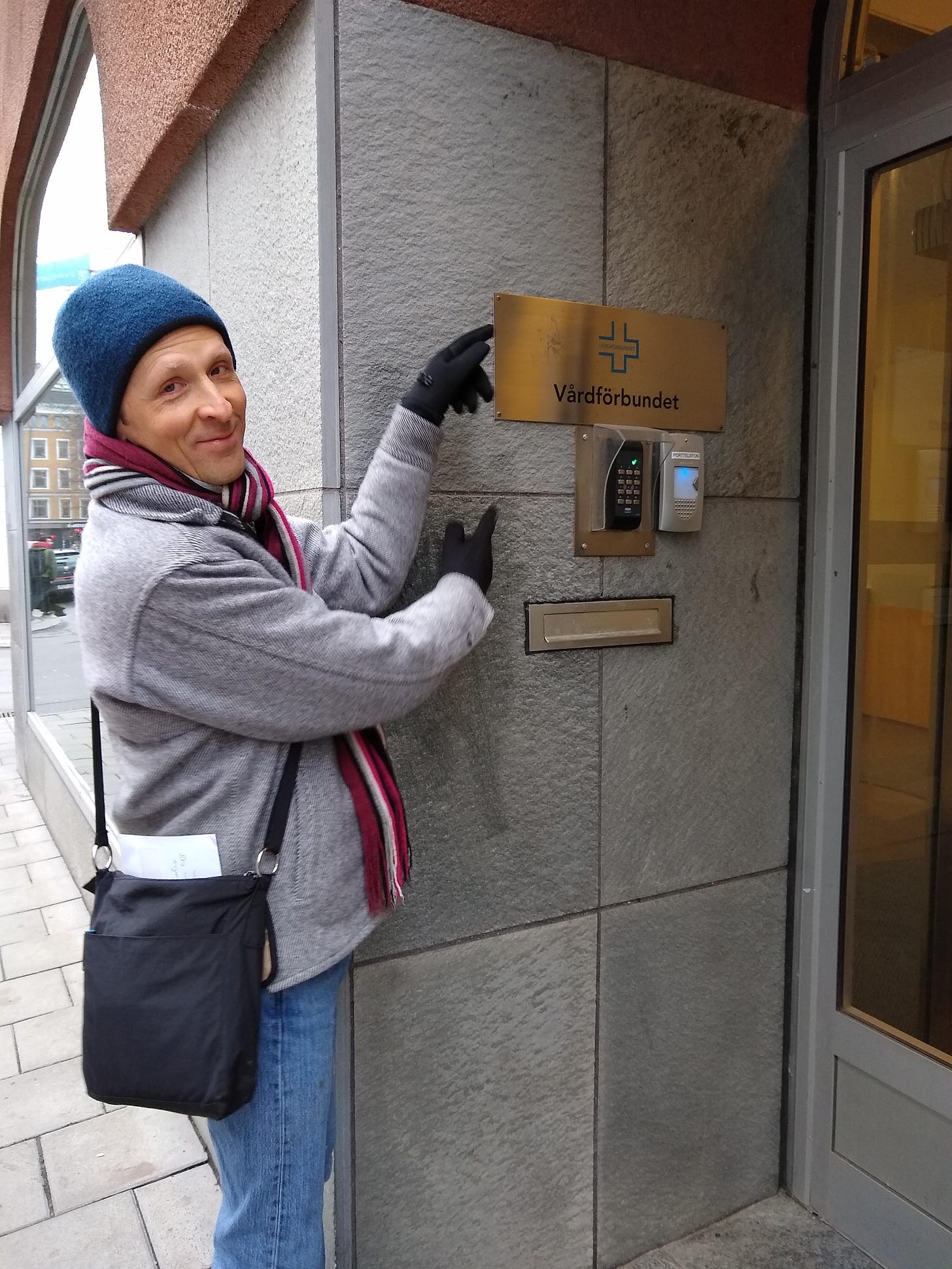
 

Stockholm Fall 2019, outside Vårdförbundet headquarters

In my Substack Honest Fight I wrote about my 2019 trip to Sweden and Norway with Ellen David Friedman, a veteran union organizer and international labor leader. While we were there, we spent most of our time with teachers, but had a visit with dockworkers, and also met some nurses and doctors. I had a fascinating one-on-one meeting with Anne Lindgren Berndt, President of Vårdförbundet. Also known as the Swedish Association of Health Professionals, Vårdförbundet is the trade union and professional organization of four registered professions; nurses, midwives, biomedical scientists and radiographers. It represents more than 80 % of the workforce.

During our conversation, Anne shared a story which stuns me to this day. A young couple made a trip to the countryside outside of Stockholm for a picnic with their two young children. After a bee stung their not-yet-one-year-old daughter, her lips began to swell and her breathing turned raspy. They called emergency services and within ten minutes a helicopter with an emergency nurse and physician landed in a nearby clearing. They administered a lifesaving epinephrine injection, and within minutes the girl was breathing more easily. Then they bundled up the girl and flew off to the nearest hospital right? Nope. The pilot, nurse, and doctor hung out for more than thirty minutes, monitoring the little girl, getting a health history, providing a pair of epi-pens, providing education about how and when to use the pens, and ensuring that there would be a followup the next day with her pediatrician. Then they returned to their helicopter and flew away, leaving the young family to enjoy the rest of their picnic. True story.

Sweden is not nirvana, or Ellen and I wouldn’t have been there meeting with union members across several sectors. The neocons strategically, methodically, almost invisibly, have hollowed out the strength and influence of Swedish labor over a period of decades. And still, the story above demonstrates what is possible when a country dedicates more than a fraction of its resources to rational healthcare instead of endless wars.

PAST

Dr Lawrence Afrin is considered by many to be the expert on mast cell activation (MCAS) in the United States, and Dr Gerhard Molderings his equivalent in the United Kingdom. An aside—would you agree that someone with the last name Molderings sounds like he should be in a Harry Potter movie? Anyway, in 2016, Afrin, Molderings et. al. wrote a review of how to treat MCAS. It was titled Pharmacological treatment options for mast cell activation disease. If I could wave a magic wand and bring the medical establishment up-to-date on the post-Covidian world, I would make these twenty three pages of clinical wisdom required reading. But seeing as how this isn’t a Harry Potter movie, and I misplaced my magic wand, I’m going to write you dear readers and try to arm you with some potentially lifesaving information.

The meat of the article lays out a step-wise approach to treating MCAS. Some of these therapies should be familiar by now to most patients with post-acute sequelae of Covid (PASC) and injury from the Covid shots: H1 and H2 anti-histamines, Cromolyn, Ketotifen, etc. What evaded my attention for months, but which rose in prominence with each successive instance of anaphylaxis, was Table 12.


Table 12 from Pharmacological treatment options for mast cell activation disease

As I pay tribute to Dr Afrin, I also feel compelled to share some small insight into the complexity of this man’s mind and expertise. When a hero fails to live up to the expectations in one’s mind, does it make a sound? For me, it sounds kind of like a “whumpf.” It turns out that “whumpf” has been adopted as technical avalanche term, which describes the sound made when a heavier lay of snow collapses under the weight of a person or machine walking over a lighter/weaker layer of snow, sometimes preceding an avalanche. Sounds auspicious to me! So, Dr Afrin has been a hero of mine, shedding light on the topic of MCAS through his prolific writing on the topic. My “whumpf” moment came when a patient told a provider in our practice that a nurse in Dr Afrin’s practice said he believes in the safety and efficacy of the Covid shots, and thinks that Paxlovid is an effective first-line treatment for acute Covid. In case that was hearsay, I checked with another colleague who has been in regular communication with Dr Afrin, and she/he said, “Yup, that’s about right.” If the poignancy of this is lost on you, give it time.

PRESENT

The origin of mast cells helps explain why hyperactivation in MCAS is so problematic. When life on this planet leapt from single to two-celled organisms, mast cells were the second cell to arrive. They were the original bouncers of life, and tasked with protecting the organism. They developed a wide repertoire of tools, which included mediators. We can count the birth, life and death of a platelet or white blood cell in about a week. Red blood cells last up to two months. Mast cells last—get this—two to four years! How would you like to really, really, really piss off your mother-in-law, and then find out she was moving in with you for the next four years? No bueno.

When a person is exposed to the spike protein, whether from infection, shedding, or vaccination, the spike protein hyperactivates the mast cells. In a person who didn’t have mast cell disease before the pandemic, this may not have significant consequences. But in a person who had some degree of mast cell disease before Covid, this can be disastrous. These are people who may have had environmental allergies, food sensitivities, rashes, unexplained headaches, irritable bowel disease, asthma, etc.

So what are mediators? They are substances released by mast cells with characteristics that promote, manage and resolve our immune response, particularly in allergic and inflammatory processes that lead to healing. When they spin out of control, or stay around too long, they cause lots of trouble. E.g. cytokines. Remember all the people who died during the pandemic in the winter of 2021 from cytokine storm? Those cytokines were coming from mast cells. What other mediators are there? Histamines, heparin, proteases, leukotrienes and prostaglandins.

 

It won’t drop, trust me!

Back to Table 12. I’ll skip down to local anesthetics, because I think this point touches the largest number of people. Procaine is what most of us know as Novacaine. It’s the most commonly used local anesthetic in dentistry, because of it’s rapid onset and short duration. In post-Covidian times, in mast cell activated patients, there is a big downside to Novacaine—it can provoke release of mediators from mast cells. If you’re a person without any history of MCAS, perhaps this is no big deal. But what if you are limping along with PASC or vaccine injury?

One of my patients is in his mid-30s, and vaccine injured. He needed to have some involved dental work, and rather than it taking a day or two to recover, it took eight to nine days. A few days after this, he went out to eat with his family and at ate some elk meat. Before the meal was over, he was starting to have trouble breathing, and his throat felt like it was closing. He had an old epi-pen in the glove compartment of his vehicle, and used it. His family drove him to the nearest ED, and he lost consciousness on the way due to diminished breathing and lack of oxygenated blood flow to his brain. He literally came within minutes of losing his life.

Why did this happen? If we go back to the period after he received the Covid shots, one conclusion of the exhaustive testing by system doctors who couldn’t find any abnormal tests, or almost none, was that he had Alpha-gal Syndrome. Ever heard of it? Me neither. It’s a potentially life threatening condition which can occur after a tick bite, and results in a delayed allergic reaction to mammalian meat. Mammals have tits and nurse their young, so we’re talking about the four-leggeds, such as pigs, cows, sheep, but also deer, rabbits, and elk. The likelihood of developing Alpha-gal are pretty slim, or at least they used to be, with estimates as low as 1-2% of the pediatric and adult population. Having never encountered it during thirty years of practice, I’ve now encountered it twice in the last year in our practice.

The patient had experienced some difficulty breathing and throat scratchiness after diagnosis with Alpha-gal, and before eating elk meat, enough to be cautious and have an Epi-pen, but what sent him over the edge? A dental procedure with Procaine, or Novacaine led to a close call.

 

Too close for comfort? (My proudest parallel parking moment in Philadelphia)

Table 12 doesn’t just point out the dangers, it also points towards the solutions, or alternatives. In the case of Novacaine, there is the alternative of Bupivacaine. This is a local anesthetic which takes longer to numb tissue, up to fifteen minutes, and lasts longer, up to eight hours. That makes it a lot less convenient for dentists and patients, but most dentists will have it on hand. It just requires some advanced planning and communication.

It’s worth noting that Lidocaine is on the naughty list too. If you cut yourself badly and go to the local Urgent Care for some stitches, the chances are that the suturing physician will use Lidocaine to numb up the site first. It may be worth discussing your options.

If we go back up the list of Table 12, we’ll find SSRIs. This is the one instance where there literally is no alternative. Examples are citalopram, escitalopram, fluoxetine, fluvoxamine, and sertraline. And how many people take SSRIs? In the United States, about 13% of the adults or 43 million people. Worldwide, estimates suggests 4-5% of the global population or 300-400 million people. Hey, I’m sorry to put a damper on pharma profits, but I think that we’ve got a problem here. MCAS + SSRIs= mediator release → increased potential for anaphylaxis.

Moving back down the list, we find peripheral acting analgesics such as Aspirin and Ibuprofen. This is where I would caution the reader, and say, “Hey, let’s not go overboard here.” Any decision about whether to use or not use a therapeutic, at what dose, and for how long, is based upon a risk vs benefit decision. We can do this! Heck, most adults drive a car, and that is one non-stop rolling series of risk-benefit decisions. Ibuprofen? Well, if you’re well hydrated, and take it with food, and haven’t just eaten a high-histamine meal with avocado, leftovers, and alcohol (inhibits diamine oxidase or DAO, which breaks down histamine) then you could be fine. But what if you take an SSRI, and you just had dental work with Novacaine, and then you had a high histamine meal. Perhaps Tylenol might be a better choice, or rather least worst choice.

Next up on the list are some opiate analgesics, some of my favorites: morphine and codeine. Meperidine or Demerol is there too, but very rarely used these days.

Trying to quit smoking or fending off the blues with Wellbutrin / Bupropion? I’m sorry to say but that’s on the naughty list too.

How about antibiotics? Not to feel left out, we have some of those too, including Cefuroxime (I think there was a typo leaving the e off the end on the list) and Vancomycin. You’ll generally encounter these in the hospital setting via IV administration. Which is also where you’ll find iodinated contrast medium (think CT contrast) and gadolinium chelate (think MRI contrast). It is into this spiderweb of therapeutics that one of my patients recently landed, with serious adverse consequences.

This patient is in his eighties, and being treated with adjunctive cancer care for renal cell carcinoma which has metastasized to his lungs and bones. One of his arms swelled up to three times the size, and his wife took him to the ED. There was a turf war there, in which the Dermatologist opined that his arm was the biggest hive she had ever seen, and recommended antihistamine treatment (think MCAS). Oncology opined that he had cellulitis, brushed aside Dermatology’s recommendations, and ordered IV antibiotics with a cousin of Cefuroxime; these are antibiotics called Cephalosporins, commonly used to treat skin infections. They also ordered an MRI with contrast. Hours later, the patient was streaking down the hallway, trying to escape, exhibiting what would be called delirium, and powerfully pushing aside his wife in his rush. After being home for several days, she reports that his mind still isn’t the same, his sleep is disrupted, and “it has been rough.” So who was right, Dermatology or Oncology? I would vote Dermatology, and say that Oncology picked two therapeutics interventions, an IV Cephalosporin and an MRI with gadolinium chelate which both ramped up mediator release from his already hyperactive mast cells and created a pro-inflammatory and disruptive environment in his brain which contributed to delirium in this vulnerable, elderly patient.

How could mast cell mediators contribute to delirium? Cytokines such as TNF-alpha and IL-6 can cross the blood brain barrier and promote inflammation. Histamine increases blood brain barrier permeability, allowing inflammatory molecules and other immune cells to enter the brain, ramping up neuroinflammation and disregulating neuronal connections. Histamine can also directly bind to histamine receptors in the brain and impact neurotransmitter release and signaling, particularly with acetylcholine and dopamine, both strongly associated with delirium. Mediators can cause dilation and increased permeability of blood vessels in the brain which affect cerebral blood flow negatively. Mediators like proteases and reactive oxygen species can induce oxidative stress which can damage neurons and lead to cognitive dysfunction and delirium.

The therapeutics on the bottom of Table 12 are ACE inhibitors, such as Lisinopril, and beta blockers, such as Metoprolol. ACE inhibitors relax veins and arteries to lower blood pressure, and are often first-line therapies for hypertension due to concurrent protective impact upon kidney function. Beta blockers block the effect of the hormone and neurotransmitter epinephrine, causing the heart to beat less forcefully and more slowly. We can’t and shouldn’t throw the baby out with the bath water, understanding that patients are often on these medications for good reason, but also expanding our focus, and realizing that use of these medications in a post-Covidian era can prime an individual for a spillover of mast cell mediators, which could in some cases lease to anaphylaxis.

An example in this case is my patient who never had any allergies to seafood, but is on an ACE inhibitor for blood pressure, and takes LDN, Ketotifen, takes Antronex with meals, and as needed H1/H2 antihistamines for her MCAS. She went out to dinner with her husband and was in a restaurant which was sparsely populated, so less risk of shedding. She had a glass of wine (inhibits DAO production to break down histamine) and ordered seafood Alfredo, which had shrimp, scallops and clams. When she began eating her entree, it started to feel like her lips were swelling and her throat was tightening, but it wasn’t obvious to the dining companion observing her. She stopped eating the dish, and this sensation of throat tightness continued for more than twelve hours afterwards. When we discussed this during a followup visit, I suggested that we order her an Epi-pen, and reviewed Table 12 with, explaining that I think she was approaching an anaphylactic reaction.

 

The average response time to 911 calls in the US is 7-12 minutes in urban and suburban locations, but much longer in rural areas, where they commonly exceed 15 minutes.

A very important teaching around Epi-pens is that they come in pairs for a reason. Remember that the Swedish helicopter nurse and physician left a pair of epi-pens? Epinephrine is a short-acting medication, and its effects can wear off before a person reaches emergency medical providers. If the patient separated the pens, and put one in a car and one in their home for instance, they may have just one Epi-pen on hand in an emergency. That is what happened with my 30-something patient with Alpha-gal Syndrome, and without a second pen to administer, he nearly died before his family got him to the ED.

My final words of advice are to print out Table 12 and carry it with you. Discuss it with your PCP, dentist, surgeon and anesthesiologist. In a post-Covidian era, our bodies are different, and we need to be smart about how we may respond to drugs and agents which never troubled us before. Be prepared.

P.S. Thank you to Deb for her original artwork, the feature image of this Substack, a tribute to Pierre and I, and our work at the Leading Edge Clinic in treating PASC and injury from the Covid shots.

P.S.S. If you’ve ever heard the Beatles song Revolution 9 (you need to listen to it with a set of ear buds or headphones), you might appreciate why I wanted to call this Substack Table 12. It’s not a zinger of a title, but it should be, because Table 12 is so darned important. I hope that after reading this Substack you’ll agree.

[ad_2]

Source link

Lick and chew, think and blink

Lick and chew, think and blink

[ad_1]

PAST

I had pecked girls on the cheek when I was still in elementary school, but the first time I really kissed a girl, I was in eighth grade. I was attending RHAM Junior High School in rural Amston, CT where we lived on an oil and stone road, between woods and a swamp, . It was Christmas time, and there was a community gathering up the street. The party was in a house built in 1790, and had a stable in back — along with some real live horses. I was trying to disappear into the couch as I nibbled cookies and listened to the adults talking and laughing.

Suddeny this girl was standing in front of me, with a halo of Christmas tree light behind her like my very own angel of mercy. “Can I sit here?” Jesus, Joseph and Mary! “Uh, yeah, sure.” Awkward, so awkward, but somehow we started talking. Before too long, she asked if I had been out to the the stable. Shit, I didn’t even know there was a stable. “Nope.” “Do you want to check it out?” “Yup.”

As I write this forty two years later, it’s the first time it occurs to me that this was a girl who knew what she wanted and had a plan. She had long, shiny chestnut hair, and gold rimmed aviator glasses that made her look kind of like a young Farah Fawcett to me. How could I have never not noticed her before? Granted we didn’t ride the same bus, and we weren’t in the same classes, but we sure had some quick chemistry.

We talked for a long time that evening. I have no recollection what we talked about, but I do remember the novelty of having an extended conversation about a wide range of topics with a girl my age. I can recall the explosions in my brain that came from the kiss which she initiated next to the horse stables, but more than that, I was thunderstruck by what it felt like to be attracted to another human being, and have those feeling reciprocated.

There was something magical about the holiday music drifting from the house, the cold air and smells of the tack and straw, and the quiet sounds of the horses moving and breathing. It turned out that she was a horse girl, so this was her comfort zone. She had been riding horses since she was little, and this helped explain her predilection for plaid shirts and blue jeans. I made a mental note that horsey girls had a lot to offer until proven otherwise.

School was out for Christmas break, and since she lived just up the street, I called the number she had scribbled on a scrap of paper the night before. She picked up on the second ring, and yes, I could come by to hang out. She lived in one of the many saltbox houses that can be found on back country roads in New England. Her parents were both at work, and she had her own bedroom. Geese, I couldn’t hear what she was saying for my heart pounding in my ears. More kissing ensued.

Sadly, it didn’t last beyond the first day back at school. I remember looking up from my open locker to see her walking down the hall with some girlfriends. Our eyes met, and then she looked away, and that was that. Her mom answered the phone the next few times I tried to call. No explanation, no note, no nothing. The rejection stung, but I didn’t languish. I figured that her clique had passed judgement and I didn’t meet the bar. It sure was nice while it lasted….

LESS DISTANT PAST

In 1989 I was studying international business in Copenhagen, Denmark. The net effect of my efforts was to persuade me that I had chosen the wrong path, but I stuck with it in order to finish my degree in business economics rather than add a fifth year of classes and pile of debt to my college experience. It was around this time that I became very interested in farming, and set a long-term goal to acquire some practical knowledge on the subject.


Yves Carlier working with the Haflingers

If the Fall of 1993, I headed to south central France for an apprenticeship at Le Couteil, the farmstead of La Famille Carlier. The 120 acre farm raised organic meat, which was butchered on site and taken to regional farmers markets in a refrigerated truck unlike anything I’ve seen in the states. The farm house dated back to the 1700s and had been the poker retreat of a French duke.

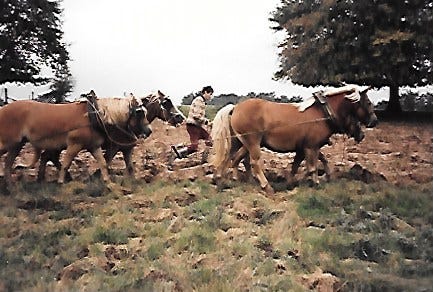
My first assignment upon arrival was cleaning the leather collars for the draft horses. These horses were in fact double ponies called Haflingers, which hailed from the Swiss mountains. They are beautiful and intelligent creatures who are sturdier than horses and love to work. Fieldwork at Le Couteil, whether it was spreading manure, plowing, or harvesting hay, was done with the team hitched up four abreast or two and two, depending upon the task. There was also an enormous Percheron on the farm which was used more for pleasure riding in a carriage.


The farmers market truck

Cleaning out the cow stalls, bringing hay to the cows in the pasture, and generally working about the farm left me in the leanest, meanest state of physical strength I have been before or since. The biggest meal of the day was lunch, and Brigitte would create the most magnificent dishes from the simple pallette of eggs, farm cheese, leeks, potatoes, butter, onions and the range of meat and poultry grown on the farm. She would also make mouthwatering tarts from the apples kept in cold storage. Almost everything, including the wheat for the flour used to bake our bread, was grown on the farm.

The only dietary objection I had during my tenure with the Carliers was beef tongue, because I simply couldn’t get past the texture. Ultimately, I enjoyed the blood sausage (saucisson noir), but I needed at least a week’s distance from the blood-covered kitchen table and the site of the slaughtered pig’s head bobbing up and down in a huge stock pot on the stove!


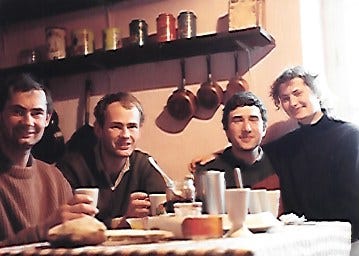
Yves, Frederic, The Italian, and Brigitte

This period of my life could and will serve as a rich repository of stories for Lightning Bug, as the learning was so deep and extensive. For now, I’ll say that I learned I was not meant to be a farmer, as the physicality of it left me with two shoulders burning and aching to such a degree that I couldn’t lift my arms to wash my face. Perhaps with better pacing I could make it work, but in the meantime, I pivoted to a career in healthcare and have been at it for more than thirty years. Even with the supports in place from the French government, and people willing to pay the equivalent of $10/lb for organic meat in 1994, the Carliers struggled. I could foresee the backbreaking work, debt and uncertainty that farming in the United States was likely to involve. There was a good nursing program at the Community College of Philadelphia which I could pay for as I worked my way through school. The pay wasn’t great, but the job security was appealing, and it would be a skillful way to serve humanity.

PRESENT

Long before we ever met, I watched Pierre’s testimony in front of the US Senate Subcommittee which eight million other people watched before You Tube took it down. My wife had called me into the living room with “Hey, you’ve got to see this!” Halfway through I was certain of several things: this guy had guts, he was smart, he was risking it all, and going to the mat for what he believed. Two previous conversations clicked into place like the tumblers on a combination lock to a safe holding the crown jewels. The first conversation had been with my cousin Danny, who follows the latest on solar flares and is a prepper. He had asked me if I ever heard of this drug called ivermectin and whether it could help treat COVID. I had arrogantly responded that I’d never heard of it, and because I worked in a unversity hospital with world renowned medical researchers, it must be a non-entity or we’d be using it. The second conversation was with my dentist, who had done black box research for the Department of Defense in a physiology lab at Temple University before his foray into dentistry. He asked me the same question as my cousin, except this time the source of the question got my attention. Then came Pierre’s fateful senate testimony.

The next day I was in the feed store at Agway with a $100 bill looking for horse paste. I found it and cleared an entire display of it off the shelf. The exchange between the clerk and I was hilarious, mostly non-verbal. She, in her worn flannel and Carharts, who could have easily bench-presseed three of me, her eyes saying “If you’re a horse owner, I’m Barbie.” Me, in my LL Bean fleece, Italian beanie, and Keen shoes, daring her with my eyes “That’s a Ben Franklin on the counter baby, and I mean business.”

My wife and I figured out that the 0.2mg/kg dose was easy-peasy, just dial in the syringe for our weight, give a little push, and a pea-sized dollop of titanium dioxide, propylene glycol, artificial green apple flavor, and ivermectin landed in the spoonful of applesauce. We toasted each other with a clink-clink of our spoons and down the hatch it went. Until the day we could get a human prescription, after paying $400 each for a consult with a telemedicine doc and $120 each for a prescription, it was weekly horse paste and applesauce for us. The worst thing that happened was eventually I developed some wicked heartburn.

I’d had two doses of our special applesauce before my first Pfizer. Yes, I know, I know, the unvaccinated in the crowd are shouting, “Why?!?” I didn’t know yet. I was terrified of dying. I was practically kissing COVID patients and spending two hours at a time sweating my tuckus off in a plastic gown, providing care in a 10ft by 10ft room.

There was one other colleague at work who was on the same page. We both started the horse paste at the same time. I rarely have contact with him now, as he has continued working at SUNY Upstate. It was helpful, though, to know and strategize with another nurse who had made the same calculations and decided that the risk-benefit ratio said to do it.

I used to be ashamed about taking the horse paste and wouldn’t have wanted to share this information. Today, knowing that both my wife and I are vaccine injured from bad batch shots: mine, Pfizers, and hers, Moderna, I am grateful that we did what we did. For my part, if I didn’t have two doses of IVM in my body before the first shot, I think I would be dead. What I understand today, which took a while to comprehend, is that it isn’t me or my wife who bear any shame. It is the physicians who went along with the system and endorsed untested and lethal shots for us who should be ashamed. We were just trying to survive.

Dr Paul Marik gave a brief interview after the recent news of the FDA settlement in the case he and two others brought against the agency for its “Ivermectin is for horses” campaign, and subsequent movement to block physicians from prescribing IVM to prevent and treat COVID. He said “This idea that ivermectin is a dangerous horse-deworming medicine is horse shit. I’m sorry to say that. It is nonsense. Millions of people on this planet have been treated with ivermectin. It is one of the safest medications…After penicillin, this is probably one of the most important medications ever developed by medical science.” Truth be told, Dr Marik, truth be told.

[ad_2]

Source link

Pushing buttons

Pushing buttons

[ad_1]

PAST

Those of you who have read my Substack since the beginning, may recall the story about me poking a stick in the yellow jackets nest. There were other more benign, but related events of me probing and testing the world and its inhabitants. In fact, there are many memorable non-events. Did escalators scare you as a child? Heck, did the bathtub drain scare you? I know it scared at least some of us, because Mr Rogers sang a song about it. “You Can Never Go Down the Drain.” Hah!

I wish he’d done a song about the sharp teeth of the escalators, but at least he did produce a sweet episode about up and down which included escalators. In my little kid brain, it seemed absolutely possible that my sneakers could get caught in moving stairs, pulled into them and mashed into bits! Every Christmas my wife and I watch Elf, with Will Ferrel, and I think the scene with him doing that fearful split on the ascending escalators is brilliant.

The escalators in our local Sears Roebuck were particularly captivating— and terrifying— to me as a child. One year around Christmas I saw the big red button at the base of the handle belt, with letters underneath that said STOP. Without much thought and zero premeditation I leaned over and pushed it. Then, those mashing metal teeth stopped. The silence was eerie. I felt this sensation of power over my destiny, that little old me could stop this enormous machine with the push of a button. I looked around and saw no one. Realizing that I maybe should not have done that, I hastily made my getaway. I ran down the now still stairway which released a hollow clunk with each step. I caught up with my mom and we left without further incident— until twelve years later….

SLIGHTLY MORE RECENT PAST

As a teenager, I lived with my Nana and Pop pop in the tiny village of Parkerford, PA, in a little house, with a corn field in our backyard.  My high school was named after the former Supreme Court Justice Owen J Roberts.  We had an active chapter of the Future Farmers of America (FFA), and in the Fall and Spring seasons, when the windows of our classrooms were open, the sweet smell of cow manure being spread on the fields filled the air.  There was also a farm store across the street from our school where many of us headed for snacks before catching the late bus home.  

Trips into the vast city of Philadelphia were therefore a very big deal.  My friend Larami, now an esteemed Interventional Neurologist in the University of Pennsylvania health care system, loved, loved, loved to initate those trips.  We would drive to Paoli and catch the R5 SEPTA Regional Rail line into Center City Philadelphia.  Before Christmas of 1986, Larami, his brother Monk , Chris and I made one such trip.  Larami’s inspirations and infatuations of the moment circumscribed our plans.  So, first we went for the buffet at Salad Alley in the Bourse Building for lunch. Then we headed to The Galleries for some shopping. This was an urban mall with at leat four levels opening onto a vast interior, and it…was…packed.  We entered on the street level and approached the escalator.  Without premeditation, and with an impulsivity that I cannot explain or defend, my eyes landed on the big red STOP button below the escalator railing, right where it had been all those years ago. I leaned over, and pushed it.

Unlike the Sears escalator of my boyhood however, this one was packed with people, who all gave a little forward and backward bobble as the escalator suddenly stopped.I was just ahead of my friends, and when they saw what I had done, they looked at me in surprise, perhaps amusement, and then concern. Within moments I was surrounded by at least six very large security officers. The Gallery didn’t mess around with security. Gang activity and drive by shootings were on the rise, and off-duty police officers could pick up some nice extra pay during Christmas. These security officers were at least twice as tall and three times as wide as me.

Their radios crackled. Ccckkkk “Level one escalator has stopped. Nobody appears to be hurt.” Ccccckkkkkk “We have a white male teen in custody.” Cccckkkkk. Before they even bothered asking me what I had done, they turned to my friends and asked “Is he with you?” They all shook their heads no and slowly backed away. F#@*?rs!! Obviously we were together. Then the guards all turned back to me. I remember looking up and seeing about five hundred people lining the railings of the different levels to see what was gong to happen to this crazy little white boy.

Time passed. I was contemplating what I would tell my Pop pop when I called from the city jail. “You what!?!” More radio crackling. Cccckkkkk “Yes sir. Yes sir. No sir. I don’t think so sir. Roger that sir.” Cccccckkkkk. One of the very big men looked at me and said “We’re going to have to ask you and your friends to leave and not return to the premises.” Really? That’s it? No jail? No report? They escorted me and my disavowing friends to the nearest exit and stood inside the doors to make sure we went on our way.

Well, dear reader, I’d be lying if I said that was the last button I ever pushed. Which brings me to the present moment.

PRESENT

Once a month I meet with wise man who I’ll call my business guru and emotional mentor. His name is Geep, and he likes to tell me instructive stories which I don’t always enjoy. One thing which he has told me more times than I can remember is, “Scott, try not to piss people off by accident.” Well, last week on the FLCCC Webinar, I think I pissed off a lot of women who are keen on using collagen to soften their wrinkles, harden their nails, and keep their hair from falling out. Frankly, I’m lucky to be alive!

It was great fun being on the weekly webinar with Dr Marik. During the webinar, when I shared my observations that collagen appeared to be provoking platelet aggregation and activaton in my patients, it didn’t seem like a big deal. Perhaps what I forgot to say was what all of the Tarot readers my wife watches on You Tube say: “The following is for entertainment purposes only.” When Pierre texts me on Saturday and writes “I known it’s your one day off, but….”, what follows is never good. It seems that I stirred up a shit storm with those observations and the FLCCC was trying to manage it.

To differentiate the players, the FLCCC is a rigorously science-based organization, and Dr Marik is the guardian of that galaxy. If there aren’t studies to back an assertion, or a heck of a lot of clinical observeration, it isn’t going to make it onto the FLCCC protocols. On the other hand, the Leading Edge Clinic is our private telemedicine practice, and as diligent clinicians, if we see signals that a therapy is harming our patients, we won’t wait until a study comes out to warn them. For example, Dr Peter McCullough asserted months ago that shedding wasn’t real, because he couldn’t find any studies which supported the ideas. The rest is history, as we began acting based upon our clinical observations re: shedding almost a year ago, instead of waiting for a study which may never happen to confirm it. Now I can’t count how many interviews Pierre has given on the topic!

Back to collagen. I understand that it could be upsetting to hear me assert that the supplement your functional medicine physician / chiropractor / naturopath / yoga instructor (not kidding here) recommended to you may be exacerbating coaguloptahy in your body. All you were trying to do was not look so damn old. As John Stewart recently said during his second episode of The Daily Show in nine years: “I have sinned against you. I’m sorry. It was never my intention to say out loud what I saw with my eyes and then brain. I can do better.” Instead of Stewart’s ironic statement that “democracy dies in discussion”, I could say “science dies in discussion.”

Forgive me for my habit of risk benefit analysis. Not only are there no studies supporting my position on collagen and clotting, there is even one research paper from 2004 which may contradict it. Of course that paper was written before space aliens zapped us with a bioweapon made in the distant galaxy of Wuhan and deranged our bodies to such a degree that most of our pre-exisitng lab studies, radiologic tools, and diagnostic approaches have been nearly useless. It’s also worth mentioning that the collagen market is estimated at 5.1 billion USD in 2023 and is projected to reach 7.4 Billion USD by 2030, at a compound annual growth rate (CAGR) of 5.3% from 2023 to 2030. This is a minor matter though, because I’m sure that the good people of supplement sales only have our best interests at heart. It also doesn’t really matter that there really isn’t substantial evidence to support the benefit of collagen in attaining beautiful skin, full bodied hair, strong nails. We also need not be troubled by the lack of any standardization or FDA regulation of these collagen products which are ingested in good faith by so many.

Did you know that collagen is a waste product? It’s made from the leftover connective tissue of fish, pigs and cows (unless you’re getting the vegan version). I love waste products as much as the next guy. We have had a worm composter in our basement for years. I love making them smile with a bruised avocado half. Their excrement feeds the beautiful lives of our houseplants and garden. Our cat litter is made from the refuse of lumber mills, pine wood sawdust. It smells great and we can compost it. Even yummy apple cider is a refuse product made from the seconds. The thing is that besides apple cider, I can’t think of another refuse product which I would ingest, let alone pay big money to consume.

According to historian Roxeanne Dunbar Ortiz, at its peak, the Native American population of North American reached 450 million people. They lived on this land for millenia. Uniformly, they used every part of the animals and fish which they hunted and harvested. Tendons and sinews were used to make bowstrings and thread. Cartilage and hooves could be ground into glue. But, they didn’t routinely ingest connective tissue, the basis of animal collagen. Why not? Did they intuitively understand something which escapes us in the present moment?

What follows is a case series of patients in whom I think that collagen played a role in their pathology and in most cases, may have set them up for their original injury, and often exacerbated coagulopathy. You’ll see references to Vitamin K2 as well. I won’t entertain questions about that until I’ve been able to explain my observations and strategy in next weeks’ Substack. I’ve spent a ridiculous amount of time on this project in the last week. Because the number of cases is fifteen and growing, I’m going to divide this up between today and next week. As a disclaimer, the following is for entertainment purposes only, and it is not to be misconstrued as frontline clinical insight or evidence from an expert in the field. ; )

Patient 0

18yo female x2 mRNA Pfizer vaccine injury within two weeks of second shot.  Family unvaccinated. First visit 2/23.  Previously healthy, s/p tonsillectomy, competitive athlete.  Intake reports fatigue, shortness of breath, chest pain, joint pain, dizziness when standing, fast or pounding heart rate (HR), worsened symptoms after activity. Blurred vision when exercising, dizzy, light headed, nauseous, swollen ankles, chest and back pain, heavy weight on chest, sharp pains on left side of chest, trouble breathing, high heart rate and high diastolic blood pressure when exercising. 2/23 live blood analysis showed RBC aggregates, Rouleaux formations, poikilocytes, echinocytes, schisocytes, acanthocytes, and platelet aggregation.  Initiated Aspirin, Eliquis, IVM and NAC Augmentata 3/23.  By 5/23 had seen tremendous improvement in leg movement and strength,adjusting fine motor movements, working with an unvaccinated personal trainer.  4 of 4 microclotting, severe and widespread in study 10/23.  It was surprising that her level was still this high despite five months of anticoagulation therapy.  11/23 visit revealed that several months ago she had tried collagen for 3-4 days.  During that time, leg pain and weakness which was associated with her microclotting became much worse.   Spike ab not available due to location and lack of access to a Lab Corp facility.

Batch ADRs Deaths Disabilities Life Threatening Illnesses

FN7924 No data

FM2952 2

Patient 1

20yo female, x2 mRNA Pfizer vaccine injury.  First seen 2/24.  Previously healthy with no surgical history.  Spouse is not vaccinated, and shedding exposure is primarily from her boosted mother.  Intake reports fatigue, shortness of breath, fast or pounding heart rate, possible enlarged atrium, low blood pressure.  Interview reveals strong signal of MCAS with childhood migraines and many food sensitivities. Also had pediatric GI issues which continue into the present moment.  Developed increased anxiety post-vaccine and started Lamotrigine, currently weaning.  Fainted following a competitive sports event in July 2023.   Started collagen on and off for hair/skin/bones in August 2023.   Started iron supplementation due to fatigue about December  2023.   DC’d oral birth control December 2023.  Had a second fainting episode at work in January of 2024.  Developed chest pain, dyspnea and fatigue.  ED visit showed abnormal ECG, and follow up cardiac echocardiogram was abnormal with possible atrial enlargement, further evaluation pending.  Labs for spike ab, D-dimer, neurotransmitters (urine) pending.

Patient 2

55yo female, post-acute sequelae of COVID (PASC), unvaccinated.  Spouse is vaccinated. First seen 1/24.  Hx TBI, cervical cancer, asthma, hypothyroidism S/p incarcerated inguinal hernia, hysterectomy, oophorectomy, cholecystectomy, appendectomy, tonsillectomy, adenoidectomy, right knee replacement x3 in 18 months. Intake reports fatigue, brain fog, memory problems, shortness of breath, chest pain, joint pain, dizziness when standing, symptoms worsening after activity, distant Hx of PE. Pain in the spleen, increased CRP values, inflammation, severe constipation.  COVID in late 2019, early 2020, and early November 2023.  Strong signal of MCAS,with very narrow range of foods she can eat.  Taking collagen and Vitamin K2.  Guided to DC both.

Spike ab 2345 U/mL

>>D-dimer 0.87 mg/L FEU

PAI-1 4G/4G polymorphism (denotes high risk of developing venous thromboembolism)

ADAMTS13 >100%

ADAMTS13 Ab 3 U/mL

Factor VIII Activity 70%

Serotonin, serum 76 ng/mL

Patient 3

68 year old male with PASC, unvaccinated.  Initial symptoms in 2/23 were sinus congestion, impact on right ear hearing, new diagnosis of asthma, and wet end-expiratory breath sounds.  Raynaud’s began before COVID and receiving monoclonal antibodies in the Winter of 2020.  Post-COVID, developed an arrtyhmia and worsening GERD.  Has had allergies his whole life.  Most recently, feeling well overall, but has intermittent muscular trouble with focal pain in one leg and bilateral leg fatigue after exertion.

Spike ab level: 3564 U/mL in 2/23, down to 157 U/mL 5/23, up to 2172 U/mL 12/20/23 following travel and shedding exposure. Microclotting score 3 of 4 moderate in 8/23, drop to only 2.75 of 4 in 1/24.  Question arose re: why there was such a small drop in microclotting after five months with use of Aspirin, IVM, Serrapeptase, Nattokinase, Flavay, Baobab, NAC Augmentata.  Scrutiny of medication reconciliationg (med rec) revealed that he was taking collagen protein peptides as a powder along with Vitamin K2 in an MVI.  The collagen had been recommended by a functional medicine physician for muscle soreness several years ago.  Collagen and Vitamin K2 DC’d.

Patient 4

54 y.o. female x2 mRNA Pfizer with vaccine injury.  First seen for acute COVID in 9/22.  Seen in follow up 10/22 for persistent enlarged, painful lymph nodes, then 11/22 for vaccine injury.  Had been on a proton pump inhibitor (PPI) when she was originally infected with COVID and vaccinated, which likely contributed to her injury.  She stopped this in early 11/22.  Lymph nodes in bilateral axillae continued to be painful, and she noted outbreak of Herpes Simplex Virus (HSV) lesions on her lips.  Reporting persistent heel pain, GERD.  In 12/22, had extended menses of twenty days, which stopped 4-5 days after initiation of high dose IVM.  We then dropped the dose due to emerging photosensitivity.  Nattokinase was started.  Lost weight, followed a lower histamine diet, had COVID again around Memorial Day 2023.  Menses began to be prolonged again, following acute COVID and extensive travel for work.  Was experiencing increased fatigue.  Started sipping Baobab in 7/23 as one of our twenty pilot study participants.  Spike ab level has consistently been >25,000 U/mL since first testing in 7/23, and with repeat testing in  9/23 and 1/24.  Microclotting score was 3 out of 4, moderate 8/23.

Batch ADRs Deaths Disabilities Life Threatening Illnesses

EW0177 1458 6 12 18

Fasting glucose decreased from 99 to 96 over the first month of sipping Baobab.  Menses stabilized.  Began anticoagulation with Aspirin, Eliquis and Plavix in 9/23, along with IVM, NAC Augmentata, Nattokinase.  In 10/23 saw decreased dyspnea with exertion, but injured left shoulder while lifting a heavy object. At this time she stopped taking collagen, and began taking colostrum to help heal her gut. I was not yet suspecting the role of collagen in provoking coagulopathy.  Use of the Arc Microtech helped minimize bruising and bleeding concerns on anticoagulation.  Despite stress of family health issues, job changes, and her own health challenges, she was doing well during this period.  Flavay was started in 11/23, and we fine-tuned treatment for MCAS by adding Antronex, a natural antihistamine from Standard Process.  She had an acute viral illness around Thanksgiving following exposure to many family members who were acutely ill.  We initiated peptide BPC-157 for gut healing and ProTandim for emerging cognitive concerns.  Chronic connective tissue concerns began to yield, with less shoulder and heel pain, improved appetite, resolution of skin issues.  She had backed off the Baobab use for two months.  Menses became elongated again, and she was having sleep disturbances.

Patient 5

49 yo female, PASC, unvaccinated.  Husband not vaccinated.  Hx migraines, MTHFR gene mutation, S/p ACL reconstruction.  Previous COVID-19 infection by testing or presumptive by symptoms, January 2022 and December 2022.  Onset ~ four weeks after initial COVID infection.  Intake reports brain fog, memory problems, anxiety and depression. Mother, sister’s husband and all of their close friends have been vaccinated. Was around them after sick first time. Unvaccinated daughter and son attend schools around many vaccinated students.  Husband works around many vaccinated individuals.  Shedding is an active dynamic and ongoing consideration in her care.  2/23 labs showed spike ab 844 U/mL and slight elevation of D-Dimer at 0.51 mg/L FEU, a late sign of microclotting.  3/23 labs reflected reactivation of EBV with early antigen level of 10.4 U/mL.  8/23 microclotting study showed stage/grade 4 of 4, widespread and significant.  Patient and her husband asserted that there was a mistake in the labs and this was another patient’s blood. When she went to the lab for another draw, the phlebotomist couldn’t draw her blood, because it kept clotting.  They then agreed this was in fact her blood, and wished to initiate treatment.  Started triple anticoagulation with Aspirin, Eliquis and Plavix as well as IVM, LDN, NAC Augmentata, Nattokinase.  Repeat microclotting study 11/23 showed reduction to 2.5 of 4, mild.  Patient felt 95% recovered.  In 12/23 and 1/24 visits, patient was exhibiting some relapse of symptoms secondary to shedding, but still doing well overall. In 1/24 visit she remarked, “Two weeks ago I was feeling really good.  I haven’t felt that good since 2022.”  Then her menses came, and she experienced a return of severe migraine.  At the end of the visit, in response to questioning from this provider, she reported that she had started taking collagen a few weeks ago.  Collagen DC’d after this visit. End of 2/24 patient reports that she is feeling much better, and was able to go for a one mile walk.

Patient 6

39 yo female, x2 mRNA Pfizer vaccine injury.   Increased fatigue over 2021 following vaccination.  Previous COVID-19 infection by testing or presumptive by symptoms, December 2021.    Husband vaccinated, works in health care.  Hx chronic fatigue syndrome, headaches, migraines. S/p no surgeries declared.  Intake reports fatigue, brain fog, memory problems, dizziness when standing, chest pain, tachycardia, headaches, depression or anxiety, worsened symptoms after activity, new onset daily headaches/ migraines, nausea.  One night she didn’t take her Aspirin, and the next day she had a severe headache.  “This is like dementia. I would open the fridge ten times and not knowing what I was looking for.”  During discussion late 2023, patient reported that she would use collagen supplementation in a liquid form regularly in the years before she became sick with COVID.   2/23, spike ab was 9814 U/mL.  8/23 study showed 4 of 4 microclotting, severe and widespread.  

Batch ADRs Deaths Disabilities Life Threatening Illnesses
EL0140    1243           52                    20                  24
EJ686             8

Patient 7

61yo female, PASC, unvaccinated.   First seen 4/22.  Hx of hypertension (HTN), s/p tubal ligation and foot surgery.  Three previous COVID-19 infections by testing or presumptive by symptoms, 11/2020 around Thanksgiving, and again 1/21, 7/22.  Onset 3/21, with lost of taste and smell, hypertension, fatigue, brain fog and memory problems, with worse symptoms after exertion. Stress from a busy work week also exacerbates symptoms.  Eating a low histmaine diet.  Completed BioAnalytics cytokine panel with Dr Patterson, started on Maraviroc for one month and most of symptoms resolved, although CCL4 remained elevated.  Excercise with HR > 100 provokes post-exertional malaise, and allergy symptoms with increased phlegm production and watering eyes for several days afterwards, at worst with vertigo, nausea and vomiting.  Low dose Dexamethasone was helfpul, as well as short-term, low dose Fluvoxamine.  HR improved and tapered off a beta blocker.  High dose IVM didn’t resolve loss of taste and smell; we then tried Vascepa, again without benefit.  Spike ab was 2497 U/mL.  During 2/23 visit, secondary to shedding from spouse traveling to a trade show, going to the gym, and being around vax/boosted people, saw increase in sympotm burden.  Experiencing eye twitching, vertigo, heat on back of her neck, returning fatigue, and increasing BP.  Initiated Arc Microtech after 7/23 visit.  At 11/23 visit, vertigo resolved, drop of spike ab to 940 U/mL continuing with low intensity exercise, modulating MCAS with antihistamines, and eating lower histamine diet.  Aspirin and Flavay initiated for presumed microclotting.  In successive visit Antronex and Ketotifen for MCAS initiated, and Oxytocin for taste/smell.  Completed microclotting study 1/24, which showed 2.5 of 4, mild.  During that visit, in response to my questions, she reported that she had been taking collagen 1 Tablespoon daily for years.  Collagen DC’d.  Within about two weeks of stopping the collagen, and initiating low-dose Nicotine patch, her taste and smell, which had remained elusively absent for more than two years, began to return, albeit inconsistently.  

P.S.. Thank you to Dr Ronald Epner for your generous financial support as the first reader to become a Founder. And thank you to each of the individuals who has chosen to support this work by becoming paid subscribers.

P.S.S. If you know someone in Wyoming or West Virginia who would enjoy reading Lightning Bug, please share. Those are the only two states from which I don’t have subscribers. I’m offering a free lifetime subscription to the first person from each of those states to become a reader.

P.S.S.S. I tried to send out a brief survey re: collagen and it didn’t work out of the box, so I deleted it. I’ll try again after learning more about this tool.

[ad_2]

Source link

One thing from another – by Scott Marsland, FNP-C

One thing from another – by Scott Marsland, FNP-C

[ad_1]

History

I had at least four fathers. My biological father, my stepfather, my paternal grandfather, and the father of my best friend in high school. Only the last of these is still alive. One thing which each of them had in common was a facility with explanations about the world around us and how things work. Instead of facility, I thought to use the word alacrity, but my Pop pop could be grumpy when I asked him the meaning or spelling of a word. “There’s a very big dictionary on the book shelf at the end of the hall Scotty.” Yes, I knew that. It was the one that each of my siblings, cousins and myself would take turns sitting on at the dining room table during holidays growing up. “But you’re right here Pop pop, and you explain it so well.” That would usually get a look up from his Travis McGee novel and over the rims of his glasses, then an answer. Yes!

Because my dad had the first shift in this province of fathers, his patient explanations overshadow all others. Why is the sky blue? What makes wind? Are cats smarter than dogs? Why do dogs eat cat poop? (seriously, that made me doubt that dogs are smarter than cats) Do girls ever fart? Do all fish have teeth? (the movie Piranha had come out) How does Santa get down the Chimney? If God created the world, who created God? How does a lightbulb work? Why do you use a radar detector? That’s just for starters. Clearly he had his work cut out for him.

Learning from my dad, 1971

I marveled that he knew so much about so many things. As an adult, I remember my dad and think that it would be fair to say he was a Renaissance man. He played tennis and volleyball, and took up martial arts before his death. He built a passive solar house, restored a Model A Ford coupe with a rumble seat, had a beautiful garden, and was a decent cook by his third marriage. He was a successful salesman, an introvert who taught himself to be socially engaging, and was well-respected by his colleagues. He knew things, things that mattered. He had the answers to my questions, and on the rare occasion that he didn’t, he didn’t fake it.

Recent Past

One of my favorite novelists is Barbara Kingsolver. The last book I read by her was Demon Copperhead which is a story of life and love in the southern Appalachian Mountains of Virginia. A line early in the novel has stuck with me as I have struggled to master this novel medical realm of Covid. “If you care, you’ll learn one thing from another. Anybody knows a sheepdog from a beagle, or a Whopper from a Big Mac.”

In the emergency setting, knowing one thing from another can make a big difference in the how the day goes for the patient in your care. Was that Morphine (MS04) or Mag Sulfate (MgS04) which caused you to stop breathing? Before I hang your blood, are you Bill Jones (DOB 6/24/59) or Bill Jones (DOB 6/23/59)? Did that telemetry monitor just show you brushing your teeth, or did you enter a potentially fatal dysrhythmia of ventricular fibrillation? You know, things that matter.

I have a decent understanding of how drugs work, at what doses, through what mechanisms of action, and with what side effects. It helped to spend nearly a decade on the Pharmacy and Therapeutics Committee at Cayuga Medical Center in Ithaca. But I still relied heavily upon the expertise of my pharmacy colleagues while working in the Emergency Department (ED). When I started work in the trauma center at Upstate, this reliance grew, both because there were expert clinical pharmacists stationed in the ED itself, and because they actively participated in bedside care. During care of a trauma patient, it was Rob or Greg who was right behind me at the bedside, mixing drugs, passing syringes, reminding the team when the next dose of Epinephrine was due. They mixed the drips which made intubation work, hearts keep beating, blood pressure supply vital organs.

In this complex environment, I outsourced some of my learning. When the Covid vaccines were being rolled out, it was our pharmacist Greg to whom I turned. He had spent twelve hours watching expert testimony about the vaccines. I remember in the med room he assured me that the technology was at least a decade old, that they were safe, and he had done his homework in order to answer questions from colleagues like me. That was enough for me, because this was the guy who had my back when the chips were down, every damn time.

Present

I don’t outsource many of my questions anymore. Since I received two bad batch shots in January of 2021, I do my homework. In fact, I’ve read more studies in the last three years than the previous thirty. At this point, my study and clinical practice have propelled me into the position of trying to teach you.

The longer we are in practice at the Leading Edge Clinic, the more I encounter patients who still have almost both feet still in the land of conventional medicine. They still trust their PCP, their Cardiologist, their Gastroenterologist. The people who advised them to get the shots. They have been through the ringer, and haven’t been getting any answers. They are talking to me because their friend, family, neighbor, co-worker referred them. All they know is that they were told I might be able to help them.

This is a weak position from which to question the guidance of the trusted medical professionals in their lives. One way in which I approach this is by offering a framework. I suggest that when they next speak with their practitioner, they ask them this: “Sir/madam, can you please help me understand what is spikopathy, the pathologies it causes in long-haul and vaccine injury, and what you know about how to evaluate and treat those injuries?” I suggest that when that doctor/NP/PA gives them a blank stare, they remember it. You figure that into your calculations about whether their evaluation, testing, diagnosis and treatment is based upon reality.

The same practitioners may also tell you “We just don’t know much about long-haul and vaccine injury, and it will be years before we understand it and can effectively treat it.” My response is that today, not tomorrow or years from now, there is a graduate level course in long-haul and vaccine injury available at no cost. It is the eighty-two (and growing) part series by Dr Syed Mobeen, known as Dr Been. It is the Long Story Short series from the FLCCC Alliance. Any layperson or practitioner who watches and learns from that series will acquire knowledge that currently evades 99.9% of the practitioners in the United States, if not the world.

Along those lines, a patient recently told me that we need to share a list of medications that people experiencing spikopathy shouldn’t take. She was right. This is a start. In upcoming Substacks I will cover proton-pump inhibitors (PPIs), statins, and polyethylene glycol (PEG). In this Substack I’ll start with aluminum-containing over-the-counter and prescription medications. Examples are Maalox, Mylanta, Pepto-Bismol, Carafate or Sucralfate.

What are these products supposed to do? Aluminum hydroxide (Maalox, Mylanta) is a basic inorganic salt that acts by neutralizing hydrochloric acid in gastric secretions. Aluminum hydroxide is slowly solubilized in the stomach and reacts with hydrochloric acid to form aluminum chloride and water. It also inhibits the action of pepsin by increasing the pH and via adsorption. Bismuth subsalicylate (Pepto-Bismol) consists of trivalent bismuth and salicylate suspended in a mixture of magnesium aluminium silicate clay. The medicine forms a protective coating over the lower part of your esophagus, and partly coats your stomach. This helps protect them from stomach acid. It also has weak antacid properties that may help reduce too much stomach acid.

Sucralfate/Carafate works by forming a barrier or coating over a gastric ulcer. This protects the ulcer from the acid of the stomach, allowing it to heal. More technically, it dissociates in the acid environment of the stomach to its anionic form, which binds to the ulcer base. This creates a protective barrier to pepsin and bile and inhibits the diffusion of gastric acid. Sucralfate also stimulates the gastric secretion of bicarbonate and prostaglandins.

Why use aluminum in these antacids? One word, flocculation. If your house is connected to a municipal sewage system, when you flush the toilet the waste flows to your local sewage treatment plant. It is common practice in the United States to add aluminum powder to the raw sewage in order to make the solid waste settle out of the solution, so that it can be collected and removed. How does that work? Aluminum is what chemists call a cation. It has a +3 charge. The organic waste from your poo has a negative charge. Aluminum binds to the organic waste and this joint venture becomes sludgy. Ergo, flocculation. What happens when you ingest medications which have aluminum? Flocculation, in your blood. Sludging, in…your…blood.

It is not rare that during my first visit with a patient who has post-acute sequelae of Covid (PASC) or vaccine injury they will have one of these medications on their list. Or, as we progress through the visit, it comes out that they take one of these medications, Carafate being the worst. That is the moment when I try to explain to them that we have a bit of work to do just to get to the starting line of healing.

When I assert to you that 100% of the population has microclotting, regardless of vaccination status, the import of what I shared about aluminum gathers weight. For now, I’ll direct your questions about microclotting to Dr Jordan Vaughn’s presentation on Microclotting at the FLCCC Alliance in May 2023. We have lost the controls in this dystopian medical experiment, and we have all been contaminated by spike. On a scale of 0-4, the best we have seen when testing blood for our patients is a 1.5. This was only one patient, and after months of anticoagulation therapy. Dr Vaughn, who I consider the United States national expert on microclotting, after testing thousands of patients, would assert that the best score we see in the general population is microclotting at a level of 1 out of 4.

Some of you are old enough to remember the white stick which your dad or grandad had in the medicine cabinet and would use to stop bleeding from a cut suffered while shaving. I’m old enough that I still have one of these. Safety razors have mostly made this a thing of the past, but that white stick was a styptic pencil. Anhydrous aluminium sulfate is the main ingredient and acts as a vasoconstrictor in order to disable blood flow. The stick is applied directly to the bleeding site and it stings. The high ionic strength promotes flocculation of the blood, and the astringent chemical causes local vasoconstriction. It has 56% aluminum.

If you doubt that the little bit of aluminum in these medications is enough to cause trouble, I’ll give you a couple of examples. One of my unvaccinated patients is a band teacher who was relatively stable. Then he went on a trip to Disney with his students. He took along his travel kit, in which he had a travel deodorant with aluminum, and travel hair gel, with aluminum. During the trip he drank soda out of aluminum cans. After the trip his health deteriorated dramatically. When we had the next visit, he reported symptoms reflective of microclotting: severe headache, vision changes, arm and leg muscle pain, joint pain, GI upset. Shedding was contributing to these changes. When he returned to his non-aluminum deodorant at home, and stopped using his aluminum containing hair gel, he saw improvement in his symptoms.

Another patient is a radiologist who had symptoms reflective of microclotting, with cognitive issues, headache, myalgia and joint pain. With the simple intervention of eliminating his habit of drinking seltzer out of aluminum cans, he achieved a remarkable reduction of his symptoms. Just avoiding this tiny amount of aluminum had enough impact that this trained medical professional could clearly identify the benefit.

Sucralfate/Carafate contains 21% aluminum by weight. A typical regimen of 1 g 4 times/day contains 828 mg of elemental aluminum. I used to love Carafate, and would introduce patients to it by saying it was an old-fashioned drug which was very effective at helping heal peptic ulcer disease or esophagitis. Ironically, the underlying autoimmune dysregulation, antibody response, mast-cell activation, and microclotting from spikopathy can easily lead to heartburn and gastrointestinal dysregulation. Along comes a general practitioner or gastroenterologist and they prescribe Carafate. The result is a catastrophic escalation of microclotting, as each dose of aluminum provokes more and more and more flocculation or sludging in the patient’s blood.

What are your alternatives to these aluminum containing drugs? First and foremost, knowledge. Dr Sherry Rogers recently updated her classic No More Heartburn: The Safe, Effective Way to Prevent and Heal Chronic Gastrointestinal Disorders. Buy it, read it, and act upon it. Take time to chew your food, drink less liquids with your meals, drink less alcohol, eat fewer processed foods, and limit caffeine intake. Try using oral liquid aloe vera, apple cider vinegar, and slippery elm bark to heal your inflamed gut. Eat a healthier diet, and cultivate a more robust microbiome, preferably with cultured foods and liquids rather than proprietary pills and potions promising probiotic nirvana. For the unfortunate with bleeding ulcers, get a juicer, and drink raw cabbage juice. There were two excellent studies from the late 1940s and 1950s which demonstrated this intervention to be a safe and quick way to completely heal ulcer craters. See references here and here.

One thing from another. If you care, you’ll learn.

P.S. This last week I appeared on the Shaun Newman Podcast episode #554. The content of his show has taken a giant turn from focusing on sports to discussing current events in Alberta and Canada. We had a fun and informative visit together. After this podcast was released on Friday December 22, 2023, bad actors hacked Shaun’s website and diverted web traffic to a bogus site in Indonesia. They stole his domain and registered it under GoDaddy. We understand from expert cyber security consultants that the cost of such a job for a talented hacker would be $20-40,000. Somebody, some organization, or some government (Canada?) doesn’t want Shaun broadcasting. My translation is that in the content of our discussion, we are over the target. Don’t let Them win. Please give a listen, and share with others.

[ad_2]

Source link

Do not go gently

Do not go gently

[ad_1]

PAST

When I was 14 years old, I was still living with my mom, stepfather and sister in rural Connecticut. Our family dynamics were acrimonious. We tried to resolve matters with a family therapist who I had known since I was a “hyperactive” little boy placed on Ritalin. Ultimately, he fired us as his clients, because he thought he couldn’t do anything to help us. Not long after that, I ran away and landed at my dad and stepmother‘s for a brief spell. My stepmother was not interested in me joining their family unit and presented me with two options: go to boarding school or go live with your paternal grandparents. To their immense and eternal credit, my Nana and Pop pop had been tracking my misadventures as a young teenager and stepped into the gap to offer me a home. After settling the legal details, my father delivered me to Nana and Pop pop in March 1983.

Lightning Bug is a reader-supported publication. To receive new posts and support my work, consider becoming a free or paid subscriber.

Parkerford 1984

The feeling I remember at that time was one of immense relief. Nana had cleared out the contents of a bureau in the bedroom; a bedroom which I had known from infancy, when we woud visit Nana and Pop pop for holidays. The room had bright yellow and orange flowered wallpaper and two creaky twin beds with feather pillows. There were the sounds of the tinkling radiators at night , the creaking springs of the bed as I turned on it, and the smells of old dog, cigar smoke and yummy cooking. I found these all immensely comforting.

There was of course a honeymoon stage. Pop pop and I had always played gin rummy when I would visit, so after I first arrived, we had a routine of playing several rounds of gin when I got home from school. I started to get better and better at cards, and then to beat him, which was incredibly frustrating for him. Within a relatively short period of time our games lost that spirit of playful competition because he would reliably get angry at losing, and so sadly, we stopped playing.

Pop pop’s uniform consisted of navy Dickies pants and shirt that he would wear when he was working on cars. This uniform was the same one he had worn for forty-five years when he ran his service station. He wore a working man’s Oxford shoe with slip resistant rubber soles. I needed some new clothes and so the first clothes I got were similar blue pants and the same kind of shoes from the local shoe store.

I was ahead of my peers in Spanish because of the excellent public school system I had attended in Connecticut. One of the classes I entered midstream was senior-level Spanish. I realize that the students were very gentle with me, considering what a big dork I was. I remember Susan, one of the pretty girls from the field hockey team, commenting without judgment “You look like a miniature version of your grandfather with your work shoes and Dickies.” At the time I was proud of that and didn’t realize it was a social liability. By the time I graduated, I had reinvented myself to such a degree that I was voted best dressed guy in my graduating class. This actually became one of many points of contention between my Pop-pop and me, as he would call me a fashion plate as I headed out for the bus in the morning.

On the way to Best Dressed, Junior Prom 1986

Nana and Pop pop had not been engaged in parenting for 20 years and a lot had changed during that time. Despite the fact that I was a straight A student and graduated second in my class, my Nana remained convinced that I was a drug user, who would surreptitiously drink alcohol at late night parties. Nothing could’ve been farther from the truth, but I think she was watching too much TV. That’s what could happen if all you watch is soap operas and Donahue.

During this time we had to get to know each other as imperfect human beings on a daily basis rather than the grandson and grandparents we each knew from occasional and relatively short visits during holidays. One thing which shocked me was hearing my Nana swear. Keep in mind that she looked like a little old lady, who spent the better part of her day, sitting on the couch, knitting sweaters, and watching soap operas. I was also coming from a household ruled by a Navy Captain for whom uttering the word crap was a punishable offense. I nearly fell off my chair the day I heard my Nana in the kitchen say “Oh shit.”

I also came to feel the tension between my Nana and Pop pop and understood that it had very old roots. My Pop pop at the age of twenty seven, enlisted in the Marines to go fight in the Pacific during World War II. He didn’t have to, and left for uncertainty and danger, leaving my Nana and two young boys behind. During that time, my Nana had what would later be called a “nervous breakdown.” I don’t believe she ever forgave my Pop pop for that, and I don’t think there’s anything he ever could’ve done to make up for that lost time. They didn’t stop loving each other, but that bone of contention was right there between them every day since 1945.

Pop pop had lots of stories that he told over and over. They used to fascinate me as a boy but living with Nana and Pop Pop, and hearing the stories for the fifth, sixth or seventh time was a little bit wearisome. He had multiple phrases that he’d like to use. Some of the most memorable would be “More _____ than you can shake a stick at,” or “I wouldn’t give you a nickel for a box car full of them,” or “I told him to take a long walk off a short pier.” My all-time favorite had to do with gauging the trustworthiness of someone. He would say “If he goes to church check him twice. If he sings in the choir, check him three times.”

My Nana had her own phrases which tended to be darker. I had never heard these as a boy growing up, but they came out in day-to-day life and close proximity. For instance, “More people dead, more blood in the gutter, and no spoon to eat it with.” Or the alarming “Just take me out behind the barn and shoot me.” Or, most relevant to today’s discussion, “Growing old is for the birds. “

When I was a senior in high school, I had the lead in a play called You Can’t Take It With You. I played the grandfather. My Nana and Pop Pop came to see the performance, and afterwards my Pop-pop commented —more than asked. “So that’s what I’m like?” It hurt my heart. I actually hadn’t considered that he would see my portrayal as a representation of him but it makes sense. I played the character as a man who walked as if in pain. Unfortunately, that was actually the case for my Pop pop. If his arthritis hadn’t been so bad, our relationship would have benefited from many walks in which we would not necessarily have had to speak, but could’ve enjoyed each other’s company and God’s magnificent creation.

In the many years since I lived in Parkerford with Nana and Pop pop, my perspective on aging has evolved. I no longer assume that aging inherently involves increased daily pain, loss of mental clarity, and increasing infirmity. Sometimes I wish that I could go back in time and heal my grandparents with the knowledge I have acquired since then.

RECENT PAST

I’ve spent countless hours in counseling, trying to move past the traumas of my childhood. I can accept that at any given time, taking into account all circumstances, and what they experienced as children themselves, my mother and father and step- parents always did the very best that they could do in the moment. That doesn’t mean that they didn’t mess up and that I got hurt.

It was my tremendous good fortune to have known four sets of grandparents during my childhood and adolescence. All of them were exceptional people. Where my parents mistepped, my grandparents filled in to impart what values and wisdom they could to help me in my journey.

I never knew until the day arrived how long it would take me to forgive my mother for the hardest times of my boyhood. It turns out I needed to turn fifty four. She visited Ithaca this last summer. My wife traveled north to visit my stepmother and so my mom and I had the house and time to ourselves. It was probably the most meaningful and delightful time I’ve experienced with my mother in my entire life.

One of the reasons our visit went so well is that my mom was able to listen to me talk about long-haul COVID, vaccine injury, my own experience as a vaccine injured person, and my experience treating patients over the last two years. She has no idea how famous Pierre is and how extraordinary it is that he and I found each other and became partners. That’s fine. I think she has some sense of the exceptional knowledge I have accumulated and how few people on the planet know what I know and do what we do as a team.

As lovely as her visit was, I don’t think I was able to effectively communicate how profoundly her decision to get boosters has affected her health and the pain which she experiences daily. At the end of the day, I’m still her son, not her treating physician. It may be hard to take too seriously the person whose dirty diapers you changed, who sass talked you when he was a teenager, or who has been hot and cold for decades of your relationship. My story is not that different than those of hundreds of other readers, who have felt disconnected and isolated from their families, friends, and neighbors as they become aware of the real dynamics behind this pandemic. I had to leave my home as a teenager to find another home. I’ve had to leave the healthcare system as I knew it, to help create a new healthcare system which prioritizes people and wellness above sickness and profit. I’ve chosen to care for the people in front of me who want my help, when I haven’t been able to protect the people I love.

PRESENT

To use another quote from my Pop-pop, “If I had a nickel for every time a patient told me that they thought their symptoms were simply a sign that they were getting older or out of shape, I would be a rich man.” In a vaccinated or boosted patient, with new symptoms of cognitive impairment, fatigue, muscle or joint pain, I think that we should assume it is spike-related until proven otherwise. It isn’t just because you haven’t been going on as many walks or eating too many Doritos.

In the last week, two different patients wanted to talk to me about a recent video which has Dr. Robin Rose of Terrain Health in Connecticut, and three other colleagues discussing a detox protocol. Robin was an early advisor of the FLCCC. There were many things in the video which I agreed with and which parallel my clinical experience. For example, Robin said that in microclot testing we have lost the controls and the best that you’ll find is a one out of four. In most long-haul and vaccine injured patients you’ll see a three, three and a half, or four out of four. Robin and her colleagues discussed a German study from 2023, which looked at the migration of spike in mice receiving IV injections of spike, and also cellular stains of brain tissue from human autopsies. Both Dr. Suzanne Gazda and I presented in reference to this study way back in May 2023 at the FLCCC conference on spikopathy.

The thing which Dr. Rose said which deserves focused attention is her statement re: triple anticoagulation. She said that triple herapy is very dangerous for many people. In our practice we have treated hundreds of patients with triple anticoagulation therapy. No one has required a transfusion, no one has died from this therapy. There have been a few nosebleeds, requiring an emergency department visit, and several menstruating women whose menses was so severe that we had to double check their CBC, and modify their treatment plan. On the other hand, there have been a long list of extraordinary improvements, and patients’ clinical symptom burden because of the effectiveness at treating microclotting. 99.9% of patients have seen a decline in their score over time. Two patient who haven’t seen this were surreptitiously using collagen which inhibits platelet activation and aggregation, and which I discussed in a previous Substack as a problem.

It is true that there are an increasing range of options for people to address microclotting. Dr. Rose puts forward a protocol which costs about $670 for six weeks of therapy and reports that it is very effective at safely decreasing spike and effectively decreasing micro clotting. In our practice, we have a robust discussion with patients regarding their clinical options. Triple anticoagulation therapy is one option. The range of other options includes enzymes, such as nattokinase, lumbrokinase, serrapetase, Flavay, and Baobab sipping. We have found that ivermectin is an extremely useful component of treating anticoagulation, because of how it inhibits spike activation of receptors on platelets, red blood cells and endothelial cells. The bottom line is that there is no single treatment which is going to work for every patient and these treatments are best delivered under the guidance of a knowledgeable practitioner.

It is equally important that among the still small cohort of practitioners who are treating patients with long Covid and vaccine injury that there is fastidious attention paid to the accuracy of statements which we make which could lead to depriving some patients of life-changing therapeutic interventions. It is always worth raising the question of what the financial interest is of the practitioner who is making such pronouncements. Do they stand to benfit financially from the therapeutics they are recommending? E.g. Dr Bruce Patterson owns the patent on Maraviroc. That doesn’t inherently mean that Maraviroc can’t be useful to some patients, but it’s a very expensive drug and an individual needs to keep this in mind when deciding whether or not to follow his protocol.

I’d also like to point out the risk of receiving care from a provider who is not up-to-speed with the clinical advances in understanding about micro clotting and spikopathy. This week our practice received multiple threatening and bullying calls from an orthopedic surgeon who was upset that his patient had developed a hematoma after major joint repair surgery. He displayed no understanding of microclotting or spikopathy and accused us of quackery. He blamed us for prescribing triple anticoagulation therapy when in fact, it had been ordered by a vascular surgeon participating in the patient’s case.

There are several important points here. The first is that the patient has a very high spike antibody level and elevated micro clotting, and so is much more likely to have a failed surgical procedure because of the inflammation and localized ischemia. The second point is that practitioners across the United States are slowly getting a clue (way ahead of the regulating and recommending bodies) that microclotting is a very powerful dynamic in the clinical setting. The third point is that knowledge about this is readily available for free to any practitioner who cares to stay abreast of the current reality and science based treatments for spikopathy and microclotting. Becoming a leading and trusted source of this knowledge has been a prime directive of the FLCCC Alliance.

Dr Jordan Vaughn has now given three separate presentations at three different FLCCC conferences regarding micro clotting and its treatment. He has safely delivered care, including the use of triple anticoagulation to more than 1600 patients and our practice has done the same with more than 200 patients. A pre-2019 understanding of coagulation is not only insufficient, but even harmful, and possibly dangerous in a physician’s treatment of a patient, especially in the context of surgery. The fact that a vascular surgeon from a conventional practitioner was willing and able to prescribe triple anticoagulation for our patient is a hopeful sign. Nevertheless, buyer beware. It makes sense to screen your providers with basic questions about what they understand about spikopathy, the pathologies that ensue and how to effectively treat them.

As an FLCCC Alliance-affiliated practitioner, I don’t think that we have all the answers. The protocols haven’t worked for every patient. I do think that under the scientific and medical leadership of Dr Paul Marik, there has been a rigorous standard of evidence applied to FLCCC Alliance recommendations and what makes it into first, second and third tiers. In a bewildering sea of sometimes conflicting medical advice, this foundation is invaluable as a North Star for patients and providers alike. Inevitably there will be honorable disagreements among providers re: the best path forward. Spirited discussion of emerging evidence and clinical responses will help lead to the best outcomes. This is the eternal flame, not yet extinguished, of scientific inquiry.

Lightning Bug is a reader-supported publication. To receive new posts and support my work, consider becoming a free or paid subscriber.

[ad_2]

Source link

Stay steady

Stay steady

[ad_1]

PAST

Legos were my thing for a long time. Wooden blocks, Lincoln Logs, and Erector Set, we had those too, but Legos kept me coming back for more. The Legos I played with were a mish mash of accumulated sets, with many multicolored and interchangeable parts. They were from an earlier time, before the hyper-specialized Lego sets with more sophisticated and realistic shapes. My most common creations were police cars, fire trucks and tractor trailer trucks. I would dump my bin out on the floor of the rec room and crawl around for hours picking out pieces. The worn holes in the knees of my Sears Toughskins pants were evidence of my dedication. BTW, I flinch at the thought of those Toughskins, which were so not cool. I couldn’t wait to be a big boy and wear the much cooler Levis jeans.

Lightning Bug is a reader-supported publication. To receive new posts and support my work, consider becoming a free or paid subscriber.

One of the habits I developed in my Lego trances was to not pay very much attention to my hunger. It wasn’t that I didn’t get hungry, and when I tell you that I’ve long been on a see-food diet, I see it and I eat it, I mean that. But the work at hand had my attention. I was searching for the four circle piece with the car grill on it, or the eight circle piece with POLICE on it, or the black circular twisty piece that connected the tractor to the trailer. If you know Legos, you probably know what I mean. Hunger didn’t hold the same pull as creation.

It turns out that playing with Legos served me well in several ways as an adult. Until I finally got fed up with never getting a break during a twelve hour shift and decided to help lead a unionization effort, familiarity with hunger was the quintessence of my nursing career. I wish that I’d known the value of intermittent fasting before I started my nursing career, as I wouldn’t have been so furious in my hunger.

There are always things to figure out and fix when you’re a nurse, especially in a busy Emergency Department. When the monitor would go on the fritz, the bed stopped working, or the computer refused to cooperate, I would often say, “It’s okay, I played with Legos,” and then set about troubleshooting. Not that I was always successful, but more that I was willing and able to give it a try. This can-do attitude has been invaluable in the uncharted territory of treating PASC and COVID vaccine injury. We are compelled to identify and try safe, repurposed therapeutics to help our patients get better, but because no one person responds in the exact same way, we need to initiate multiple trials of therapy.

MORE RECENT PAST

I love France. And French food. And French women. Yes, my American wife of nearly thirty years knows this. It took me four trips to France and some seriously dark moments to finally figure out that French women were bad for my health. I have absolutely nothing against them, and in fact quite the opposite. The way they move the vowels and consonants with their mouths; the way they move period. Their strong scents of perfume, sweat, and food from the magnificent dishes they are creating in the kitchen.

There are three specific French women from my past who come to mind. Brigitte continuosly mystified me with the delectability and variety of what she could concoct from some leeks, a few eggs, potatoes, cheese, and the meat du jour. The fastest path to my heart is indeed through my stomach.

Boy can French women dress. Clotilde’s hair was always coiffed, and she would have just of touch of lipstick. She wouldn’t be caught dead in sweatpants, not even at home. Not when I knew her anyway. The fashion sensibility didn’t stop on top. I’ve never seen underwear and bras like that in the United States. Do they keep the good stuff in France and send the seconds out for export?

French women can pout like no others. I can’t quite catch it in writing, but it’s something like the movement your lips make when you’re blowing a quick puff of air, and make a sound like a pfff. Seriously. I never looked this up, but when I did, there is was. Yup.

1. Pfff

It might sound (and look) a bit silly but this word is a staple of French conversation and used in the right way, it will give your spoken French a bit of native attitude. 

Pfff often goes hand in hand with a facial expression that exudes boredom or dislike because it is used to convey contempt, disdain and scorn. 

I’m a recovering people pleaser, and pfffs are a way of life in France. Charlotte’s sharp regard and her pfff would slay me. It’s so much worse when it’s directed at you by a beautiful French woman.

Ultimately, French women were just too sophisicated for me. I could not get a handle on “La Seduction”. In case you are as mystified by this as I was, check out the book La Seduction: How the French Play the Game of Life by Elaine Sciolino. When I read this book in my forties there were more lightbulbs going off in my head than flashes at an outing of Taylor Swift and Travis Kelce. Honestly, I tried to keep up, but ultimately I had to leave it to French men. It seems like they enjoy talking as much as French women. I’m inclined to think foreplay is not four hours of political discourse followed by thirty minutes of sex, followed by another hour of political discourse.

So when did I reformulate my position on French liasons and pin my hopes on an American woman? Well, I came back from France in the Winter of 1994, after months of hard work on a farm, and a misadventure of pfffs, to the warm smile, loving arms and kind heart of the lovely lass who had seen me off at the airport in 1993. Somehow it all came into focus, kind of how the surface of a pond settles into still reflection again after a stone drops beneath the surface.

My beautiful American bride is big-boned, wears a Carhart jacket, and can handily beat me in an arm wrestle. She used to swing a hammer building houses with the boys. She is about the smartest commentator on political events that I know, but it doesn’t take four hours to get to kissing. She has a closet full of flannel and never wears lipstick. She is also a damn good cook.

I will always treasure the picture of her standing in front of a French impressionist masterpiece in La Musee D’Orsay: she was the only woman in the joint wearing a plaid flannel shirt and sturdy hiking shoes, as les femmes francaises floated by in their slim tight dresses and princess flats. As The Rolling Stones sang, sometimes you get what you need.

PRESENT

Three months ago I began leading a Zoom support group for patients who had post acute sequelae of Covid (PASC) and injury from the Covid shots. This wasn’t just an act of charity, because I needed it myself. I’m not a psychologist or psychiatrist, but since the age of fourteen, I have been involved in a type of peer counseling, called RC or Reevaluation Counseling or Co-Counseling. The parents of my best friend in high school, the same good people who brought me into the fold of Quakerism, also introduced me to RC. I have spent thousands of hours counseling with others, as well as leading support groups, teaching classes, organizing workshops, and participating in the workshops.

RC dramatically changed the course of my life. It gave me some really important skills around listening and healing. In my 20s I was spending 15-20 hours a week in counseling sessions. I was so dogmatic at that time that I held it out as a make or break requirement of an ongoing relationship with my beloved spouse. Ultimately, I think she has become a much more effective and balanced counselor than me. For me, RC was the Truth, the Way and the Light.

Over time RC lost it sparkle for me. I’ve never stopped using the tool but I found that it didn’t adequately address the issue of suffering. In 2005 when I helped lead an effort to establish an integrated free clinic here in Ithaca, New York I had to back off of my RC commitments. At the time it seemed like a logical next step of putting my learning into action to try and change the world for better.

We all have stories about the surreal way in which our lives changed during the pandemic. The response of the leadership of the RC community and its participants was one of the more bizarre dynamics which I witnessed and continue to observe. Essentially the community bought the narrative. Just like my beloved, progressive, liberal Quakers. That wasn’t as surprising to me as the politicization of the organization and community where Trump became the devil incarnate and people who made the brave choice to not get vaccinated, began to be excluded and treated as if they were not acting rationally. The very organization which I believed was built upon the idea of trusting one’s independent thinking fell for the hypnotism, hook line and sinker.

As I have developed clinical expertise, treating thousands of patients for PASC and vaccine injury, I waded into the online discussions of the RC community to try and share some information. The response was mixed. There was a small number of furtive, private appreciations. There were some very strident, public counter arguments, some of which rose to the level of personal attacks. Ultimately, with some finality, I was instructed by the New York State and national leadership to cease and desist sharing my “opinions” which had no place within the discussions of the counseling community.

In my correspondence with the leadership, it became evident that their perspective was informed by articles in the New York Times, directives from the CDC, articles in Nature, and the guidance of two physicians who participated in the counseling community. One dynamic which surprised me was that people who have known me almost my whole life as a person of blunt honesty and integrity, as well as being a capable clinician, would so quickly deride and dismiss the lifesaving information which I tried to gently share.

One of the most uplifting consequences of my efforts to share was that I became connected with another co-counselor, who has been struggling with PASC. In comparison to the very knowledgeable clinicians within the FLCCC circles and beyond, I think that she is one of the most intelligent, and well informed lay people I have the privilege of knowing. While I have been silenced with regard to the RC community, she continues to persist within the organization to try and communicate the urgency of our predicament in a relaxed and loving way.

One of the immediate lessons that I have taken from this experience is to reconsider the lens through which I’ve viewed the world for most of my life and connection with RC. In essence, people in RC think that they have a corner on the market of rationality, and if they could only get the rest of the world to understand their perspective and utilize their tools the world would become a more peaceful and cooperative place. I think this is actually a very limited and dangerous perspective, which will ultimately lead to a higher proportion of illness and death within the participants of that community as they continue to submit themselves to Covid boosters. It is also a perspective which I need to consciously avoid.

There is no standard of care in treating PASC and vaccine injury, but those of us aligned with the FLCCC Alliance are doing our best to identify the scientific basis for the treatments which we utilize and observe for benefit, neutrality and side effects. Nobody, not even me, is an expert on this subject.

In the meantime, those of us who think that we have some insight that could be helpful to others, face the struggle of effectively communicating that in conversation with the people in our lives. In our support group last week, we spent some time on this subject, and it raises the idea of moral injury. Do we hold our tongue because every time we try to share others reject our guidance and may even break off communication and relationship with us? Certainly, clinicians such as myself, and Pierre have greater responsibility to share what we know publicly because of the ethical and moral commitments we have made to healing. But do you as an individual person have the same level of responsibility?

What we may anticipate—and fear— is that when the day dawns in which the majority of the population understands that we have been duped and poisoned, and are sickening en masse because of that, will the people around us turn on us, and claim that we withheld life-saving information? We won’t know until we get there.

In the meantime, I have a few suggestions. One is to go to the FLCCC Alliance website and become part of the online community there. It is a new initiative to try and establish a virtual space in which clinicians and lay people can engage in dialogue, which is not being censored, and which is scientifically based. Second, I would abide by the idea that we have two ears and one mouth. We should listen twice as much as we speak. Although I am not brief in my Substack, by any means, I try to be brief when there is an opportunity to discuss these matters with an individual.

Respect the innate intelligence of other human beings, give them the space to come to their own conclusions, and hopefully return to you with questions. My need to save others doesn’t override their need and right to exercise free will. Our urgency and strident tone will not persuade people that we are accurate in our perception and ideas about correct interventions.

I learned the hard way that we need to check our egos at the door. I’m still at the beginning exercises of How to Have Impossible Conversations by Peter Boghossian and James Lindsay. We need to prepare ourselves with time spent in nature, meditative repose, and prayer, for the tsunami of sickness which is crashing upon us. We can study the dynamics of grief, and attempt to engage in letting go as we proceed forward. Find your people and endeavor to breakdown the barriers between us. Humanity has not survived this long because of survival-of-the-fittest, but rather from tribal cooperation.

Peace be with you.

P.S. Je suis ravi de voir que la semaine dernière il y a deux nouveaux abonnés français. S’il vous plaît, comprenez cela. Je prends une licence poétique pour essayer de trouver de la légèreté et de l’humour dans la narration. J’apprécie profondément le large éventail d’expressions de l’identité française, qui ne pourrait pas être capturée dans un seul article ni dans une bibliothèque pleine de livres.

Lightning Bug is a reader-supported publication. To receive new posts and support my work, consider becoming a free or paid subscriber.

[ad_2]

Source link


Opus Health logo

Leading Edge Clinic has partnered with Opus Health to help patients unlock HSA/FSA funds and save on care.

Click this popup to learn more