Little grey cells – by Scott Marsland, FNP-C

Little grey cells – by Scott Marsland, FNP-C

[ad_1]

PAST
Today I have a facility with numbers and finances, but that wasn’t always the case. When I was a boy, I delivered papers for the New Britain Herald. It was an afternoon paper, back when there were such things. In my substack Capital C Characters, I wrote about the “bionic” man who was one of my customers. I had about 60 customers. Depending on the weather — and how many stops I made for socializing— it took me anywhere from a half hour to an hour to bicycle around delivering their papers after school.

On Saturdays I needed to collect payment. Some customers had subscriptions through the office and mailed in their monthly checks. Most of my customers paid on a weekly basis. I had a little flipbook with tiny, dated coupons that I would tear out and give to the customer when the payment was made. I think this was good practice for life because it meant handling money on a regular basis and, by extension, that means dealing with people’s idiosyncratic quirks around money.

Most customers were home and answered the door on Saturday, knowing I would be there to collect. But there were always a few who either weren’t home or didn’t answer, even though I suspected that they were in there somewhere. This gave me an early lesson in persistence.

Weather in my area of Connecticut at that time could still deliver extreme conditions. Winters were marked by bitter cold and plenty of snow. Flash rain storms with thunder and lightning, gale force winds, hundred degree days with high humidity, not to mention the ferocious dogs that wanted a piece of me: it was all part of the mix. There was one day that I just didn’t feel up to delivering papers and so I didn’t. I delivered Tuesday’s paper with Wednesday’s paper. There weren’t a lot of complaints, but the ones that I did get stung. This was my introduction to providing good customer service while managing extreme dissatisfaction.

At least three times a year my family would leave town on a road trip. This was usually to spend Thanksgiving and Easter with both sets of grandparents in Pennsylvania, and sometimes a week at the shore with the Marsland clan. My parents weren’t micro-managing my affairs, and so this meant that it was up to me to find a substitute to meet my obligations, and pay him well enough that he found it worth his time and effort. This was the upside of my not having helicopter parents. I had to figure this stuff out on my own as early as fourth grade.

Zhivago Velasco and Larry Lebatique became my go-to guys to cover my route. They were both classmates, first generation Americans of immigrant Filipino families.  With a memory that astounds me today I was able to easily recall the street names and house numbers for all of my customers and write a list from which Zhivago and Larry could deliver the papers.  If I was lucky and most people paid their weekly bill, I would net about $10 a week, which wasn’t bad for 1976. I think that I paid $15 to Larry and Zhivago. I intuitively understood that they didn’t have the relational capital or emotional investment in this enterprise that I did and accordingly I would have to compensate them with more financial reward.

On the other end of things, I would have to hand over the payments to my handler, the nameless adult who dropped off the bundle of newspapers in our driveway six days a week. Every Sunday evening, I would be sitting at the kitchen table with a pencil and eraser doing long addition, subtraction and multiplication to determine the amount of cash and coins I needed to leave in an envelope taped to the storm door for the handler to collect every Monday morning.  I never got it right. I never left enough. I tried and tried and tried to understand the formula. I’m pretty sure that I called the main office more than once to try and get some insight. The experience which I had around paying my handler, probably planted the seed for me to become a union agitator and organizer many years later. 

What I knew for sure was how hard I worked. And that it felt like I was being cheated. Even worse was that I couldn’t crack the code and challenge my handler, so that his skimming capitalist enterprise could and would exploit my cheap labor. It’s not like I had a mortgage to pay, but I did depend on that money to buy the model planes I liked to build and the candy of which my mother disapproved. I wanted to buy the sugary Fruit Loops and Applejacks cereals that would never make it into our family shopping cart.  I even ventured out into more “exotic” cuisine like yogurt, and the stir fried rice from the local Chinese takeout. I acquired an appreciation of the scent of incense from the New Age store, and bought some Phillies blunt cigars, and Malboro cigarettes.  So, I continued to ply my trade, knowing that I was being exploited, but was getting some reward that definitely improved my quality of life.

RECENT PAST

When the nuclear power plant at Fukushima, Japan melted down in March 2011, I felt despair which landed on top of my feelings at following the prolonged war in Iraq. I determined that the most achievable and sensible way to counteract that despair was to put solar panels and solar thermal tubes on the roof of our house. My wife certainly didn’t stand in my way, but she never had— and still doesn’t have— the same enthusiasm which I did, which was necessary to pull it off.

We needed to replace the roof around the same time.  My wife had been working in construction for 6 to 7 years at that time, co-owner of a small residential building company. Their preferred roofing material was corrugated metal, and some of their customers from the Ithaca community and its environs would install solar panels on their roofs. This meant drilling holes through the corrugated metal which not infrequently led to leaks—and call backs!

At the time, New York State had generous rebates for solar electric, solar thermal, and reflective roofing material. My wife and I are generally inclined to pay more for something that’s built well and will last longer, and we decided that installing a standing seam roof would be the best investment of our money. The racks for the solar panels and tubes could be attached to the seams without compromising the integrity of the roof.  Of course, standing seam metal roofs are only slightly less expensive than slate.

We obtained a home equity loan, borrowed more than $10,000 from our stepmother Betty Ann (who took this out of her retirement in order to bridge the expenses until the NY rebates came in) and signed contracts for a roofer and solar installation.

That was thirteen years ago. Given that the roof hasn’t leaked, gas and electric prices have increased exponentially, and the solar thermal tubes paid for themselves by 2019, I think we made a good choice. My wife might still disagree. Her partner in residential construction was very critical in 2011, quipping that “You’ve got a Cadillac sitting on top of your house.” I’m curious, but only slightly, what he would say today.

What I didn’t know back then, but I know now, is that solar electric panels are no bargain for the global economy and environment. The harm to the environment from mining and processing the raw materials to make them, exploitation of cheap labor, and rebates which ultimately serve bigger corporations that finance installation of PV panels on fertile farmland, taking it out of commission… these are all concerning and give me reason to pause.

But let me tell you, when I see neighbors whose 30 year asphalt shingle roof is being replaced after 10 years, I count myself lucky. It gives me great pleasure every time I come down to the basement on a sunny day and see that the domestic hot water has been preheated to more than 100° by the sun. We resell our excess electricity to our utility company. It’s delightful to see the drop in both the charges for supply and generation of electricity sold to us at retail by NYSEG, now a Spanish conglomerate, but retaining its New York name.

These investments would not still be useful if there were not several passionate men who arrived in our moments of need to help troubleshoot and maintain the electricity, plumbing, and various components of these complex systems from which we benefit.

Robert Leroy Nape 1951-2021

It is here that I can write about one of the finest human beings I ever had the pleasure of knowing.  Bob Nape and I first met in 2005 when we were both helping to start the Ithaca Free Clinic (IFC). He had serious carpentry skills and together we put up partition walls and drywall to build out the internal exam rooms of the IFC.  The thing is that he didn’t just bring his skills, he brought his warmth, humor, and love of humanity, which made it a joy to be around him.

Bob was a man of long-standing passions. He became keenly interested in solar hot water back in the 70s in Philadelphia. He was also an enthusiastic and probably very good basketball player. He certainly had the height and the speed for it. He was more faithful in living his Catholicism and doing good in the world than the Pope, as exemplified by his perspective and actions from the moment he woke every day. Years after we met through the IFC, Bob started his company Solar Is Hot, through which he helped legacy solar thermal systems dating back to the 1970s, as well as newer ones such as ours, remain functional. I cannot take a hot shower without giving thanks to Bob.

We connected around our mutual challenges with heart disease and arrhythmias, which in my case kept me out of competitive sports, but in Bob’s case never kept him from his basketball games. During the pandemic, he developed complications following acute COVID, had a stroke, and ended up at SUNY Upstate, my previous employer. His loving partner Elizabeth, who also helped start the IFC, attended to him faithfully during his last days, and was at his bedside when he died January 2nd, 2021. I count Bob as one of the many great losses of the COVID era, who I think could still be alive today, but for the war on Ivermectin and all repurposed drugs. An odd twist to our story is that when I signed up for a post office box for the Leading Edge Clinic, it turned out that the one assigned, #6834, had been Bob’s.

Another person who has helped us over the last twenty years of home ownership is David, whose last name I don’t know, but who is the constant presence behind the service counter of an old-fashioned plumbing supply business in Ithaca. I have literally carried in a four foot section of twisty plumbing that I cut out of it’s place under our utility sink, and he helped me identify and assemble the new pieces I would need to replace it. He would guide me with patience and humor every time. And so, for good reason, I trusted him.

In September of 2021 our solar thermal system had a problem, and I didn’t have Bob. There was a puddle of the glycol fluid, which was supposed to be circulating in the system, but was instead pooling beneath the expansion tank. Because I didn’t have a choice, I started reading and watching videos, ordered a new tank, and went to David for advice on a fitting. He gathered what I needed from the warehouse, out of my sight, while I waited at the counter. I paid him and drove home to begin my project.

Eight hours and a lot of cussing later, I was unsuccessful. I had depressurized, disassembled, reattached and re-pressurized the new expansion tank six times, and each time there was a leak around the fittings. My kind, loving, patient wife, was trying to have a productive day in her stained glass studio on the other side of the basement, and it wasn’t going well, because as the hours went on, the number of f-bombs coming out of my mouth was increasing.

I had one lifeline which I hadn’t used…Paul Czarnecki, who was mentioned in my Capital C Characters substack. Via phone and text, I explained my predicament, but even Paul couldn’t get me out of this jam. And it was then, after eight hours of blood, sweat, tears and a blue streak of foul language, that I finally understood what went wrong. My dear trusted David had sold me this:

But he didn’t tell me, it was a combination of these two pieces:

As a result, there was not teflon tape or paste between the threads of these two fittings, and under pressure, the connection was leaking. By the time I figured this out, I had put so much torque on the original two pieces that there was not chance of getting them apart, and David’s store was closed. Off to Home Depot I went, purchased the two pieces, came home, wrapped Teflon tape around the joints, reattached the joint and tank, repressurized, held my breath, and turned the circulating pump on again. I swear that on the other side of the wall, my wife was holding her breath too! This time—success— there was no leak!!!!

To this day, that damn fitting sits on my home office desk, to remind me that if we persist and approach challenges with an open mind, questioning our assumptions, we just might sometimes come up with a solution. We just need time to let the little grey cells of our brain work on the problem.

PRESENT

With the author’s permission (my own), I’m going to reiterate part of what I wrote in my subtack Hot Mess Express, in which I discussed the use of Lithium as a trace mineral.

What about Lithium Orotate? Dr Michael Nehls, the neuroscientist from Germany, has been talking a blue streak about Vitamin D and Lithium Orotate to protect our brains from the onslaught of spike. Pierre and I had the pleasure of a private meeting with Dr Nehls nearly two months ago, and he helped us understand that Lithium Orotate was a key tool in the fight to reclaim our brains in general, and the hippocampi in particular. If therapeutics such as Vitamin B6 (as P5P 50), or 5-MTHF, or L-Theanine are useful to rebalance specific neurotransmitters, then Lithium Orotate is a general tonic which helps rebalance all neurotransmitters, because it reestablishes neuronal connections, decreases neuro inflammation, and enables the brain to start making new neurons. The particulars for inidividual patients have proven to be nuanced. I generally start with 130mg, but India Scott FNP-C prefers to start with 20mg of Lithium Orotate and work up to 130mg, stopping if clinical benefit is achieved earlier. Dr Nehls strongly recommended 130mg for symptomatic patients, dropping back to 20-30mg for maintenance when stability has been achieived. It’s important to note that 20-30mg of Lithium Orotate equals 1mg of active Lithium and 130mg of Lithium Orotate equals 5mg of active Lithium.

Because most health professionals — and many laypeople — have preconceptions about Lithium as solely the province of psychiatry and bipolar schizophrenia, it’s important to note that we are talking about Lithium as a trace mineral. Would you be concerned about toxicity from a pinch of Celtic sea salt in your water, or 25mg of Vitamin C? No. Neither should you be concerned about trace amounts of Lithium which are many times less than the doses used in psychiatry. You can get 1mg of active Lithium by drinking a pricey bottle of San Pelligrino mineral water, or eating a lot of seafood, but you’ll also quickly empty your wallet, and in the case of seafood, there are so many toxins in the ocean that you’ll poison yourself with mercury before you reach therapeutic levels of lithium. And it’s cheap, cheap, cheap. Horbaach makes a 130mg capsule of Lithium Orotate which costs $15 a bottle, including shipping, and provides six months worth of the supplement.

The Leading Edge Clinic has several dozen patients in Canada, and together we find ways to get lifesaving supplements and prescription medication to them, in spite of the totalitarian and life-threatening restrictions which the Canadian government continues to impose upon its citizens. Thanks to one of these patients, this week I came to understand that I was somewhat befuddled about the dosing and active Lithium content of the supplements I was recommending. It is my hope to bring light to this topic, as there is ample potential for confusion.

The form of Lithium which Dr Nehls recommends is Lithium Orotate, and that is primarily because of its bioavailabilty and affordability. The trouble begins with how the different supplement manufacturers label their products, and then how the supplement vendors (we use FullScript for a 30% discount for our patients) catalogue the supplements. From my perspective, Horbaach does the best job in their labeling, as the front of the label states “Lithium Orotate 130mg”, and the back states “Lithium 5mg (from Lithium Orotate).” What follows below is correspondence from three other suppliers of essential Lithium as Lithium Orotate: Vital Nutrients, Pure Encapsulations, and Doublewood. First, Vital Nutrients:

Vital Nutrients – Support 
From:support@vitalnutrients.co
To:X
Mon, May 13 at 4:42 p.m.

Good afternoon,

Thank you for contacting Vital Nutrients.

There is 500mg of total lithium orotate and 4% is elemental. So 20mg of elemental lithium and 480mg of orithic acid. (for round number purposes)

This is the highest we do carry. We are unable to do a comparison as other companies may source raw materials from other vendors. It would not be an accurate comparison.

If there is anything else we can do today, please let us know.

Omar
Customer Care Representative II
888.328.9992 | vitalnutrients.co

On Mon, May 13, 2024, at 08:41 PM, X> wrote:
To follow up on my previous question…I think the confusion has arisen from the fact that it doesn’t say Lithium Orotate on the front of your bottle, just Lithium. So I read it as 20mg of pure lithium. If it’s not correct, and 20mg is the amount of lithium orotate, then what is the actual amount of pure/elemental lithium in your supplement? If the opposite is true and 20 mg is the amount of pure lithium, what is the amount of lithium orotate per capsule?

On Mon, May 13, 2024, at 08:29 PM, X> wrote:

Hello, could you please confirm the amount of active/elemental lithium in your supplement Lithium 20mg? My health care provider thinks it’s 1mg of active/elemental lithium, but it looks like the label says it’s 20mg. Is this the highest amount available in North American market? Could you please also compare your Lithium 20 with Horbaach Lithium Orotate 130mg, in terms which supplements contains more active/elemental lithium? I am attaching the link below. Again, my provider thinks Horbaach contains more of active lithium, but I think it’s the opposite. Please advise. This is very important for us to sort out, so thank you in advance! X.

Second, Pure Encapsulations:

And third, Doublewood. I actually found their answer more confusing. But doing a quick calculation clarifies it. 9% or 0.09 x 57mg of Lithium Orotate = 5.13mg of active Lithium.

Here is my translation:

  1. Horbaach delivers 5mg of active Lithium from 130mg of Lithium Orotate

  2. Vital Nutrients delivers 20mg of active Lithium from 500mg of Lithium Orotate

  3. Pure Encapsulations delivers 5mg of active Lithium from an unstated amount of Lithium Orotate

  4. Doublewood delivers 5mg of active Lithium from 57mg of Lithium Orotate

  5. Pure Encapsulations also has a 1mg Lithium product, which delivers 1mg of active Lithium, ideal for titration in very sensitive patients.

Clinical reports of symptomatic benefit from our patients indicates that the Vital Nutrients product is either not as effective, or too high a dose in some people. Dr Nehls recommends daily dosing with 5mg of active Lithium for symptomatic patients (active brain fog, neurological symptoms), and 1mg for maintenance. However, we can use up to 40mg twice daily without toxicity in severely symptomatic patients, and so people can titrate under medical supervision.

Normal Lithium dosing for adults with Bipolar disorder is 300-600mg of Lithium Carbonate, two to three times daily, with long-term control using up to 1200mg daily. Lithium Carbonate has 18.78% active Lithium, so that typical daily dosing in psychiatric treatment delivers between 113mg to 229mg of active Lithium. It is for this reason that Dr Nehls writes and speaks of Lithium Orotate as a trace mineral, as 5mg of active Lithium is 4.4% the psychiatric dose, and 1mg is 0.8%. At 40mg daily, which is the highest we have gone in any of our patients, we are still at only 35% of the lowest psychiatric dosing.

P.S. I have no financial interest in any of the supplements which I am discussing.

P.S.S. If you enjoy Lightning Bug, an edition such as this takes at least five hours of my time to conceive, write, and edit. I pay an editor to minimize my typos and deliver a better finished product to you. The recommended annual subscription is $50, but the settings should permit you to make a choice for a smaller amount if you want to demonstrate your appreciation, but like most of us, are on a budget. Please consider becoming a paid subscriber, and share Lighting Bug with others who you think would enjoy it. Peace, Scott

[ad_2]

Source link

Preggers – by Scott Marsland, FNP-C

Preggers – by Scott Marsland, FNP-C

[ad_1]

Helen Boyd Marsland and Walter Stanley Marsland, Jr (my Pop pop)

PAST

A refrain which I heard frequently as a child was that I was “just looking for attention.” I had some intuition that this wasn’t a bad thing, but it was framed as just that by some of the adults around me who had other interests besides paying attention to a little boy.

Fortunately for me, there were other adults who were happy to pay attention. This included dozens of grey and white-haired customers on my paper route, my paternal and maternal grandparents, and my godparents. There was enough collective attention among them that I emerged from childhood without getting picked off by some predator who could smell the attention-starved boys and girls like a fox smells the rabbit.

When I was fourteen years old, my friend Larami’s parents sponsored me to go to a weekend workshop for young people. It was my first introduction to Re-Evaluation Counseling or RC, was held in a big old house in West Philadelphia, and led by an RC leader named Blair Hyatt. Larami was there too, as was another high school classmate named Tracy, and about a dozen other teenagers. That weekend changed my life, and how I thought about people—and attention.

The way these workshops go, each person gets a turn, if not multiple turns, in front of the group with the leader paying attention to them. Even the leader takes a turn. This last piece is important, because, unlike most conventional therapies in which the therapist is positioned as the knowing one, within RC, the leader has the opportunity to share their struggles with their community. It’s a different model of leadership, which has pluses and minuses, and doesn’t necessarily translate to the non-RC world.

One thing which I learned that weekend was that no matter how confident and together someone looked on the outside (e.g. Tracy), everyone had an interior emotional life, insecurities and old hurts that they were handling. This became clear to me as we took turns listening to each other in small groups as well as the entire group. The stunning moment was when Tracy was in front of the group with Blair paying attention to her in a light and playful way, and she burst into tears. I remember thinking, “What the hell just happened?” I didn’t expect this, and somehow the attention of Blair and the group made the difference. Tracy showed herself in a way that I hadn’t seen in the two years I had known her, and it made me care more deeply about her.

Another very important thing which I learned that weekend was that we all want and need attention, but that things go much, much better if we take turns. This immediately made sense to me. How many times have we been in a conversation where everyone is chomping at the bit to speak, and not necessarily listening to what the other people are saying? RC explicitly circumscribed this approach, by using timers, with each person taking a turn as client and counselor. You could begin to let go of formulating what you wanted to say while someone was still speaking, because you knew that your turn would come.

Perhaps the most important thing I learned that weekend though, was that I was a good listener, and that my listening could help another person to heal. People at that workship, and in RC over the years, showed me how to use attention to examaine what has been hard in life, with the aim of moving through it and moving on from it. I felt like I had discovered a superpower. We all have a need to be loved, but I would assert that our need to demonstrate our love for others, is far greater. RC presented me with a way to do this regularly, and skillfully.

RECENT PAST

One of the best decisions I ever made was to get a vasectomy in my mid-twenties. (I didn’t yet know that vasectomies don’t prevent you from adopting large numbers of cats, but that is a story for another day). For a year and a half I had been living together with the woman who would become my wife. I was still swearing that I would never get married, but was even more certain that I didn’t want to have children. She wasn’t as fervent on the issue of kids, but we both had come from broken homes, and had serious doubts about our capacity to be good parents. And so we came to an agreement that I would get fixed. So out-of-the-norm was this desire, that it took another year for my primary doctor to agree to sign off of the surgery, as he wanted me to take a year to “think about it.”

At this point in life, I don’t doubt that my wife and I could be good parents, if only because we have spent so much time raising each other into adulthood, and becoming relatively balanced human beings. But I’m still glad that we didn’t become parents. What we have had as a child-free couple is fewer financial constraints, more time, and freedom.

Parenthood doesn’t have to be the death of romance in coupledom, but it sure seems to be a common side effect. You can read romance to mean not just a sex life, but also closeness, connection and a fighting chance at finding intimacy, whatever that elusive relational state may be for you.

Wally and Devon 1999 (a sketch by my sister-in-law Carolyn, of my father, frail and nearing the end of his life, with our middle niece Devon)

As a child-free couple, we have been able to step up during some very important times in the lives of our extended family. When my sister-in-law was in the hospital for a major surgery, I was able to take time off from work to help watch my three nieces while my brother worked long hours at a demanding job in finance. When my father was dying of metastatic kidney cancer, we were able to regularly drive five and a half hours to his home, and provide respite to my stepmother during the last months of his life. We did this at a time that we were both working retail jobs, didn’t have a car (we would rent one) and with finances that were very tight. When my paternal grandmother was dying from colon cancer, and had burned her bridges with my aunts and uncles, we were able to take her into our home and care for her during her last month of life. Each of these experiences was deeply meaningful and had its own intrinsic rewards for us, but I know also made a big difference for those receiving our time and attention.

Niece Kayla and Uncle Scott

My wife learned RC when we first moved in with each other in 1994, and quickly became a skillful counselor, better than me in fact, even though I had been at it a decade longer. We tried to use our super powers of attention to elevate the emotional lives of our nieces and nephew. We’ll never know what impact those efforts had, but we quickly understood the limitations of our influence, as parents often seen their children as their private property, and can quickly perceive competition and threat from other adults who have relaxed attention for them.

One summer we had two of our nieces come to visit us in Ithaca, NY and had a memorable week hiking, camping, and exploring together. My brother and sister-in-law expected the girls to be homesick, and were miffed when they didn’t get a call which affirmed this. The week was not without its challenges, as our nieces tested us and used our attention to show some of the struggles they had, but couldn’t get air time on at home. I think that all of us had a sense of closer connection to each other by the end of the week, and my wife and me were looking forward to another visit the next summer. When we later asked about having the girls come visit again the next summer, we were told that they would be going to camp. I suspect we did not get that opportunity again because my brother and sister-in-law perceived a threat to their parental exclusivity and validity.

Given what I have learned about attention, giving and receiving, and the healing power of it, I’ve long thought that many people shouldn’t become parents, or at least not as soon as they do. All humans need attention, but children especially. How rational is it that people become parents when they haven’t developed their capacity to pay attention to others? As far as I can tell, good parenting is more likely to flow from adults who have some capacity to meet their own human needs, including self-validation, without needing to extract it from the dependent little creatures they brought into this world. I have come to believe that developing our capacity to pay and share our attention can only improve our interactions with each other, and the children in our lives.

PRESENT

As a Family Nurse Practitioner, I was trained in delivering care to human beings from birth to death. If I had to, I think that I could do a decent job of delivering a child, but I’d rather not. I’ve cared for plenty of children during years of work in an Emergency Department which treated children and adults, but pediatrics isn’t my favorite. Yet, due to the uniqueness of thess post-Covidian time, there have been teenagers and pregnant women who have needed my care.

The most frequent appearance of pregnancy in my practice with the Leading Edge Clinic has been after a miscarriage or stillbirth. Women and couples who are seeking to understand what about COVID or the COVID shots is interfering with successful pregnancies seek out our counsel. I think that we have some insights into the pathology of the spike protein which have been helpful in those cases.

In one instance, a young woman who had started treatment for injury from the COVID shots, was due for a second visit, and became pregnant in the interim. During our second visit, I met with this patient and her husband, and the focus was on how we should modify her plan of care now that she was pregnant, and specifically, whether or not she should keep taking Ivermectin.

Medicine is perpetually an enterprise of risk vs benefit. What we witnessed in the last four years was the utter abandonment of informed consent, which cannot occur in any meaningful way without discussion of risks vs benefits of different treatment options. In discussing the use of IVM with this couple, I explained that there was some evidence of teratogenic effects (birth defects) of IVM in the first trimester, but at doses which were also harmful for the mother. We have been treating patients with IVM since February 2022, and I haven’t seen worse than blurred vision or GI upset in a minority of patients, despite doses as high as 0.6mg/kg. (There were two patients who were self-described as very sensitive to everything, who had what I would describe as Herx reactions upon initiation of IVM dosing, even at 1mg per day, but they were extreme outliers).

This particular patient had stopped IVM when she learned that she was pregant. She was taking only 2mg per day, which is far lower than I use in most patients, but she was also a self-described sensitive patient. Within three days of stopping IVM, the symptom of dizziness which had been plaguing her prior to taking IVM, returned.

To counterbalance our discussion, I asked the rhetorical question: “Have you been told that it is safe to take Tylenol (Acetaminophen) in pregnancy?” Yes, they had been told that it was safe. I then relayed my understanding of acetaminophen’s safety— or lack therof. For purposes of this Substack I’ll stick with the less impressive, but also less debatable numbers. According to the CDC, 1567 people have died from accidental Tylenol overdose between 2001-2010. During that same time period, annual acetaminophen-related deaths amounted to about twice the number attributed to all other over-the-counter pain relievers combined, according to the poison control data. A 2018 study published in a Scandinavian journal reported acetaminophen poisoning was associated with increased long-term all-cause mortality. The increased all-cause mortality was more prominent in the younger population, and in the first 12 months after poisoning. In July of 2009, an FDA panel of thirty-seven experts came very close to issuing a call for a ban on all over-the-counter sales of acetaminophen to reduce associated deadly overdoses and to eliminate the leading cause of liver failure in the U.S. They instead pulled back and called for only limiting the amount of Tylenol used in combination with narcotics such as Percocet. A 2023 study found that this decision saved many lives. This 2013 report from ProPublica does a good job of chronicling the sordid and deadly history of acetaminophen, and Big Pharma’s dodginess in response to decades of efforts to curtail its over-the-counter availability and use. However, it is still widely considered safe to use in pregnancy.

Now, let us again consider IVM. In 2021, a French company which had developed a long-acting, injectable form of IVM, commissioned a sweeping study of the medical literature on IVM by the well-respected French Toxicologist, Dr Jacques Descotes. He examined 82 chapters in multi-authored books, 249 original scientific papers, 74 review papers in peer-reviewed journals, 486 presentations and posters at scientific meetings on the preclinical and medical safety assessment, immunotoxicology and immunological safety, regulatory safety and risk evaluation of medicinal products and chemicals. In more than three decades of use, in hundreds of millions of people, there wasn’t even a solid case to be made that IVM was associated with a single death. He concluded that “…the safety profile of ivermectin has so far been excellent in the majority of treated human patients so that ivermectin human toxicity cannot be claimed to be a serious cause for concern.”

I know which of these two products I would feel comfortable recommending for use in pregnancy.

A 2020 systematic review funded by Unitaid (read Bill Gates) found: “There is insufficient evidence to conclude on the safety profile of ivermectin during pregnancy. Treatment campaigns should focus additional efforts on preventing inadvertent treatment of pregnant women.” I find it noteworthy that the recommendation is to prevent inadvertent treatment rather than more closely study its safety in pregnant women, and the authors take pains to point out the low quality of the studies used.

No evidence was found for increased risk of neonatal deaths, preterm births or low birthweight. Some evidence was found for spontaneous abortions, stillbirths, and congenital anomalies, but the number of cases was too low to be conclusive – fewer than 100 women were exposed during the first trimester, when the foetus is expected to be more vulnerable to the drug’s effect.

Alternately, in its discussion of the Unitaid (Gates) review, the Barcelona Institute for Public Health spends a moment longer on the pertinent point that if IVM could be shown to be safe in pregnant women, that would be very important for public health. That is because IVM is not only used to treat the parasitic infections of onchocerciasis, lymphatic filariasis, Strongyloides, and scabies, but also has potential role as an endectocide to reduce malaria transmission by killing malaria vectors. The consensus of scientists and public health workers is that malaria kills up to 2.7 million persons each year. Nine out of ten of these cases and deaths occur in Africa and the vast majority of them are in children under the age of five years. If IVM got the green light for use in pregnancy, it could save many more lives.

The introduction to the Unitaid (Gates) review is worth quoting in detail; highlights are mine.

Before moving to the narrative description required by the 2015 labelling rule,9 the US Food and Drug Administration (FDA) had previously classified ivermectin as pregnancy category C—ie, “Animal reproduction studies have shown an adverse effect on the foetus and there are no adequate and well-controlled studies in humans, but potential benefits may warrant use of the drug in pregnant women despite potential risks”.1 This classification is based on studies done in mice, rats, and rabbits during the original New Drug Application in the 1990s by Merck (appendix p 2).10 These studies showed adverse pregnancy outcomes at cumulative doses that are high enough to produce signs of maternal toxicity in animals, ranging between 20 and 600 times the human Mectizan single-dose target of 0·15–0·20 mg/kg. However, later evidence showed that the mouse strain (CF-1) used in the initial acute and developmental ivermectin toxicity studies was inappropriate, as it was later shown that CF-1 mice have deficient P-glycoprotein expression, which is an efflux pump key to preventing ivermectin toxicity.11

My interpretation of the above is as follows. First, if we were to dose a pregnant human female at 20 to 600 times the typical single-dose use of 0.15-0.20mg/kg, for a 120lb (54.5kg) woman, instead of 12mg, we would use doses of 1090 – 6540mg. That ain’t happening. Second, the mouse studies which demonstrated teratogenicity to the fetus used a type of lab mice which have a genetic mutation that leaves them unable to avoid IVM toxicity. Hmmm.

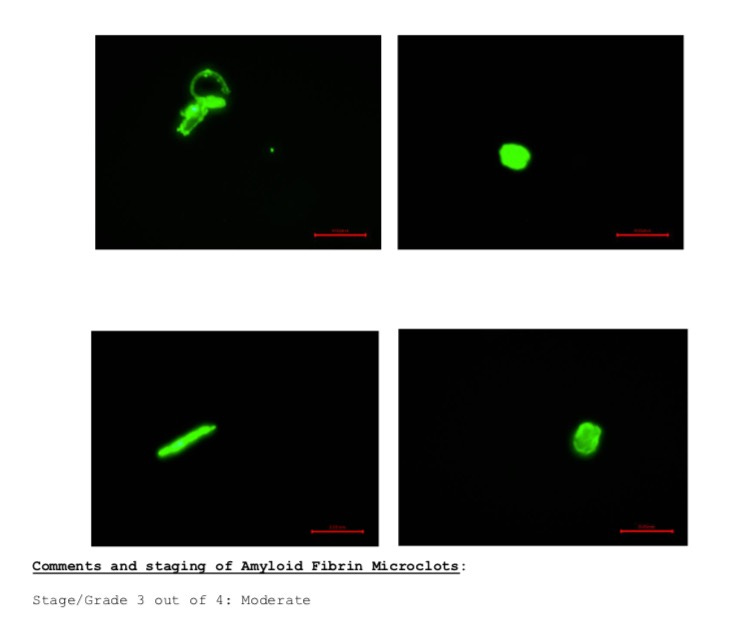
I’ll report that in our clinical experience, whether a person has received the COVID shots or not, all of our patients have amyloid fibrin microclotting. If a person received two or more shots, they will typically have microclotting stage/grade 3-4 on a scale of 0-4. We know that microclots concentrate in the capillaries, where red blood cells (RBCs) are meant to deliver oxygen and remove carbon dioxide, but can’t due to congestion and blockage. We also know that the dense networks of blood vessels within the placenta are responsible for exchanging respiratory gases, nutrients, and wastes between the mother and fetus throughout pregnancy, which is essential for proper fetal growth. And we know that IVM is very effective at blocking the clot- provoking impact of spike on the platelets, RBCs, and endothelial cells which line the blood vessels.

In a post-Covidian world, the risk of using IVM in pregnancy is inhibited by the inconclusive and weak body of evidence (per Unitaid (Gates)), and studies using mice which couldn’t avoid IVM toxicity at crazy high doses. On the other hand, we have a punctilious review by an esteemed toxicologist, basically saying that IVM hasn’t killed anyone over thirty years and hundreds of millions of doses. And our clinical experience reveals microclotting in everybody, which poses an imminent threat to the viability of a fetus. IVM is one of the most effective therapies to block that effect of spike to promote microclotting.

If it was my wife who was pregnant, after a detailed review of the above risks and benefits, I would opine that I think the risks of IVM at current dosing at 0.2mg/kg-0.6mg/kg for post-acute sequelae of COVID and COVID vaccine injury are not only safe in pregnancy, but likely to prevent fetal demise from microclotting. If my wife was especially sensitive and cautious, I would use as little as 1mg of IVM daily, but I would use it.

P.S. This Substack is not individual medical advice for you.

P.S.S. Happy Memorial Day!

P.S.S.S. Thank you to each of the paid subscribers who help support the long-term effort of writing.

[ad_2]

Source link

Waking Life – by Scott Marsland, FNP-C

Waking Life – by Scott Marsland, FNP-C

[ad_1]

The title of this Substack is inspired by one of my favorite movies, a quirky animated film called Waking Life, written and directed by Richard Linklater and starring Wiley Wiggins (https://www.imdb.com/title/tt0243017/). Waking Life follows the dream(s) of one man and his attempt to find and discern the absolute difference between waking life and the dreamworld. I think the funniest part of the movie is what I refer to as the ‘burrito doings’ scene:

(Main character, Wiley Wiggins, goes into the convenience store. The clerk, Bill Wise, is the same guy who drove the boat car)

BW: “What’s the word, turd?”

WW: “Hey, do you also drive a, a, boat car?”

“A what?”

“Like, you gave me a ride in a car that was also a boat.”

“No, man, I don’t have a ‘boat car’. I don’t know what you’re talking about. Man, this must be, like, parallel universe night. You know that cat that was just in here, who just ran out the door? Well, he comes up to the counter, you know, and I say, ‘What’s the word, turd?’ and he lays down this burrito and he kind of looks at me, kind of stares at me, and then he says, ‘I have but recently returned from the valley of the shadow of death. I am rapturously breathing in all the odors and essences of life. I’ve been to the brink of total oblivion. I remember and ferment a desire to remember everything.’”

“So, what’d you say to that?”

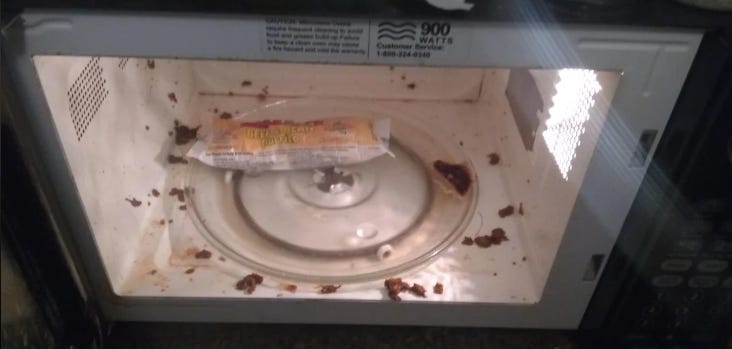
“Well, I mean, what could I say? I said ‘If you’re going to microwave that burrito, I want you to poke holes in the plastic wrapping because they explode, and I’m tired of cleaning up your little burrito doings. You dig me? ‘Cause the jalapenos dry up. They’re like little wheels.’”

DREAMWORLD VS. WAKING LIFE

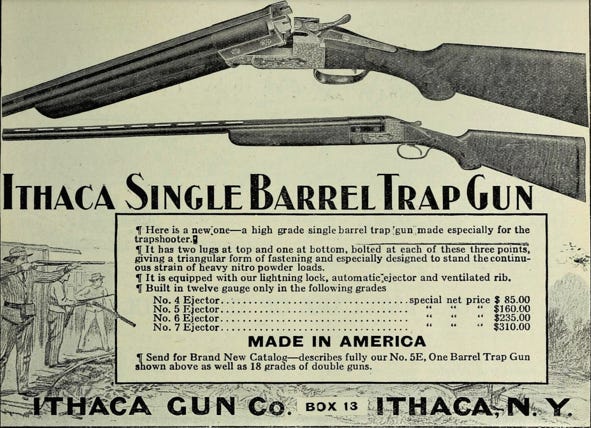
Living in Ithaca during the pandemic and post-Covidian times has been a bit of a mind-twister. I spend 8-10 hours a day in my office, working hard to help people recover from the life-changing adverse effects of the Covid virus and the Covid vaccines. In my physical office, I share the space with a colleague who sees what I see. I work with the talented and growing team of the Leading Edge Clinic, now twenty of us including schedulers, an RT, RNs, NPs and physicians, and we all are dealing with the same reality every day. I return to my home and my wife is is injured by the Covid shots (hers Moderna), just like me (mine Pfizer). Yet we are surrounded by a city filled with people who continue to believe in the narrative that the shots are safe and effective, and in fact many continue to get boosters. This is despite the growing list of ailments which they are encountering, and for which their physicians have no answers or effective treatments. The bumper sticker “Ithaca, 10 sq miles Surrounded By Reality” takes on a sinister twist. On a midday walk, a public transit bus passes me with a fresh advertisement on its side promising “Safe and Effective Against COVID, Get Your Booster Today!” As far as I’m concerned, the bus might as well have an ad for Ithaca Gun Co., and we can just move forward as if we are all in a Steven King novel. Everyday life outside my home and office can start to feel like a dreamworld, some sort of Twilight Zone wrought large in Central New York.

MORNING INTO AFTERNOON

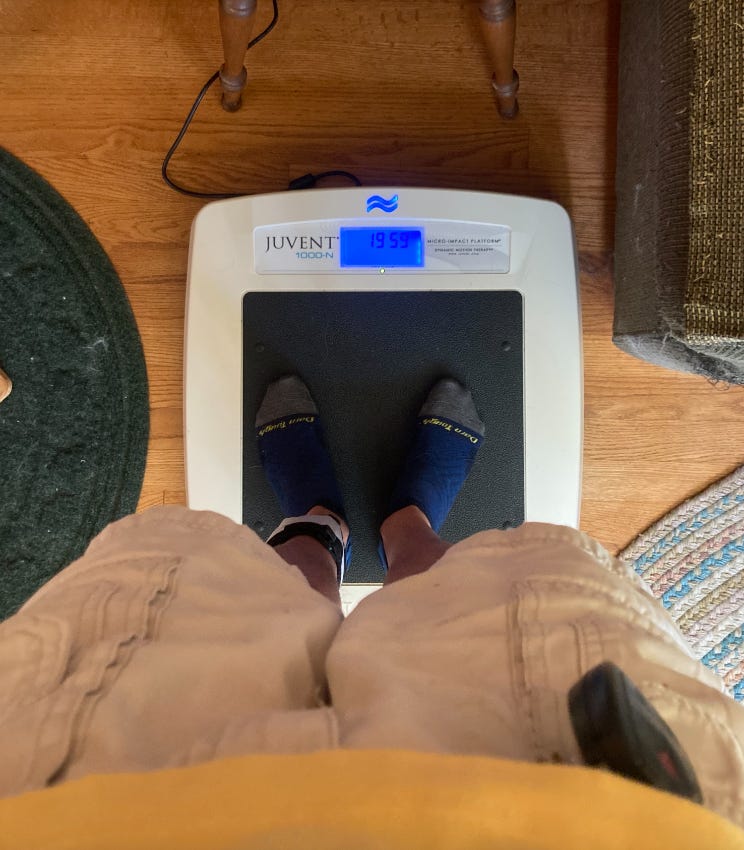
I push in the clutch, turn the key, shift into reverse and back out of the driveway. Squeeeeeeaaaaak! The lady who had my Volvo C30 before me put racing brakes on it, and they are quite noisy when they are cold. I wave to Kerrie and step on the gas, doing 30mph up the hill until, just a couple of minutes later, I take my routine right turn. I pull my little white car into the far right parking place next to the black and silver cars of the Dolson-Fazio clan. The monochrome color combo strikes me every day. I pop the hatchback and grab the Juvent, and trundle down the drive to awkwardly open the front door. I set down the Juvent, plug it in, shed my shoes and slip into my slides (a la Mr Rogers), and head to the office to turn on the computer. Green tea poured, check. Phone plugged in and charging, check. Glasses cleaned and on, check. VPN whirling, thinking, whirling, and…connected, check. Sign in, write good morning to my nurse, Kara, bring up the chart, begin the video, and ACTION!

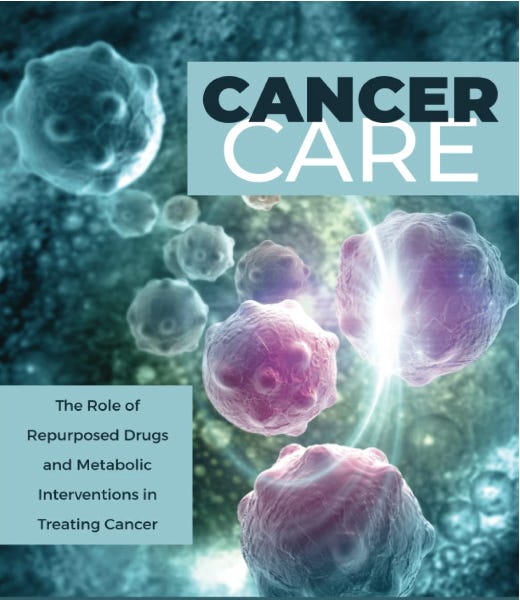
It’s back-to-back patients, along with managing messages, but by 12:20pm I’m dashing out the door for a midday walk. This is a new, welcome and very important addition to my daily routine. It is inspired by Dr Paul Marik’s guidance in his book and evolving document Cancer Care: The Role of Repurposed Drugs and Metabolic Interventions in Treating Cancer. “Patients should be encouraged to engage in at least 30 minutes of moderate-intensity physical activity at least five days of the week. Walking, particularly in the sunshine, has enormous physical, emotional and psychological benefits.” It has been a month since I started these afternoon walks, and it’s hard to fathom how I got along without them. As I am starting my day and securing a positive focus, the walks are something to which I can look forward. I notice the breeze, the sun, the trees, the birds. There is time to settle my mind, work through questions and clinical puzzles that my patient visits have produced – and walk off some of the burdensome emotions that can come with this work.

Sometime between 5pm and 7pm I wrap up my day. I pick up the Juvent and bring it back to the car, and it’s a quick drive back down the hill, and home. Kerrie makes dinner most weeknights, and I have kitchen duty on the weekends. Although we often eat at 7pm, we continuously aspire to eat earlier, and are careful to leave three to four hours between when we finish eating, and when we go to bed. This is very important for brain health. Sleep is the only time our brain has to clean and restore itself through glymphatic drainage. If we eat less than three hours before bedtime, we prevent this internal housekeeping, and will accumulate debris such as amyloid proteins in our brain. Cognitive function will inevitably decline as a result.

Over the course of multiple videos, Dr Been has gone into terrific detail re: how the glymphatic system and lifestyle changes which we can make to improve our brain health with a deeper understanding of glymphatic drainage. In glymphatic drainage, the cerebrospinal fluid flows into the para-vascular space around cerebral arteries, combining with interstitial fluid and parenchymal solutes, and exiting down venous para-vascular spaces. In plain terms, the brain has a mechanism of special blood vessels which maintain the blood brain barrier while also permitting waste be moved out of the brain. A good starting point to learn more about this is Course 49 of Long Story Short, part of a series Dr Been made on the FLCCC Alliance platform.

Recently, my wife and I have taken this understanding to another level, and fast between Friday morning breakfast and Saturday afternoon brunch. I have our patient Rodney to thank for this behavior. During a long-haul and vaccine injury support group which I led, Rodney remarked that hitting sleep time at least twelve hours into a fasting state exponentially increases the glymphatic drainage and neuronal repair in our brain. Another patient demonstrated the power of this practice when he decided to eat one morning meal each day for two months, and we saw his energy, focus, cognitive abilities, quality and length of sleep improve; and his lab measurement of Beta Amyloid 42/40 returned to normal levels.

EVENING

Most nights, weather permitting, we drive down to Cayuga Lake for a walk. The city of Ithaca is situated at the base of Cayuga Lake, which is one of the Finger Lakes in Central New York.  Just before the pandemic, New York State completed a mixed pavement and gravel trail around the perimeter of Treman Marina. Kerrie and I have been walking this trail for the last four years, a routine we developed during the early days of the pandemic, especially with lockdown. I think of these walks as essential to processing our experience of the pandemic – and to stay steady.  The avian life there is bustling, and the cycle of seasons and migration provided some reassurance of normality and continuity among so much chaos and uncertainty. In the Springtime the Osprey arrive at any number of nesting platforms to roost and raise their young. At this precise moment, the activity in the nest has ticked up because the fledglings are learning to fly and fish. It is heartwarming to watch their early efforts, as they circle the nests and call out to each other with what one can easily interpret to be excitement and encouragement. 

I don’t think one can overstate the case for spending time outside as a path to healing. Yes, the vapor trails which appear in the sky overhead can be distracting and discouraging. But, experiencing the sensations of breezes, the scents of vegetation and water coming off the lake, seeing the distant views which are never the same, the clouds which are always configured differently with an ever-changing colors — we need this for our spirit.

The rhythm of walking with its alternating left-right cadence helps our minds integrate our experiences by reconnecting our left and right brain.  This dynamic process is the foundation of EMDR, a form of therapy, which has a strong evidence base and has been used extensively by the Veterans Administration to treat patients who suffer from PTSD and TBI.  Human beings are bipedal creatures who were designed to walk.  It is our inheritance and an essential tool for promoting optimal health.

When we get home, Kerrie calls shotgun on the Juvent, and I go second.  We each spend 20 minutes standing.  As soon as one of us steps onto the Juvent, our young black cat Charlotte leaps onto the arm of the sofa next to it for her nightly pets from both of us. Kerrie will usually look at her iPad while on the Juvent and I will usually read a book.  I have even been known to do some ironing at the same time. In this way, and for these reasons, the time feels productive.

We have both been using the Juvent for more than three months at this point. There is a short list of specific benefits which I can identify so far. The Covid shots put me into heart failure, and the lower extremity swelling I have as a result has been reduced since using the Juvent. The myalgia and fatigue in my lower extremities is also significantly reduced or absent. My increased capacity to walk at a rapid pace up hills during my midday strolls is noteworthy.

Besides those benefits, which I can credit in part to long-term use of the Juvent, there are the improvements which I have seen in patients who have purchased and use the device. The spouse of one patient who was previously diagnosed with osteopenia used it only intermittently for two months and when she had her annual bone scan was told that at the age of 70, she now has bones comparable to those of a 40 year old woman. Another patient who has suffered from low red blood cell, platelets and white blood cell count for decades, has levels which normalized for the first time in 20 years. This makes a lot of sense to me given that the kinetic energy of the Juvent is stimulating the bone marrow of our long bones, tibia, fibula and femur.

The reason that the Juvent makes a daily commute with me to the office is that my colleague and his wife use it. She has MS and has found that with relatively brief, that is, 5 to 6 minute intervals of use, she has had improvement in balance.  He is a martial artist who has chronic knee pain from years of matches, and has found that by using the device with his knees slightly bent (similar to the stance taught in Tai Chi), he has seen an improvement in his knee pain from a 6 out of 10 to a 3-4 out of 10 over a period of about two months. 

On most Saturday mornings, I spend up to one hour in our Sauna Space NIR sauna.  In the winter time Malcolm, our big older black cat will stick with me the entire hour. During the summer, he is in and out, pacing himself. My goal with this routine is to reach an internal temperature of 100°F, or as close as I can get in one hour’s time. I’m trying to stimulate heat shock proteins in order to more efficiently break down toxins, deformed proteins, pathogens and spike in my body. If I can get to 100F sooner than one hour, I stop. I use an oral digital thermometer to measure my progress. The shortest time it has ever taken me is 25 minutes. I have both Dr. Mercola and Dr. Been to thank for inspiring this practice. 

My understanding is that there are three types of autophagy. Micro autophagy is happening all the time because, for example, our body is making and breaking down red blood cells to the tune of five million a second. Macro autophagy is what occurs when we get to the 14th to 16th hour of intermittent fasting. Chaperone-guided autophagy with heat shock proteins is what we can stimulate when we get our internal temperature up to 100° F.

In terms of cellular repair and cleanup, I think of these three pathways as a shovel, a wheelbarrow, and a backhoe. Heat shock proteins are the backhoe. My understanding is that Dr. Mercola tries to accomplish this on a daily basis and because of how he has conditioned his body, he is able to get his temperature up within 10 minutes. I would caution readers who try this to limit their initial efforts because it takes time for our bodies to get acclimated to such an exercise and I would never go beyond an hour.

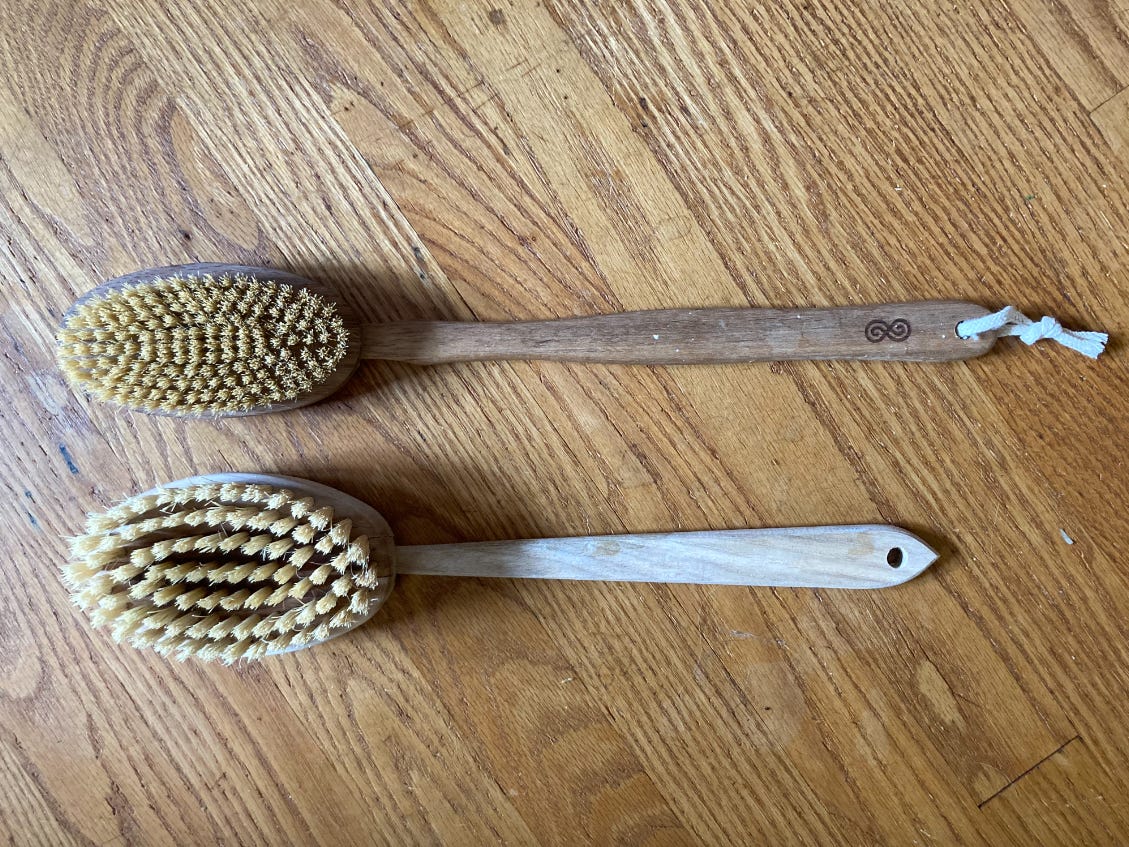
Top is a dry bristle brush, bottom is a tampico shower brush

There are a few tricks which I have learned help get me to 100° F faster. The first is to make sure that when I get out of bed, I am dressed for the ambient temperature and not developing a chill. In the winter time this means making sure that I put on pajamas and socks, and wear slippers and a bathrobe.  I have also learned that drinking cool or cold water inhibits my efforts and so try to add hot water from the teapot to make my morning water, warm – or hot, but drinkable. The sauna came with a bristle brush, and I use it to dry brush from my neck to my toes before I get into the sauna. I think that Japanese readers who are fastidious about their skin care and use soaking baths will note this as a familiar pre-bath ritual.  It helps clear older skin cells and free pores to release perspiration more easily.

A common question is whether one can use a Finnish sauna to promote heat-shock proteins. The short answer is yes, but a NIR sauna facilitates reaching a higher internal temperature sooner with a lower ambient temperature, and less stress on the body. I’ve always enjoyed saunas, but never spent more than fifteen minutes in one before I need to exit for a dip in some cold water.

Immediately after a long sauna, and occasionally also before, I will drink 16oz of water with a sachet of an electrolyte replacement. The product I prefer is Quintessential 3.3 by Quicksilver Scientific, developed by the French military as an oral plasma replacement during campaigns in the desert environment of colonies such as Algeria. It doesn’t have sugar or flavorings, and it produced from micro-filtered seawater obtained from ocean depths.

Finally, I head to the shower where I perform a second wet brushing of my skin from neck to toes. My understanding is that this helps clear off toxins and pathogens which were transported out of my body via perspiration, but which may still linger on my skin’s surface. And so I am ready for my day, theoretically with less spike – and definitely with more hope.

P.S. I have no financial interest in the products which I write about in my Substack.

[ad_2]

Source link
Cancer: adjunctive care – by Scott Marsland, FNP-C

Cancer: adjunctive care – by Scott Marsland, FNP-C

[ad_1]

For nearly six months, Pierre and I have been seeing patients for adjunctive cancer care. In one week, as of 8/12/24, our adjunctive cancer care will be augmented Dr Sid Lawler, an internist with more than twenty years of clinical practice. The Leading Edge Clinic is one of five practices nationally participating in a five-year observational study sponsored by the FLCCC Alliance, evaluating the clinical benefit of a ketogenic (keto) diet, repurposed supplements and prescription medications in treating cancer. This intervention, an integration of a keto diet with layered therapy, is based upon the groundbreaking research of Dr Paul Marik and his protocol . Pierre is putting the finishing touches on a detailed four-part Substack series on this topic. In the meantime, I’m going to supply a focused update on what I’ve learned so far from our current patients.

DIET AND GLUCOSE MONITORING CHALLENGES

About fifty percent of my patients have had some kind of difficulty with the keto diet. For starters, we are using the Libre3 continuous glucometer sensor, which costs $80 and, unless a person is diabetic, insurance won’t cover it. The value of the monitor, especially in the first weeks and months of treatment is invaluable, because it gives patients real-time feedback about the glucose spikes which result from different dietary choices. Some patients can’t get over the fact that the sensor uses a small needle, and remains in place for two weeks. If they get really sweaty in the hot weather, it may not stay attached. Some older patients are technically challenged and not up to downloading the app to a phone which provides continuous reporting on their current glucose levels.

Our target goal is a glucose of 50-80 ng/dL, and that alone scares some patients and their family members. They have long been told that if their glucose gets below 70 ng/dL they should drink some juice or eat something, because a lower blood sugar is considered life-threatening. The truth is that as we move away from simple carbohydrates (carbs) and our bodies learn to happily use ketones for fuel, we can think and feel just fine with a glucose of 50 ng/dL.

There are the patients who are underweight when we have our first visit, because they have already started chemotherapy, radiation, and/or immunotherapy and are dealing with decreased appetite and nausea. Limiting them to keto options doesn’t necessarily make sense, so we are instead guiding them in harm reduction: e.g. avoiding processed foods, sugary beverages, and simple carbs. Simple changes such as the order of eating can help tremendously: i.e. eating leafy greens first, then proteins/fats, then starches, and then fruit.

There have also been family members who are on speed dial and ever-ready to take the patient out for White Castle or McDonalds, because “you deserve it.” In part, this reflects that the patient has come to us because of a different family member who is diligently researching and aches to save their loved one’s life, but if the patient her/himself isn’t as committed, there is only so much we can do.

VITAMIN K2

Dr Marik’s protocol advises the use of a Vitamin D3 / K2 combination when high-dose Vitamin D3 is being used. I have previously written about my clinical observations re: compounding factors which promote and perpetuate microclotting in our post-acute sequelae of COVID (PASC) and COVD vaccine-injured patients. Vitamin K2 is one of those factors. In one of my first followup visits with a patient who is a retired nurse, I didn’t get my first sentence out before she said “I’m not taking any more of that Vitamin K2 you ordered. My infusaport has been working fine for a year, and as soon as I started taking the Vitamin K2, it clogged up from clotting. No more!” I didn’t object, and we discussed the other factors to consider when taking high-dose Vitamin D3 which help manage calcium levels: 30 minutes of weight-bearing exercise (e.g. walking) daily, 250-500mg of Magnesium daily, and limiting, or stopping, the intake of dairy products due to their contribution of excessive free Calcium.

One challenge here is that some patients are too weak or fatigued to walk thirty minutes a day. If someone has $6,000 to purchase a Juvent, I think that 20 minutes a day on the Juvent is a fair approximation, but this is beyond the budget for most. When D3 and K2 are in the same supplement, one can quickly arrive at a daily intake of more than 1000mcg of K2, and these are levels at which I have observed PASC and vaccine-injured patients get stuck with stage/grade 4 of 4 microclotting. I’ve communicated my concerns to Dr Marik, and there is some agreement that separating Vitamin K2 from Vitamin D3 intake is reasonable. In this way, a patient can plan for 100mcg of K2 daily, or 800mcg weekly.

RESEARCHING FAMILY MEMBERS

Pierre and I both have encountered many patients and family members who are diligently researching cancer treatments, and bombarding us with messages that reference articles and studies which promise good clinical results from any number of supplements and prescription therapies. There are 256 repurposed drugs and over 2000 nutraceuticals that reportedly have anti-cancer mechanisms.  One cannot treat a disease using over 2000 medicines. Very few of the long list has reliable, or extensive, clinical or in vitro evidence. (In vitro is Latin for “in glass.” It describes medical procedures, tests, and experiments that researchers perform outside of a living organism. An in vitro study occurs in a controlled environment, such as a test tube or petri dish.) Our approach follows Dr. Marik’s protocol, which relies on those therapies which have the widest and deepest evidence base in both efficacy and known safety.  

Telling the social media “experts” apart can be difficult

While we try to be clear with patients and their family members about what we do and don’t provide in our adjunctive care, we still encounter a lot of pushback. E.g. patients encounter the X posts of physicians like Dr William Makis who make claims re: his ability to treat cancer with repurposed supplements and prescription medications. He states “We have proposed a ‘first in the world’ protocol!” It would seem he hasn’t heard of the FLCCC Alliance, or Dr Marik’s protocol which was published in…August of 2023. Dr Makis isn’t doing the right thing. The best example I can give you is that he promotes the use of Laetrile (Amygdalin), derived from the seeds of Apricots. On X he posted “Bioactive compounds are a crucial part of any “Alternative Cancer Treatment” strategy and Apricot fruit and seeds are a reasonable addition (nothing even remotely controversial about it).” https://x.com/MakisMD/status/1784557179975942564 He makes quick work of dismissing concerns that Laetrile is a cyanogenic glycoside—as in, it contains cyanide. If you read Dr Marik’s protocol, you’ll find Laetrile listed at position #45 under Recommended Against. In 2015, a Cochrane systematic review failed to identify any studies of Laetrile which met their inclusion criteria.

DISMISSIVE ONCOLOGISTS, OBEDIENT AND FEARFUL PATIENTS

Thanks to Dr Marik and forward thinkers/researchers/writers such as Thomas Seyfried, Otto Warburg, Jane McLelland, Travis Christofferson, Jeffry Dach, Nasha Winter and Jess Higgins, we now understand that a combination of keto diet and repurposed drugs can target cancer stem cells and increase both the safety the effectiveness of modern Oncology’s primary tools: chemo, radiation, surgery and immunotherapy. For patients who are working with an Oncologist who doesn’t dismiss adjunctive care, the length and number of treatments can be decreased, with fewer adverse effects. My experience so far is that at best, Oncologists tolerate patients’ used of repurposed therapies up until “the real treatment begins”, and then direct them to cease all adjunctive therapies. In his Forward to Dr Marik’s protocol, Dr Justus Hope writes that proactively adding repurposed drugs as early as possible can help prevent cancer stem cells from regrowing the tumor into a more resistant and sometimes indestructible form. Chemotherapy and radiation target about 10% of active cancer cells, but miss the other 90%, and do not address the stem cells which give rise to more cancer. It’s comparable to the way mowing the lawn actually makes the grass grow more. Most of the repurposed drugs which we are using in our adjunctive therapy target the cancer stem cells.

CROSSOVER OF CLINICAL EXPERIENCE

We’ve treated more than 6,000 patients for acute COVID, PASC, and COVID vaccine-injury since we opened our practice in February 2022. It turns out that the expertise we have developed during this time is invaluable to our delivery of adjunctive cancer care. The spike protein of COVID illness and vaccines has profoundly altered the inner universe of our bodies. We have good reason to believe that the spike protein is often at work behind the turbo cancers which are emerging. Understanding how to diagnose and treat the sequelae of spikopathy, including mast cell activation syndrome (MCAS), microclotting, dysbiosis, neuropathic, cardiovascular and pulmonary pathologies, makes us more effective at treating cancer in the current contaminated environment, where spikopathy and its impact on the human body is rampant.

As we learned to use layered therapies to treat COVID, PASC and vaccine injury, we are also learning to use layered therapy as adjunctive therapy for cancer. Importantly, the clinical options are safe, gentle, often economical, and can be used together with current conventional approaches. In both cases, it has been necessary to challenge the pre-existing and economically supported assumptions, choosing instead to follow the revelations of existing, if rarely cited, science. We have a lot of work to do, and a long way to go, but I feel confident in the integrity of the practice we have built, and in the pathway that Dr Marik’s protocol has provided.

[ad_2]

Source link
Zeolite – by Scott Marsland, FNP-C

Zeolite – by Scott Marsland, FNP-C

[ad_1]

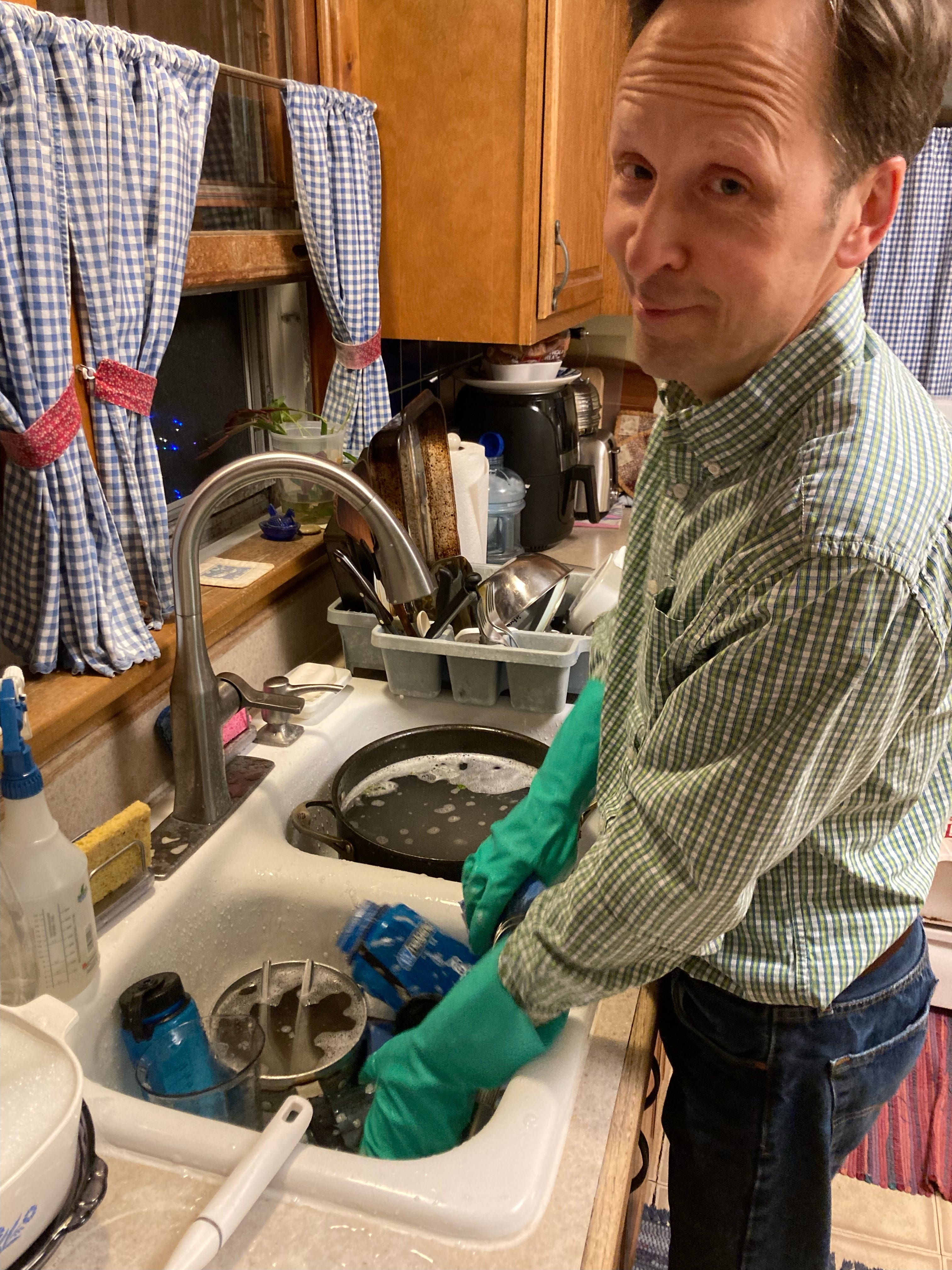
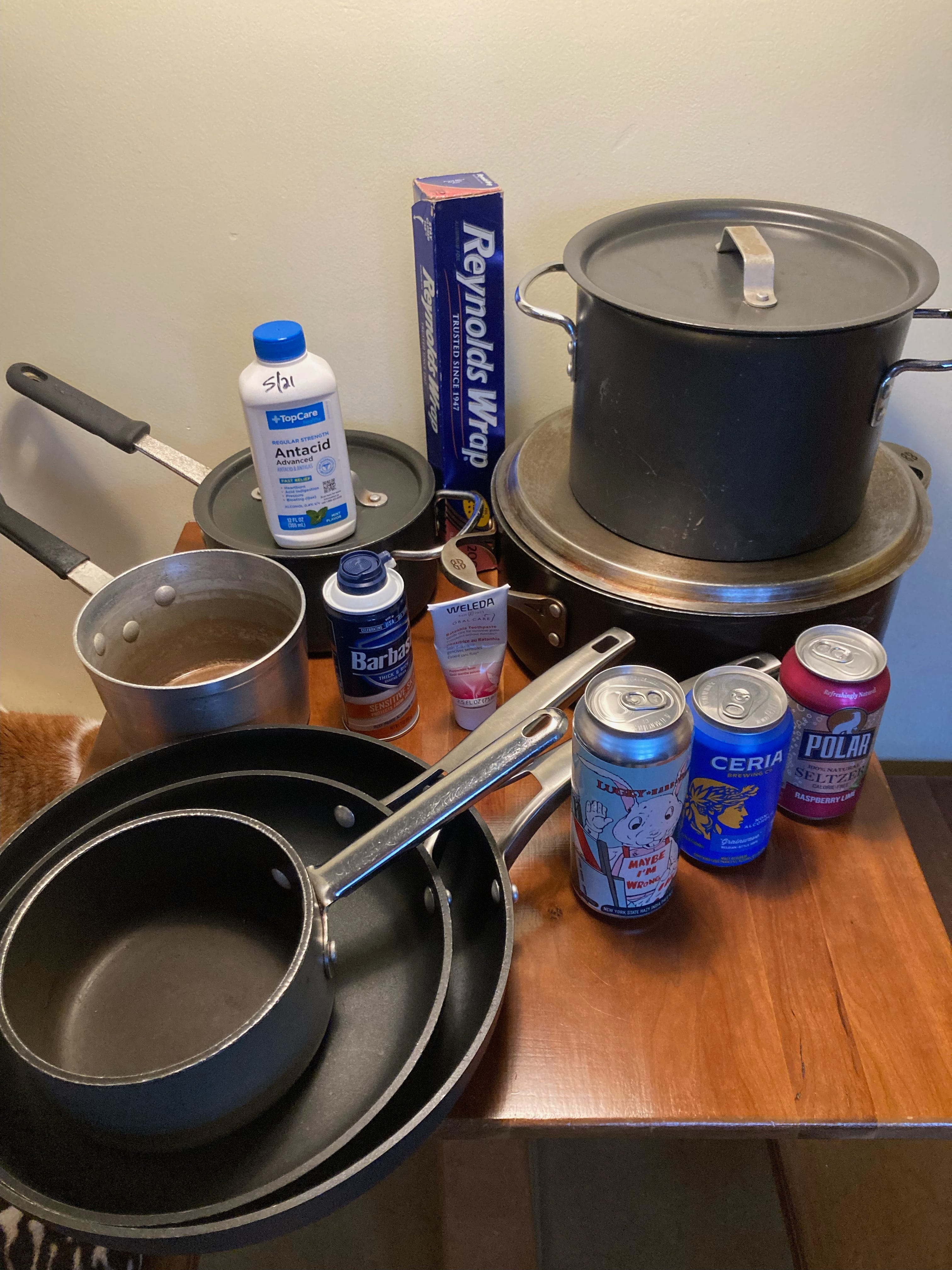
Yours truly on dish duty, using “all-natural detergent, before we jettisoned our aluminum pots and pans.

PAST

In the Fall of 1992, I was twenty-two years old, had just left my service with the Brethren Volunteer Service, and was living in a boarding house. I was still trying to pursue my dream of becoming a farmer, attempting to get a visa to live and work in France. Working as a cook at an Italian place, I made very little money, and got around Philadelphia either by foot or by bike. I was the third owner of my bike at the time, which was a small-framed Lotus twelve-speed. The Lotus had been a high-end Japanese bike in its day, and is still in my possession. One day, the chain and gears were gummed up with grease and grime, so I brought home (a single walkup bedroom with a hot plate and shared bathroom) some ALL NATURAL cleaner. It was called CitraSolv, concentrated cleaner and degreaser. It had a pleasant citrus smell. I mixed some with water in a quart plastic yogurt cup and proceeded to dip an old toothbrush in the solution and brush grease off the gears. The first thing I noticed was that I starting to get a headache. About ten minutes in, I went to make another dip in the cup with my brush, and noted that there was liquid around the cup, and that the cup was now half its size. What? The Citrasolv had melted the plastic in a neat line around the top of the solution.

It was an early lesson in the fact that all-natural is not the same as gentle, or non-toxic, or safe. We still keep a bottle of the stuff around the house for odd tasks, although I’d say it has been a very long time since I’ve used it. But I treat it with tremendous respect , work with it outside, and am careful to avoid sparks or open flames.

PRESENT

I count nearly a dozen Naturopathic Doctors (ND) among my patients and trusted colleagues. In email exchanges facilitated by Dr JP Saleeby, as well as in person at the February 2024 FLCCC Conference, I’ve had the pleasure of interactions with the ND, Dr Kristina Garman. Visits with NDs who are my patients are among the most stimulating and challenging, because they are generally very smart, very experienced, and philosophically opposed to most, if not all, pharmaceutical interventions which I would propose. They want to treat themselves and their own patients “naturally.” It is only after these approaches have failed to yield satisfactory results that they come to us. I lead with these statements, because I want to be clear that I respect, appreciate, and value their intelligence and clinical expertise.

The Leading Edge Clinic operates under the legal framework of the First Nation Medical Board (FNMB), and a foundational principle of the FNMB is that indigenous or native medicine is plant-based medicine. In a sense, it is “old-fashioned” medicine. The longer our practice is open, and the more we learn, the more often we are using plant-based medicines, and the larger the percentage of what we do resembles indigenous medicine. E.g. Bacopa, which is an Ayurvedic medicine, has played an important role in rebalancing neurotransmitters, supporting thyroid function, knocking spike off nicotinic receptors, and improving both musculoskeletal and neurologic function because of increased acetylcholine production. I like to tell patients that Ayurvedic medicine is a pleasure to use, because it has been field-tested for three thousand years, and is often adaptogenic, meaning it brings the body towards homeostasis, whether certain parameters are low or high.

Nevertheless, none of us was taught in medical school or practice how to treat the pathology resulting from a bioweapon made in a lab, and with the COVID virus and COVID shots, that is what we are dealing with. Most of the patients who find their way to the Leading Edge Clinic (LEC) have already tried many conventional – and natural – approaches. If I had a nickel for every patient whose functional medicine doctor, ND, chiropractor, or acupuncturist tested them and asserted that they have mold and heavy metal toxicity, well, I could buy a vintage Volvo C30 with less mileage and fewer dents than the one I drive. It may be that they have mold and heavy metal toxicity, but the treatments they have received didn’t resolve their symptoms, and so, after months or years of treatment, we might safely assume that there may be something else at play. Given worldwide environmental contamination with the spike protein and its innumerable resulting pathologies, the chances are pretty good that treating spikopathy will help the patient get better.

Two labs which we rely upon consistently in our practice at the Leading Edge Clinic test levels of spike antibody and microclotting. I have written several times about different variables which I think promote and perpetuate microclotting. However, a new variable has appeared on my radar: Zeolite.

There have been two distinct clinical groups which introduced me to Zeolite. The first was a group of pharmacology researchers in Puerto Rico who were proposing “natural” approaches to treating post-acute sequelae of COVID (PASC) and injury from the COVID shots. Under the category of chelation, they listed Alpha Lipoic Acid, Chlorella, and Zeolite.

Zeolite recommendations from an ND colleague

The second clinical group is an online discussion group sponsored by ZeroSpike, the small non-profit startup which developed and manufactures NAC Augmentata. Clinicians in this clinical group practice in Europe, Australia, New Zealand, Japan, Canada and the United States. One particularly knowledgeable Naturopathic Doctor is a regular and lengthy contributor, and on several occasions has shared his recommended brands of Zeolite and how he uses them to treat PASC, vaccine injury and other illnesses.

As a Family Nurse Practitioner who was educated in mainstream universities, and worked in hospitals for most of my career, the things which I know about nutrition, homeopathy, supplements, counseling, microcurrent therapy, etc. were often encountered along the way in life, but not in the classroom. My Grandpop used to called it the school of hard knocks. For this reason, I value the lively discussion about holistic or alternative approaches to healing, but I continue to interrogate those approaches from the perspective of my Western medical training.

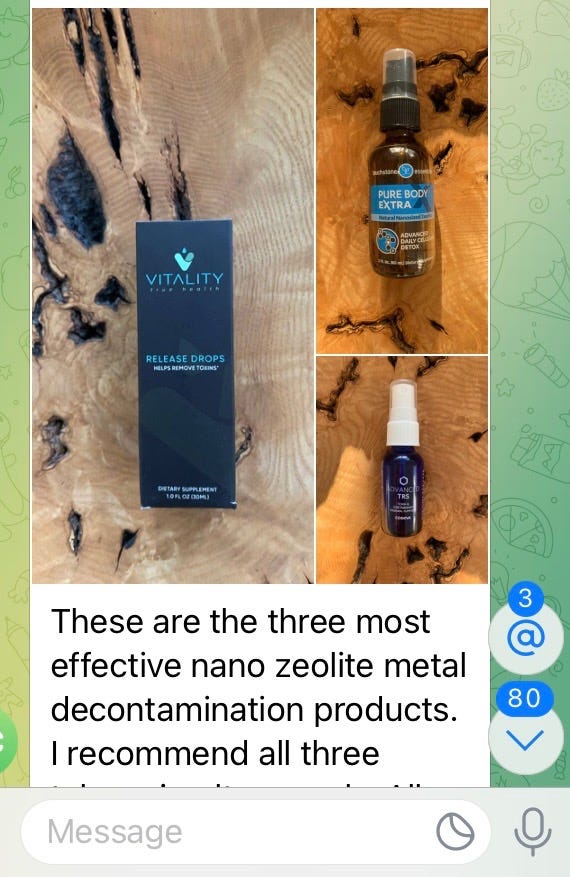
Zeolite nearly got past my defenses. I had actually recommended it to a patient, because he was reading about chelation and was eager to try something to facilitate it. I shared the three suggested brands from the ND in the ZeroSpike group. Later that same day, I had finished with my charts and was digging a little on the internet when I came across a nugget of information. Zeolite had been used in military field dressings for a while, but was then discontinued. Hmmm. I thought that was interesting – and curious. I dug a little deeper. It turns out that the military used dressings with Zeolite, because the dressings rapidly promoted coagulation and staunched bleeding from wounds. They discontinued use of the Zeolite-infused dressings because of thermal injuries and promotion of micro emboli. Full stop! Before I left the office that night I messaged the patient and asked him to disregard my recommendation of Zeolite, saying that we would find something else to use.

That week I messaged the ND on the ZeroSpike chat, mentioning what I had learned about the military’s use of Zeolite dressings. I asked if he ever checked microclotting in his patients and, if he did, were there any concerns about Zeolite promoting clotting. Crickets. That wasn’t a good sign.

A month or two has since passed, and when patients invariably bring up the issues of mold and heavy metal toxicity, and their online reading about chelation, I suggest that they try a topical product called EZDtox, which is readily available online, not too expensive, and well tolerated. EDTA has been FDA approved for chelation of lead and other heavy metals for decades. I defer discussion of mold and focus on managing their mast cells. I steer them clear of Zeolite.

Not too long ago I had a visit with a patient whose microclotting had just been rechecked, and despite six months of Rx and enzymatic anticoagulation therapy, it remained a 4 out of 4. Something was amiss. We went through her medication list, and then her supplement list, coming up empty-handed. I said “You know, there is usually a reason for persistent microclotting, and the list is short: Vitamin K2, collagen, green protein powders with a lot of Vitamin K1 and K2, aluminum containing antacids – and something new to me – Zeolite.” A lightbulb seemed to go off and she said, “I use TRS Zeolite Spray.” (This is one of the three which my ND colleague had recommened in our online discussion). I said, “Ohhhh?” It turns out that she had been using TRS Zeolite spray for nearly two-and-a-half years. Her ND had tested her and advised that she was laden with mold and heavy metals, including arsenic and mercury, so that she needed to chelate them with Zeolite. It never made it onto her supplement list. “Why not?” I asked. “Oh, I’ve been taking that forever and didn’t think it counted.” She also wondered out loud if that might not be harming her kids, as she has been giving to them for some time also. “You know, I had stopped giving it to my daughter, but restarted it recently and now she is having balance issues.” I asked her to stop the TRS Zeolite spray, and also suggested that also she not give it to her children. We made a plan to recheck her microclotting in another month or two.

That afternoon I was catching up with my office mate Dr Fazio, telling him about my Zeolite story among others, and he asks: “What’s in the stuff? Like, what is is chemical composition.” I said, “Well, Zeolite. I’m actually not sure. Let’s look it up.”

From Wikipedia:

Zeolite is a family of several microporous, crystalline aluminosilicate materials commonly used as commercial adsorbents and catalysts. They mainly consist of siliconaluminiumoxygen, and have the general formula Mn+1/n(AlO2)−(SiO2)x・yH2O where Mn+1/n is either a metal ion or H+. These positive ions can be exchanged for others in a contacting electrolyte solution. H+ exchanged zeolites are particularly useful as solid acid catalysts.

Aluminum in our house, including the packaging of my “all natural” Weleda toothpaste

Dear Lord! Aluminosilicates!! They contain aluminum!!! If you have been following this Substack, you might know by now that aluminum in our bloodstream is catastrophic, as it promotes flocculation, the sludging of red blood cells, platelets and proteins. It’s the same process, using aluminum, which is used to induce solid waste to settle out of liquid sewage. Ooof, this was ugly.

Now it made sense that the wound packs which the military was using would promote micro emboli.

And it also made sense that my patient with the 4 of 4 microclotting was doing so poorly. She was literally poisoning herself on a daily basis with the “natural” chelator. Geesh!

Another week went by and I had a visit with a different patient who has made some progress, but not what I would expect for all the therapies that we have utilized. I took a scan through her med and supplement list before we started and what did I see? Zeolite. During the visit I asked her how long she had been on it? One year. What was the reason? Mold toxicity and heavy metals. And who recommended it? An ND. Sigh. Another nickel.

At the end of the day, “natural” therapies understandably hold more appeal than pharmaceutical ones, as I have said above. Over time, in the LEC, we are using more and more plant-based medicines in our practice. But, and it’s a big BUT, “natural” doesn’t always equal safe, and an ND doesn’t necessarily understand what effect spikopathy has on the body, or that it could be amplifying what symptoms they are seeing. As we continue to learn about how to effectively heal from PASC and the COVID shots, we need to use many different tools, some of which are pharmaceuticals. At baseline, we endeavor to do no harm, and when our clinical experience and lab testing show us that a therapeutic is hurting patients, we should take it out of our toolbox. I would assert that, in a post-COVIDian era, Zeolite should be crossed off the list.

[ad_2]

Source link
Love and marriage – by Scott Marsland, FNP-C

Love and marriage – by Scott Marsland, FNP-C

[ad_1]

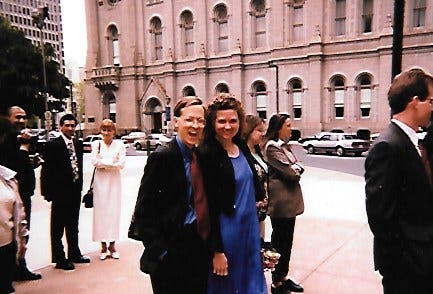
Waiting with other couples outside City Hall to get married

Love and Marriage

Three things have me thinking about love and marriage this week: a few tough conversations with my wife Kerrie, the recent second marriage of a close colleague, and the death of a patient’s husband.

Kerrie and I have been together since the Fall of 1992. We took our relationship for a test drive, so-to-speak, when we moved in together in August 1994. We didn’t get married until May 1997, the same year that both my sister and brother-in-law got married.

Kerrie with maids of honor Linda and Anne

Scott with best man Paul

Our approach was simple and frugal. We bought her lavender rose bouquet on our walk to City Hall in Center City Philadelphia. Judge Rayford Means conducted a civil ceremony in his office on his lunch break. We had been in the court room and watched him sentence someone to a lengthy sentence in prison just moments before. The layers of meaning were not lost on us, and just in case they were, when we left the Justice Center, the police guarding the entrance were laughing ruefully and said almost in unison “Another life sentence handed out!” My close friend Paul, with whom I had weathered three years of nursing school, was my best man. Two of Kerrie’s art school classmates and former apartment-mates Anne and Linda were her maids of honor. Afterwards we enjoyed a feast at our favorite Chinese restaurant in Chinatown, Lee How Fuk. I know that my dad and Kerrie’s dad were both relieved when they heard of our wedding, because their bank accounts had just taken a huge hit. My sister and Kerrie’s brother both had lavish weddings with rehearsal dinners, more than a hundred people in attendance, and a big celebration afterwards. Sadly, they were then both divorced after about one year of marriage.  Here we are twenty seven years later, and still growing together. 

It would be too easy for me to say that the reason we are still married is because we are more mature or more committed than others, although we do each have some of those qualities.  I certainly don’t feel superior to other people who have gone through the crucible of divorce. A saving grace of our relationship has been the tool of Reevaluation Counseling, or RC, and the ability to listen to each other which that has cultivated in us.  But if I am being brutally honest, I would say that staying married for this long owes a lot to luck, fate, and codependence as much as anything else.

Yesterday I told my wife that we are both wounded birds trying to live in community with each other. I’ve never understood or been sympathetic, let alone admiring, when a couple celebrating their 50th year anniversary quips that they never had an argument. The idea is unfathomable to me. If you are two distinct individuals, who are growing over time through the different stages of life and human development, I simply don’t think it is possible to not ever argue. 

My wife has often described me as a strong cup of tea.  Other people who have had childhoods and physical ailments similar to mine have easily fallen into addiction and self-destruction. I know this because over the last forty years I have counseled with some of them, and more than a couple are dead.  Living in Philadelphia for a decade made this harder in some ways, because of experiencing armed robberies, muggings, interrupting a rape and generally feeling unsafe in an unrelenting atmosphere of racial tension and urban violence… it doesn’t tend to reassure someone about the benign reality and safety of the world.  I would say that one of my personal stages of development has been to tame my inner fire and rough edges so that I respond more calmly and thoughtfully in situations which I historically felt as provocative.  

At the risk of being cliché, what comes to mind is a song which Garth Brooks wrote and performed back in the early 90s. (I note that at least one person on You Tube included this song as one of the most annoying songs ever! LOL!!)

Standing Outside the Fire by Garth Brooks

We call them cool
Those hearts that have no scars to show
The ones that never do let go
And risk it the tables being turned

We call them fools
Who have to dance within the flame
Who chance the sorrow and the shame
That always come with getting burned

But you got to be tough when consumed by desire
‘Cause it’s not enough just to stand outside the fire
We call them strong
Those who can face this world alone
Who seem to get by on their own
Those who will never take the fall

We call them weak
Who are unable to resist
The slightest chance love might exist
And for that forsake it all

They’re so hell bent on giving, walking a wire
Convinced it’s not living if you stand outside the fire

Standing outside the fire
Life is not tried it is merely survived
If you’re standing outside the fire

One dynamic of our marriage, which some couples may recognize, is that when one’s partner in life vibrates at a low or very high pitch, we respond inversely. I’m used to this in marriage, and it is helpful that both my wife and I recognize it and acknowledge it with the intention to recalibrate ourselves when it happens.  When at least one partner is doing this consciously it can help de-escalate a tense situation. We say “As long as you zig when I zag, we’re good.” Allow me to explain this with reference to an old friend.

Scott and David at an Ithaca Vinophile Society gathering

David Kraskow is an old friend and another nurse who I first met at our local regional medical center in 2000.  He is ten years my senior and has had his experiences of human development, meditation, spiritual practice, and intentional growth courses. He is self-described as pollyanna, without any negative connotation. For a period of years, we commuted together to work as we both were on the night shift and my house was along the way.

David encouraged my vinophilic interests, inviting me to weekly wine tastings at a local establishment, as well as monthly wine tastings with a vinophile society.  For a stretch of at least three years, we developed a ritual of returning to his home at the end of a night shift and sharing a glass of the most recent vin du jour.  I know that drinking alcohol at 7:30 in the morning would be cause for many to suspect alcoholism, but I will assert that having worked the night shift, it was our equivalent of stopping by the bar on the way home, and we imbibed in moderation.

The wine we were drinking was always a topic of discussion, but nothing was off-limits.  Being a strong cup of tea, a person of convictions and strong opinions, there would invariably be moments in the conversation were I would assert a rhetorical or empirical question, and David’s reply would send me over the edge. With equanimity he would say, “Yes, that is a question.” Aaaaaaaaayyyyyyyyyyy!!!!!  In the seesaw of our relationship, it would feel like we were on the playground and he was a playmate who had height and weight on me and he had just propped me up in the air. All I could do was flail and scream to “Let me down!”  

Me and Pierre at the February 2024 FLCCC Conference

I’ve come to notice a similar dynamic between myself and my practice partner, Pierre. He is an interesting combination of steely character, intelligence and curiosity, with an easygoing, carefree and generous approach to life. “Wow” is his most frequently used reply to any message via text. If he wasn’t a guy, I would say he is the most Valley Girl guy I have ever met.  All that is missing in his messages is “like”, as in “Like wow!” Small insight: he attended medical school in the Caribbean, where he would wind surf during the day and study at night. That is to say, he is not your typical doctor. 

So, my challenge to be more steady and less reactive in response to my partner has been accepted. I recognize an opportunity to grow when it presents itself. One other thing I have learned over many years of marriage is that if we are growing, we do not seek out people who are mirror images of ourselves, but instead seek relationships which include people who come from different backgrounds, have different world views, and have different manners of reacting and interacting with the world.  It would be too easy to slide into a pitch for diversity and inclusiveness, but I am talking about what we seek out for ourselves rather than what would be imposed upon us. Having worked in large urban hospitals, I have experienced the joy and sorrow of interacting with so many different kinds of people.

Pierre is exceedingly generous and forgiving in his treatment of healthcare professionals who remain embedded in the system which has implemented the plandemic. He would be the first to say that if the stars hadn’t aligned in a certain manner, he would still be plugging away in the system, worshipping the medical journals and buying the narrative. As a person who is vaccine-injured, or at least that is the excuse I give, I feel what Joni Mitchell would call a ‘thunderhead of judgement’ for those who continue to endorse the COVID shots as safe and effective, and thus continue to maim and kill innocent people. It feels hard to forgive and empathize with those nurses and doctors, when every day I have to overcome the physical, mental and emotional limitations imposed by the spike protein on my existence – and try to help heal others who are more severely injured and disabled. In upcoming Substacks, I plan to write about moral choices in history and the present, without resorting to a black and white/good guys vs bad guys approach, while seeking to understand how and why people make the decisions they do.

Today, as I write, a patient of mine is holding a funeral service for her husband of twenty eight years. What makes this especially poignant is that less than two weeks ago, they were both here in Ithaca so that I could treat her with stem cells and exosomes. We have delivered this therapy to patients in a protocol which follows the phase two clinical trials of Vitti Labs https://www.vittilabs.com/research-development/#research, in which they do infusions on day one, three and five. We also deliver exosomes nasally and via nebulization. There was ample time to spend one-on-one with the patient and her husband over the course of five days, and the love between them was palpable. Her husband was tender and sweet, of good cheer and very thoughtful in his words and actions. I enjoy hearing the story of how a couple met, and their story is unusual, in that they became friends in grade school, boyfriend and girlfriend in middle school, and then married twenty eight years ago. They have children and twenty grandchildren. Less than a week after they returned home, her husband was killed in a car crash.

Woking in the Emergency Department (ED) for fourteen years, and trauma at the end of my ED career, I have had a lot of contact with people who suffered serious injuries, some of whom died, following a motor vehicle crash. It is still stunning to interact with someone who is so full of life, and in what feels like mere moments later, is dead. We are holding this patient, her husband and their family in our prayers, and on this day especially, pray that God will ease their pain, and join them in celebration of the joyful kindness which their husband/father/grandfather radiated during his life.

For my colleague and friend who recently remarried, my modest and brief advice is to nurture your capacity to listen to each other, often and well. Try not to blame each other, and be quick to sincerely apologize for your missteps and thoughtless moments. Try to notice, and acknowledge (out loud guys), what you appreciate about them, and what they do. Plan to grow, and change, together, in the time with which you are blessed.

L’chaim! Mazel tov!

The newlyweds outside their favorite Chinatown restaurant in Philly

P.S. Short comments with words of wisdom from living in relationship are welcome.

P.S.S. My partner in practice at the Leading Edge Clinic, Dr Pierre Kory, just published the first of four installments on Adjunctive Cancer Care. Pleaes Subscribe to his Substack to read these, at https://substack.com/home/post/p-145035952?source=queue

[ad_2]

Source link
 

Opus Health logo

Leading Edge Clinic has partnered with Opus Health to help patients unlock HSA/FSA funds and save on care.

Click this popup to learn more